

On a Thursday evening in August, the riverbank at Ttukseom looks like a city that has already solved the problem. Delivery riders weave between picnic mats. A drone swarm assembles a whale over the water, then dissolves it. Couples eat fried chicken from paper boxes at nine at night. Nobody seems in a hurry to leave.
Then you walk two blocks inland. Half the storefronts are dark by ten.
That gap is the entire premise of the Seoul night economy plan the city unveiled on August 20, 2026. Mayor Oh Se-hoon’s administration wants to add 5 trillion won — roughly $3.6 billion — in annual nighttime consumption within five years. It also wants 30 million foreign visitors, and it wants small merchants earning more than half their revenue after dark. In other words, Seoul has decided that its next growth engine runs from 6 p.m. to 6 a.m.
However, the timing is strange. Korea is drinking less than it has in a decade. Nearly half the country’s pubs have closed since 2018. So the city is placing a very large bet on hours its own citizens have been quietly abandoning. Whether that bet pays off comes down to one question. Can a night economy survive without alcohol at the center of it?
What the Seoul Night Economy Plan Actually Contains
Start with the concrete items, because the headline number hides how granular this plan is.
From October 2026, a late-night shuttle called the Firefly Bus begins running. It connects Hongdae, Gwanghwamun, DDP, Myeongdong, and Gangnam, stitching the city’s five biggest evening districts to the subway network. Meanwhile, 269 public sports facilities will stay open until midnight. Those include school gyms, park courts, and riverside pitches. In addition, 259 facilities along the Han River and its tributaries get lighting upgrades, so people can actually use them after sunset.
Culture gets a similar extension. Starting in September, eight municipal museums and galleries move from one late night per week to five. Each will stay open until 9 p.m. A pilot program called Seoul Museum Night runs from September through November. It offers curator talks and family tours, and it becomes permanent in 2027.
On the commercial side, the city is scaling up Seoul Moonlight Market (dalbit yajang), its licensed outdoor night-dining zones. The count rises from 5 locations this year to 25 by 2028. Waterside leisure spaces grow from 19 to 40 by 2030. Furthermore, four districts have been designated as flagship night landmarks: DDP, Namsan, Gwanghwamun, and the Han River. DDP begins piloting a permanent illumination program called 365 Light in September. Meanwhile, a stretch of riverbank between Jamwon and Dongho Bridge gets a full night-lighting treatment in 2027.
Behind all of it sits the machinery of governance. A Seoul Night Economy Committee launches in September. A basic ordinance on nighttime economic activity takes effect in January 2027. In addition, the city is deploying 1,086 AI-equipped crowd-detection cameras and a 150-person sanitation squad. From 2027, patrol staff branded as “Seoul Sheriffs” join them.
The annual cost comes to roughly 200 billion won, about $145 million. Much of that is a reshuffle of existing budgets rather than new money. As bets go, therefore, it is aggressive in ambition and modest in outlay.
The Numbers Behind the Seoul Nighttime Economy
The case for the plan rests on tourism data that has genuinely surprised people.
In the first half of 2026, 8.23 million foreign visitors came to Seoul. That is up 21.3 percent year over year. Their card spending hit 5.6 trillion won, or $4.1 billion — a 56.8 percent jump. Average stay lengthened to six days. Per-person spending climbed to roughly 1.97 million won, about $1,430.
Those visitors are not spending that money at 2 p.m. Instead, they spend it in the evening, at restaurants, night markets, and the kind of walkable retail Seoul happens to be unusually good at. As a result, City Hall concluded it was leaving money on the table. Too many things simply close too early.
The broader inbound picture supports that read. Korea’s tourism economy has been on a tear, and Seoul captures the majority of it. For context on how quickly the shift happened, see our breakdown of Korea’s inbound tourism boom in 2026.
Still, tourists are only part of the target. Oh framed the initiative around residents first. “The new growth hours for Seoul should come in the evening,” he said at the announcement. He described a city whose operating hours should match how people actually live. That means exercise after work, a museum with the kids, and dinner that does not require an expensive taxi home.
The Firefly Bus and Seoul’s Oldest Night Problem
Transport is where the Seoul night economy plan is most obviously trying to fix something real.
Seoul already runs late-night buses. The Owl Bus (olppaemi beoseu) launched in 2013. Before launching it, the city analyzed roughly 3 billion late-night mobile phone records to find out where people were actually stranded. Today it operates 14 routes and 100 vehicles between 11 p.m. and 6 a.m. The fare is 2,150 won. Ridership runs about 3.1 million passengers a year, and 28 million since launch.
Impressive as that sounds, the coverage gap is stark. City data put the late-night floating population between midnight and 4 a.m. at roughly 342,000 people. Of those, 26.1 percent take a taxi. Only 2.7 percent take a night bus.
That imbalance explains a great deal about Korean nightlife economics. When the subway stops and buses thin out, getting home becomes expensive. Consequently, people cut the evening short and spend less. It also explains why Korea built one of the world’s most sophisticated designated-driver industries. We covered that system in our guide to the daeri driving business.
The Firefly Bus is a targeted response. It is not a general late-night network. Rather, it is a shuttle between the specific districts the city wants people to linger in. In theory, cheap and predictable transport extends the evening by an hour or two. In practice, though, the Owl Bus record suggests something else. Koreans will keep choosing taxis unless frequency beats a five-minute app wait.
Four Landmarks, Rebuilt for Darkness
The landmark strategy is the most visible part of the Seoul nighttime economy push. It is also the most conventional. Cities everywhere light monuments and call it a night strategy.
DDP, Zaha Hadid’s aluminum whale in Dongdaemun, already anchors a district that never fully sleeps. The wholesale fashion markets nearby have traded overnight for decades. 365 Light aims to make the building itself a fixed attraction rather than an occasional festival venue. Seoul has built serious art-market momentum in recent years, as we documented in our coverage of Frieze Seoul 2026. For that reason, the design district is a reasonable place to start.
Namsan gets “campnic” zones and firefly gardens. That is a softer, slower proposition, aimed at residents rather than tour groups. Gwanghwamun leans on media art projected against palace architecture. Honestly, it is the most photogenic and least original idea in the package.
The Han River, by contrast, is where the evidence is strongest. It deserves its own section.
What the Drone Shows Proved About the Seoul Night Economy
Here is the data point that likely convinced City Hall this was worth 200 billion won a year.
Seoul’s Han River drone light shows drew 125,358 spectators in the first half of 2026. That averages around 25,000 people per performance. Attendance on show nights ran 97 percent above the same weekday averaged over the preceding four weeks. Notably, 34.6 percent of the audience was foreign — 43,395 people, a 191 percent increase over normal foot traffic. At one Yeouido show, foreigners made up 49.6 percent of the crowd.
The commercial effect was measurable rather than theoretical. Around Ttukseom Han River Park, card sales rose 39 percent. Transaction counts rose 38 percent. Across all event areas, card spending ran 17 percent above baseline.
The digital tail mattered too. A Star Wars-themed show pulled 770,000 YouTube views. Of those, 93.4 percent came from outside Korea. The United States accounted for 44 percent and the United Kingdom for 8.4 percent, while Korea itself contributed only 6.6 percent. Three more shows follow on September 12, October 9, and October 31. One is a Marvel-themed performance using 2,000 drones, the largest Seoul has attempted.
In short, a free public spectacle generated merchant revenue and international marketing at the same time. Consequently, the logic of the Seoul night economy plan becomes clearer. Give people a reason to be outside after dark, and the spending follows on its own.
The Sober Problem Nobody Wants to Mention
Now for the part that complicates everything.
Korea’s traditional night economy was built on alcohol. Company dinners, second rounds, third rounds — an entire commercial ecosystem grew around them. Hof bars, pojangmacha tents, and 24-hour restaurants existed to service a drinking culture that ran on obligation.
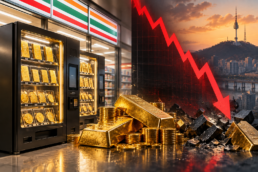
That culture is collapsing. According to National Tax Service data, the number of pubs in Korea fell from 52,302 in March 2018 to 28,178 in March 2026. That is a 46 percent contraction, more than 24,000 closures. Moreover, the decline is accelerating rather than stabilizing. Between March 2025 and March 2026 alone, 2,998 pubs shut. That works out to roughly eight per day. Beer houses dropped 9.4 percent in a single year, and casual pubs fell 10.2 percent.
Household spending tells the same story. Korean households spent about 13,000 won a month on alcohol in the first quarter of 2026. That is down 9 percent year over year, and it is the steepest drop since 2019. It was also the tenth consecutive quarterly decline. Meanwhile, domestic liquor shipments have fallen 17.3 percent over the past decade.
We have written about this shift at length in Sober Korea 2026. The causes look structural rather than cyclical. Younger workers refuse mandatory hoesik. Health spending has replaced drinking budgets. Zero-proof categories are growing fast.
Therefore the Seoul night economy plan is not simply reviving an existing market. It is attempting to replace one. Museums, sports facilities, drone shows, and riverside markets are all explicitly non-alcoholic propositions. Can they generate 5 trillion won of the spending that 24,000 dead pubs used to capture? That remains the single biggest unknown in the entire strategy.
Who Actually Pays to Keep the Night Economy Open
There is a second friction, and it lands on the people the plan claims to help.
Keeping a shop open until 2 a.m. costs money. Korea’s minimum wage rises to 10,700 won an hour in 2027, an increase of 3.7 percent. That is modest as a percentage. Even so, it compounds on top of years of increases. Night hours, after all, are the least profitable hours a small business operates.
The market has already responded. Convenience stores are the most visible symbol of Korea’s always-open reputation. Yet many have abandoned 24-hour operation, and franchise agreements have grown more permissive about overnight closures. Some owners now shutter the counter and leave a vending kiosk running instead. We mapped that shift in Korea’s convenience store empire, and the automation response in Korea’s unmanned store boom.
So the city is asking merchants to extend hours. Meanwhile, those same merchants are calculating that late hours do not pay. The Firefly Bus and the Moonlight Markets need to deliver enough extra footfall to clear that math. Otherwise “night sales above 50 percent” will remain an aspiration rather than an outcome.
Labor policy pulls in the same direction. Korea has been shortening the working week, not lengthening the commercial day. We explored that tension in our piece on the 4.5-day workweek. A society moving toward more rest is not obviously a society eager to staff more midnight shifts.
The Complaint Line
Every night economy eventually runs into the same wall. Somebody lives there.
Seoul’s Han River zones already generate friction. Summer 2026 brought repeated coverage of litter, noise, and overflowing bins at riverside parks. Residents in adjacent apartment complexes objected to amplified sound. The city’s answer is a 150-person cleaning squad, AI crowd cameras, and operating-hour and noise standards for Moonlight Markets. That is a reasonable start rather than a settled solution.
Gentrification is the slower risk. Districts that succeed as night destinations tend to price out the independent operators who made them interesting. Seoul has watched that pattern play out in Garosu-gil, Gyeongridan-gil, and Ikseon-dong. Designating official night zones accelerates the clock. For instance, a licensed market drawing 25,000 visitors a weekend will move commercial rents around it within two years.
How Seoul’s Night Economy Compares Globally
Seoul is late to this conversation, which is arguably an advantage.
According to the World Cities Culture Forum, 97 percent of major world cities now support nighttime initiatives. In addition, 59 percent have a formal night strategy, and 69 percent are developing safety-after-dark policies. London appointed a Night Czar in 2016 and built Night-Time Enterprise Zones. Those zones raised participating high-street footfall by 22 percent and lifted evening spending between 6 and 9 p.m. by as much as 70 percent. Sydney, meanwhile, secured AUD 103 million in nighttime investment. Amsterdam has run a night mayor structure since 2003. Guangzhou operates China’s largest night consumer market. The forum’s full comparison of how cities are supercharging the night-time economy is worth reading.
Seoul’s version differs in one important respect. Western night-economy policy usually begins with deregulation. Cities extend licensing hours, shield venues from noise complaints, and defend nightlife from redevelopment. Seoul’s begins with provision instead. The city builds the attraction, runs the bus, cleans the street, and lights the bridge. That reflects a municipal government with unusual capacity to simply do things. It also reflects a nightlife sector too fragmented to lobby for itself.
The trade-off is legibility. A state-built night is orderly, safe, and family-friendly. Almost by definition, though, it is less strange than the nights that made Hongdae and Euljiro interesting in the first place. The Korea Times’ coverage of the announcement captures the official framing. The harder question is whether official nights can be good nights.
What This Means If You Visit, Invest, or Live in Seoul
If you are visiting. The next twelve months are the best window in years for an evening-heavy itinerary. Drone shows run September 12, October 9, and October 31. Museum late nights start in September. The Firefly Bus starts in October. Official listings appear through Visit Seoul and the Korea Tourism Organization. Furthermore, the city plans to consolidate everything into a single “Seoul Night Map.”
If you are investing or operating. The opportunity is not bars. Rather, it is the adjacent layer. Think late-night dessert and coffee, non-alcoholic beverage concepts, experience venues, and wellness or fitness formats that fill the 8 p.m. to midnight window. Logistics serving all of it counts too. The 25 designated Moonlight Market sites are effectively a published map of where the city will concentrate foot traffic by 2028. In addition, the drone-show data suggests event-adjacent retail captures a 17 to 39 percent lift. That is a usable planning assumption.
If you live here. The most consequential changes are the unglamorous ones. Sports facilities open until midnight will change more weeknights than any light installation. So will museums open until nine. Whether noise standards and cleaning squads keep pace with the crowds will determine how the Han River neighborhoods feel by next summer.
Seoul has spent two decades being called a city that never sleeps. That reputation rested largely on a drinking culture that is now disappearing. The Seoul night economy plan is an attempt to earn the title a second time, on entirely different terms. It might work. Ultimately, though, it will not be judged by the 5 trillion won figure. It will be judged by something simpler — whether a Tuesday night on a Seoul side street still feels alive in 2031, or whether the lights are on with nobody underneath them.