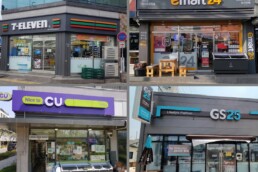


It is 11 p.m. at a GS25 convenience store in Seoul. A young office worker walks past the instant noodles and the triangle kimbap. Then she stops at a glass-fronted machine near the door. She taps a screen, pays by card and waits. A moment later, a tiny gold bar drops into the tray. It weighs one gram, and it cost her more than a nice dinner. This is what the Korea gold rush looked like at street level.
For most of 2025, Koreans bought gold as if it were going out of stock. In fact, it did go out of stock. The national mint stopped making gold bars. Retailers rationed supply. For a while, gold in Seoul traded about 20% above the price in London or New York. Locals called it the “kimchi premium.”
Then, in 2026, the music stopped. Gold on Korea’s main exchange peaked at 269,810 won per gram on January 29. By late September, it had fallen to about 181,000 won, a drop of more than 30%. Trading volume collapsed too. This is the story of how a country of savers turned gold into a meme trade. It is also about why Korean gold investors paid more than anyone else on earth. Finally, it explains what the crash means for foreigners watching Korea’s markets.

The Korea Gold Rush in Numbers
First, the scale. The Korea Exchange gold market, or KRX gold market, opened in March 2014. For a decade, it was a sleepy corner of the financial system. However, in the first half of 2025, it traded a record 37.3 tons of gold. That was 4.1 times the volume of a year earlier. It also beat the whole of 2024 by a wide margin.
Individuals led the charge. According to the exchange, retail investors made up 46.9% of trading in that period. Institutions accounted for 34.0%, and physical gold dealers for 19.1%. Meanwhile, the number of individual accounts grew to 1.45 million.
October 2025 was the frenzy’s peak. Monthly volume passed 24 tons, the most since the market opened. Trading value topped 5 trillion won in a single month. Prices crossed 200,000 won per gram for the first time on October 14.
Outside the exchange, the numbers were just as wild. Roughly 450 billion won of gold bars were sold in 2025 by mid-October, according to The Korea Times. That was nearly triple the 165 billion won sold in all of 2024. In addition, “gold banking” balances at KB Kookmin, Shinhan and Woori banks passed 1.5 trillion won. These accounts let customers hold gold by the gram in a bank book.
Put simply, the Korea gold rush was not a niche hobby. Instead, it was a mass-market investment craze that reached students, retirees and everyone in between.
Gold Next to the Kimbap: Convenience Store Gold Bars
To foreigners, the most striking image of the boom is gold for sale beside snacks. Yet in Korea, it makes a strange kind of sense.
Korea has one of the densest convenience store networks in the world. As we explained in our report on Korea’s convenience store empire, these shops already handle parcels, bill payments and even banking. So adding gold was a small step.
GS25, the largest chain, installed gold vending machines at selected stores. They sell bars of 0.5 grams, 1 gram, 3.75 grams and 11.25 grams. Notably, 52% of buyers were in their 20s or 30s, as the Korea JoongAng Daily reported in 2024. Its rival CU went further. It launched small “gold chips,” and its 1-gram units sold out in two days.
The trend only grew in 2025. GS Retail’s vending machine gold sales reached 2.4 billion won from January to September. By comparison, the total for the whole of 2024 was 1.8 billion won. Similarly, silver bars sold out as buyers looked for a cheaper alternative.
Why would anyone buy gold at a convenience store? For one thing, it is easy. There is no bank appointment and no jewelry dealer to negotiate with. For another, it is small. A 1-gram bar is affordable, giftable and fun. In other words, the vending machine turned gold from a serious asset into an impulse buy. That shift explains much of what happened next in the Korea gold rush.
The Million-Won Don: How Korean Gold Investors Count Gold
Before going further, it helps to understand one unit. Koreans rarely talk about gold in grams or ounces. Instead, they use the don (돈), a traditional unit equal to 3.75 grams.
The don is everywhere in Korean life. For example, a baby’s first-birthday party, or doljanchi, traditionally comes with a one-don gold ring as a gift. Wedding gifts, called yemul, often include gold sets. Parents tuck away small gold pieces for their children’s future. As a result, many Korean families already own some gold before they ever think of it as an investment.
That cultural habit made price headlines very personal. In early 2024, a one-don ring cost around 450,000 won. By January 2026, one don of pure gold on the exchange cost about 1 million won. For many families, the “million-won don” became a symbol of the Korea gold rush. It also changed habits. Many families sold old rings to cash in. Meanwhile, couples cut back on wedding gold, a trend linked to Korea’s wedding industry collapse.
Gold also became a holiday gift. During the Chuseok harvest festival, small gold bars joined the list of premium presents. That sits oddly beside the canned ham sets in our story on Korea’s Chuseok gift sets, but it fit the mood. In 2025, gold was the gift that felt both safe and smart.
The Kimchi Premium in Gold: Why Korea Paid 20% More
Here is the part of the story that puzzles global investors. Gold is one of the most traded commodities on earth. In theory, it should cost roughly the same everywhere. In Korea, however, it did not.
The term “kimchi premium” first became famous in crypto. It described how Bitcoin often traded higher on Korean exchanges than abroad. In 2025, the same gap appeared in gold. On February 14, 2025, the KRX gold price closed 20.1% above the international price. Intraday, the gap hit 24%.
That spike did not last. Within a month, domestic gold fell 14% while global prices barely moved. By mid-March, the premium had shrunk to about 1.5%. Many latecomers to the Korea gold rush lost money even though world gold prices were rising.
Remarkably, Korean gold investors did it all again in the autumn. On October 17, 2025, the kimchi premium gold gap closed at 18.56%, as Asia News Network reported. At one point that day, it reached 20.5%. KRX gold traded near 227,000 won per gram, while the converted global price was about 191,000 won. In other words, buyers in Seoul were paying around 35,000 won extra for every gram.
Why did this happen? There were three main reasons.
- Supply bottlenecks. Gold traded on the KRX must be certified and stored at the Korea Securities Depository. Only approved domestic refiners could supply it. When demand surged, new supply could not arrive fast enough.
- No easy arbitrage. In most markets, traders would buy cheap gold abroad and sell it at home. In Korea, however, the futures market was inactive and import rules were strict. As a result, the gap stayed open.
- Panic buying. The national mint, KOMSCO, halted gold bar production until January 2026. Some sellers reported delivery delays of more than ten days. Consequently, scarcity itself became a reason to buy.
On the same October day, gold fell more than 7% within 30 minutes of the opening bell. That was an early warning. A market priced 20% above the rest of the world can fall fast, even when global gold does not.
Inside the KRX Gold Market: The Tax-Free Engine
If vending machines were the face of the boom, the KRX gold market was its engine. Understanding it explains why the Korea gold rush ran through a brokerage app as much as a shop counter.
The government launched the market in 2014 to bring gold trading into the open. Before then, much of Korea’s gold trade happened in cash, outside the tax system. To lure people onto the exchange, policymakers offered unusually generous terms. Here are the key features:
- Tax-free gains. Profits from trading KRX gold are exempt from capital gains and income tax.
- No VAT while trading. Trades are exempt from value-added tax. However, a 10% VAT applies if you withdraw physical bars.
- Low fees. Brokerage fees are around 0.3%, compared with roughly 1% for gold banking.
- One-gram units. Investors can buy a single gram through an ordinary brokerage app.
By contrast, other routes are less attractive. Gold banking profits are taxed as dividend income at 15.4%. Gold ETFs and funds face the same 15.4% withholding. Physical bars from banks or shops carry 10% VAT plus a dealer’s markup. Therefore, for a Korean saver with a phone and a brokerage account, the KRX gold market was the obvious choice.

There was also a newer option. Korean asset managers launched ETFs that track KRX spot gold rather than global prices. These products inherited the kimchi premium, for better and for worse. When the premium collapsed, their returns diverged sharply from global gold ETFs. Many retail investors only learned the difference after it cost them money.
The 30% Crash: How the Korea Gold Rush Unwound
Every rush ends. For the Korea gold rush, the turning point came at the start of 2026.
Global gold hit a record of about $5,595 an ounce in January 2026. On January 29, KRX gold peaked at 269,810 won per gram. A Middle East war then broke out at the end of February. At first, gold briefly spiked. Soon, though, the conflict pushed oil prices and the dollar higher, and markets began to expect tighter monetary policy. Gold, which pays no interest, lost its shine.
The slide was steep. By June 30, global gold had dropped to about $3,942, roughly 29% below its peak, according to the Seoul Economic Daily. In Korea, KRX gold fell to 189,810 won by July 24, down 29.7% from the top. A brief rebound in August lifted prices above 200,000 won again. Then, in September, rising U.S. bond yields and a strong dollar pushed gold down once more. On September 29, KRX gold closed at 181,460 won. That was 32.7% below the January high.
The trading data tell an even starker story. In July 2026, average daily trading value on the KRX gold market was about 47 billion won. That was 51.5% lower than in June. Compared with January, trading value had fallen 80.6%, and volume 77.1%, according to Financial News. In short, the crowd had left the room.
Fund flows followed. In the month to mid-May, 11 domestic gold ETFs saw net outflows of 83.4 billion won. Including mining funds, more than 100 billion won left gold-related products. By June, retail investors had also become net sellers, dumping about 200 billion won of gold.
Where did the money go? Much of it chased Korean stocks. The KOSPI nearly doubled in the first half of 2026 on the back of a chip boom, before a brutal July sell-off. We covered that whipsaw in our report on the KOSPI crash of 2026. Others moved abroad, joining the army of Korean retail investors buying U.S. stocks.
For those who bought at the top, the damage was real. A 10 million won position bought in late August was worth about 9.06 million won a month later. Someone who bought a one-don bar in January paid about 1 million won. By late September, it was worth roughly 680,000 won before dealer spreads.
Why Korean Gold Investors Trust Gold So Much
Still, to see the Korea gold rush as pure speculation misses something. Gold carries a special meaning in Korea, and it goes back to the country’s darkest economic moment.
In late 1997, the Asian financial crisis hit Korea hard. The country needed an emergency bailout from the International Monetary Fund. Koreans still call that period simply “the IMF.” Companies collapsed, and unemployment soared.
Then something remarkable happened. In January 1998, ordinary citizens began lining up at banks to donate their gold. They brought wedding rings, baby rings, medals and keepsakes. Over four months, about 3.51 million people took part, as the Wikipedia history of the gold-collecting campaign records. Together, they collected around 227 tons of gold, worth about $2.2 billion at the time. The gold was exported to earn dollars, and the campaign became a national legend.
That memory still shapes behavior. For older Koreans, gold is what you hold when the system fails. For younger ones, it is a hedge against a housing market they cannot enter and a currency that has weakened. Recent shocks reinforced that instinct. The brief martial law crisis of December 2024 and a volatile won pushed many families toward “real” assets.
Trust in local institutions matters too. For instance, the run on community lenders described in our report on the Saemaul Geumgo crisis left many savers wary of where they park cash. Gold, by contrast, feels like something no bank can lose.
The Bank of Korea Comes Back to Gold
Interestingly, the end of the Korea gold rush coincided with a major policy shift. In August 2026, the Bank of Korea announced it would resume buying gold for the first time since 2013.
Korea’s central bank holds about 104.4 tons of gold. That is only 3.5% of its foreign reserves, and it ranks 41st in the world. By comparison, Japan holds 846 tons. The bank’s last buying spree, between 2011 and 2013, added 90 tons. However, prices then fell, and the purchases became politically embarrassing.
This time, the plan is modest. The central bank intends to buy 4 to 5 tons a year from domestic producers. Even so, it is a signal. Globally, central banks have bought about 600 tons of gold a year on average, according to the Seoul Economic Daily. The World Gold Council tracks these flows in its quarterly demand reports.
There was a second reform, too. In April 2026, the KRX opened its gold market to foreign bullion producers certified by the London Bullion Market Association. Previously, only domestic refiners could supply the exchange. The goal was clear: increase supply and prevent another kimchi premium. Domestic jewelers protested, calling it reverse discrimination. Nevertheless, the change took effect.
Together, these moves suggest Korean authorities want a calmer, more connected gold market. In particular, they want Korean prices to track global prices, not social media hype.
What Foreigners Should Know About the KRX Gold Market
So can foreigners join the Korea gold rush, or profit from its hangover? Here is a practical guide.
Access. The KRX gold market is mainly designed for domestic investors. Foreign residents with an alien registration card can often open a Korean brokerage account, which can include gold trading. Non-residents, however, face far more hurdles. Check with a Korean broker before assuming you can trade.
Taxes. The tax-free treatment applies under Korean law. If you are a tax resident of another country, your home tax rules may still apply. Therefore, speak to a tax adviser before investing.
Physical gold. Buying small bars at a convenience store is legal and easy. Prices include 10% VAT and a retail markup, so you start well behind the exchange price. Treat these as gifts or souvenirs rather than investments.
The premium. Always compare the KRX price with the global price, converted at the current exchange rate. In 2025, buying at a 20% premium wiped out a year of gains in weeks. In the six months to April 2026, global gold rose 14.9% while KRX gold rose just 0.53%, so the gap narrowed sharply.
Fintech apps. Several Korean banking and payment apps now offer fractional gold. They are convenient, yet fees and taxes vary. For context on the wider app landscape, see our overview of Korea’s fintech scene in 2026.
Scams. Finally, be cautious. Gold booms attract fraud, including fake “gold investment” schemes promoted on messaging apps. If returns sound guaranteed, walk away.
Is the Korea Gold Rush Over?
The Korea gold rush is not dead, but it has changed. The euphoria of 2025, when people queued at vending machines and paid 20% over world prices, is gone. Trading volumes are down about 80% from January. Many late buyers are nursing losses of 30% or more.
Yet the underlying demand has not disappeared. Korean families still give gold rings at first birthdays. Savers still remember 1998. And the Bank of Korea has just decided that more gold belongs in the national reserves. Some analysts, such as those at NH Investment & Securities, expect gold to recover in the first half of 2027 as inflation fears ease.
For foreign observers, the episode offers a useful lesson about Korean markets. Korean retail investors are fast, mobile and highly connected. They move together, whether into crypto, U.S. tech stocks, the KOSPI or gold. That herd energy can create local price bubbles even in a global asset. In turn, it can make Korea one of the most exciting, and most dangerous, places to watch a trend unfold.
The next time you see a gold vending machine in a Seoul convenience store, look at the price on the screen. It tells you more about Korea’s mood than any economic forecast.