

It is 6:50 on a Tuesday morning in Mapo-gu, and Lee Jiyeon has already sold a coffee table. She listed it the night before on a neighborhood app. Then she woke to three messages and arranged a handoff to a buyer four minutes away. There was no shipping label to print. There was no payment dispute to fear. Above all, she never worried that the stranger at her door might be a scammer. By the time her kettle boils, the table is gone and the cash is in her account. This small, frictionless moment is the heartbeat of the Korea resale economy 2026. Moreover, it explains a puzzle. A market that most outsiders dismiss as flea-market clutter has quietly become one of Asia’s most sophisticated consumer tech stories.
Foreigners tend to picture South Korea through a single lens. They see glossy new smartphones, luxury flagship stores in Gangnam, and the churn of fast fashion. However, the same country that buys new with such enthusiasm also resells with discipline. Indeed, the Korean secondhand economy has built something rare. It engineered trust directly into the product. Most Western resale platforms still struggle to do that at scale. As a result, what looks like a simple used-goods market is better understood as a trust machine. And that machine is now worth tens of billions of dollars.
The Number Nobody Abroad Knows
Start with the size, because the scale is surprising. According to the Korea Internet & Security Agency, the domestic secondhand market grew sharply over time. It rose from roughly 4 trillion won in 2008 to about 24 trillion won by 2021. Furthermore, estimates placed it near 26 trillion won in 2023 and around 35 trillion won in 2024. Projections then reached as high as 43 trillion won — roughly 30 billion US dollars — by 2025. In other words, the Korean resale market expanded nearly tenfold in under two decades.
For context, that growth mirrors a global pattern. The secondhand apparel market alone is expanding far faster than traditional retail. In fact, analysts at ThredUp now size the worldwide secondhand market at around 393 billion dollars. That figure is growing roughly twice as fast as the overall apparel sector. Meanwhile, younger consumers are driving the shift. In particular, Gen Z and millennials are expected to fuel more than 70 percent of resale growth through 2030. Korea sits right at the leading edge of this transition, thanks to its dense cities and digitally native population.
However, the raw market size is not the most interesting part. The more revealing detail is how concentrated and how engineered the Korean version has become. Three platforms dominate the landscape. Crucially, each one solved the trust problem in a different way.
Why Trust Was the Bottleneck
Every secondhand market faces the same fundamental obstacle. Specifically, the buyer cannot fully verify what the seller is offering. At the same time, the seller cannot fully trust that the buyer will pay. Economists call this information asymmetry. It is the reason most peer-to-peer trading historically stayed small, local, and risky. For decades, Korean secondhand trading lived on internet cafés and message boards. There, fraud was common and disputes were nearly impossible to resolve.
Consequently, the platforms that eventually won did not compete on having the most listings. Nor did they compete on the lowest fees. Instead, they competed on removing risk. As one industry framing puts it, the Korean recommerce winners replaced the broker with software. In effect, they replaced suspicion with verification. To understand how, it helps to look at each of the three giants in turn. Together, they reveal the architecture of the entire Korea resale economy 2026.
Karrot’s Hyperlocal Bet
The first and largest player is Karrot, known domestically as Danggeun. Its insight was disarmingly simple. Trust, it bet, is easier between neighbors. So rather than building a national shipping marketplace, the company restricted trades to a user’s immediate area. It also encouraged in-person handoffs and layered a neighborhood community on top. As a result, the platform feels less like an auction site. Instead, it feels like a digital village square.
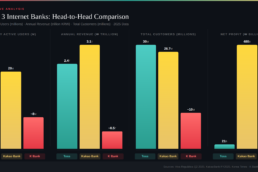
The numbers behind that bet are striking. In 2025, Karrot reported consolidated revenue of about 270.7 billion won. That marked a 43 percent jump from the previous year. Moreover, the company posted an operating profit of roughly 14.6 billion won and a net profit near 23 billion won. This extended a profitability streak that began with its first annual profit after eight years of operation. Notably, more than 21 million Koreans now use the app every month. In practice, that means a large share of the entire country opens it regularly. Over the course of 2025, the platform facilitated roughly 190 million transactions.
Crucially, the business does not actually make most of its money from the trades themselves. Instead, the enormous, habitual traffic powers a hyperlocal advertising engine. On it, neighborhood businesses pay to reach nearby residents. In 2025, the number of advertisers rose 37 percent year over year. This matters enormously for foreign investors. It reframes Karrot not as a thin-margin marketplace but as a local-media platform with marketplace mechanics underneath. For readers tracking how Korean apps monetize attention, the dynamic rhymes with patterns Seoulz explored in its analysis of the Korea convenience store empire, where physical density became a data and advertising asset.
The trust mechanism here is social rather than technical. Because buyers and sellers are neighbors who may meet again, behavior self-regulates. In addition, the platform layers on reputation scores and AI-assisted listing tools that auto-generate descriptions from a photo. It also runs an in-app payment system. The result is a marketplace where a stranger four minutes away feels safe enough to transact with before breakfast. In many ways, Karrot is the foundation layer of the Korea resale economy 2026, because it normalized the everyday habit of buying and selling used goods for tens of millions of people.
KREAM’s Authentication Empire
If Karrot solved trust through proximity, KREAM solved it through inspection. Launched in 2020 as a spin-off from a Naver subsidiary, KREAM began as a marketplace for limited-edition sneakers. That category is notorious for counterfeits. Its core innovation was physical authentication. Every item passes through a verification center before reaching the buyer. So the platform itself guarantees the product is genuine. For a market drowning in fakes, that guarantee was transformative.
The growth that followed was explosive. KREAM’s standalone revenue climbed from just 3.2 billion won in 2021 to 45.9 billion won in 2022. It then rose to 122.2 billion won in 2023. By 2025, the company reported combined revenue of about 397.5 billion won — a record high. Combined EBITDA also turned positive, at roughly 12.5 billion won. In short, a sneaker-trading app matured into a serious commerce platform in five years.
What happened next is the most strategically important part of the story. Sneakers once accounted for roughly half of all transactions on the platform. By 2025, however, they had fallen to about 37 percent of trading volume. Meanwhile, the non-sneaker categories expanded to roughly 63 percent of the total. These included technology gadgets, luxury goods, and lifestyle items. In particular, smartphones and other tech products became the second-largest category. Then, in January 2026, KREAM launched “KREAM Gold,” a brokerage service for trading physical gold and silver.
That move is the tell. A platform built to authenticate sneakers had effectively become an exchange for verifiable assets. Its real product, after all, was never footwear. Rather, its real product was trust in authenticity. And that capability transfers to anything where buyers fear getting cheated. Think watches, handbags, electronics, and now precious metals. International expansion follows the same logic. Through its Japanese subsidiary SODA, the company became the top premium trading-card platform in Japan. SODA posted 2025 revenue of about 190.4 billion won, up 57 percent year over year. Furthermore, online transaction value there grew 218 percent. The company now aims to weave together partner platforms across Japan, Thailand, and Indonesia into a single regional network.
The parallel to other Korean tech exports is hard to miss. Korean studios turned domestic IP into global franchises. Likewise, KREAM is turning a domestic verification capability into a regional asset-trading infrastructure. Seoulz examined a related dynamic of category expansion and platform layering in its look at the Korea live commerce platform war, where the underlying engine mattered more than the surface format.
The Bunjang and Soldout Wars
The third major player, Bunjang, carved out a different niche. Karrot focuses on neighborhood daily-life trades. Bunjang, by contrast, built a nationwide, interest-based marketplace. It optimized for fashion, streetwear, sneakers, and idol merchandise. Its user base skews heavily toward younger consumers. Fashion alone accounts for a large share of its transaction value.
Like its rivals, Bunjang competes on safety rather than scale. The company was an early adopter of escrow-based protected payments. Then, in August 2024, it made safe payment mandatory across all transactions. The effect was dramatic. By some reports, fraud on the platform dropped by roughly 80 to 95 percent within months. Monthly transaction counts subsequently hit record highs. In early 2025, the platform surpassed one million monthly traded items, with monthly transaction value above 90 billion won. For higher-value goods, the company also runs an authentication service for luxury items and streetwear.
Financially, Bunjang has been the slower story. Revenue grew to about 44.9 billion won in 2024, up roughly 32 percent. However, the company continued to post operating losses as it invested in safety infrastructure. The trajectory then turned in 2026. Specifically, the company reported its strongest-ever quarterly results and reached monthly break-even on an EBITDA basis. It also set a goal of achieving its first full-year profit. The domestic market is increasingly locked into a one-strong, two-mid structure. To escape it, Bunjang partnered with Japan’s largest secondhand platform, Mercari. That deal opened a cross-border channel that taps global demand for K-culture goods.
Taken together, these three companies show that the Korea secondhand economy is not a single market. Rather, it is a layered ecosystem. Karrot owns the neighborhood. KREAM owns authenticated high-value goods. Bunjang owns interest-driven nationwide trading. Each occupies a distinct trust niche. That segmentation is precisely what makes the overall market so resilient.
The Hidden Engine of the Korea Resale Economy 2026
Step back, and a pattern emerges that outsiders consistently miss. The defining feature of the Korea resale economy 2026 is not its size, its apps, or even its young user base. Rather, it is the systematic industrialization of trust. In most countries, secondhand trading remains a fragmented, caveat-emptor activity. In Korea, by contrast, trust has been productized. It has been turned into escrow systems, physical authentication centers, reputation scores, and AI tooling. Together, these make buying used feel nearly as safe as buying new.
This is why the category expansions feel so natural. Once a platform owns a reliable verification capability, extending it to new product types costs relatively little. A sneaker authenticator can authenticate watches. An escrow system built for fashion works just as well for electronics. Consequently, the durable value sits not in any single product category. Instead, it sits in the verification layer itself. For investors, that distinction is everything. It points toward where margins ultimately concentrate.
Vertical specialists are now multiplying on top of this foundation. For instance, curated secondhand-fashion platforms have built full-service models. They collect, inspect, photograph, list, ship, and settle on the seller’s behalf. Some operate warehouses that process tens of thousands of garments monthly. In effect, they are applying the trust-infrastructure playbook to a single high-volume category. The fragmentation resembles the early days of food-delivery technology. It is venue-specific, operationally intensive, and ripe for eventual consolidation.
What Foreign Investors Should Watch
For anyone evaluating the Korean recommerce opportunity, several practical signals deserve attention. First, watch the public-market path. Karrot has been valued in private markets at roughly 2.5 to 3 trillion won. Market observers widely expect an eventual IPO, with much speculation pointing toward 2026 as a plausible window. A successful listing would matter for global investors. Specifically, it would give them their first clean, liquid way to take a position in the Korean resale market. Until then, exposure runs mainly through Naver, KREAM’s parent ecosystem, and through private secondary shares.
Second, watch the monetization layer rather than transaction volume. As Karrot demonstrates, the profit does not come from the trades. It comes from advertising, payments, and adjacent services built on top of habitual traffic. Therefore, the right question for any platform is not “how many items sell.” Instead, it is “what high-margin service rides on the attention those trades generate.”
Third, watch the regional expansion. The most ambitious players are no longer content with Korea. KREAM is knitting together an Asian network. Bunjang is channeling K-culture demand through Mercari. And Karrot operates abroad under the same name in Canada, Japan, and the United States. For foreign operators, the lesson is clear. The Korean trust-infrastructure model may be exportable. That makes these companies potential templates, partners, or competitors well beyond the peninsula. Readers weighing market-entry strategy will find related context in Seoulz’s coverage of the Korea pop-up industry 2026, which similarly dissected where durable value sits in a fast-moving Korean consumer trend.
Of course, risks remain real. The earlier limited-edition resale boom cooled sharply. Several players — including ventures backed by major conglomerates — shut down their resale services when the hype faded. Margins in pure marketplace operations are thin. Fraud is an ever-present arms race. And category fads can reverse quickly. For a broader sense of how Korean consumer markets handle that kind of volatility, Seoulz’s analysis of Korea’s silver economy offers a useful comparison of demand durability across demographics.
There is also a macro tailwind worth naming. Across major economies, tariff uncertainty and sticky inflation have pushed prices on new goods higher. In response, many shoppers now consider secondhand first. Survey data cited in global resale research suggests a majority of consumers would buy more used items if tariffs raised the price of new clothing. That preference runs even stronger among younger buyers. For Korea, this is significant. The trust infrastructure was built during a domestic boom, but it is arriving precisely as global demand for affordable, verified secondhand goods accelerates. In short, the timing favors the platforms that already cracked the trust problem.
The Bigger Picture
Why does a market for used coffee tables and pre-owned sneakers matter to a global audience? Because it reveals something about where consumer commerce is heading. Persistent inflation, environmental awareness, and a generational comfort with buying used have all converged. Together, they have made resale a structural feature of modern retail rather than a recessionary footnote. The countries that win this transition will be the ones that solve trust at scale. And Korea has done exactly that.
In the West, resale still carries friction. Buyers worry about authenticity, payment risk, and quality. In Korea, those frictions have been engineered away. They disappeared one verification center and one escrow system at a time. External research makes the broader trend clear. Outlets like the Business of Fashion and global retail trackers such as Statista show that the secondhand sector is now one of the fastest-growing corners of consumer spending worldwide. Korea simply got there first. More importantly, it built the machinery to make it work.
So when Lee Jiyeon sells her coffee table before breakfast, she is not just decluttering an apartment. Rather, she is participating in a quietly revolutionary system. In it, a stranger can be trusted, a sneaker can be guaranteed genuine, and a used good can change hands as smoothly as a new one. That system is the real story of the Korea resale economy 2026 — more than any single app or any single number. And as the rest of the world races to catch up, Korea’s trust machine is already running.