

It is a Sunday afternoon in a Mapo-gu apartment, and Kim Soo-jin is cleaning out a drawer she has not opened in two years. Inside, beneath a tangle of charging cables and dead earbuds, sit three old smartphones. One is a Galaxy from 2021. Another is an iPhone with a hairline crack. The third she cannot even identify without charging it first. All three still switch on. None of them have been used since the day she upgraded. And all three, quietly, are worth money.
This small domestic scene repeats itself in millions of Korean homes. Together, those forgotten devices form the strange, lucrative core of the Korea e-waste economy 2026. For foreign readers who know Korea through its gleaming new phones and midnight delivery, the opposite story is far less visible. Behind the relentless upgrade cycle sits a mountain of idle hardware. These are the so-called “drawer phones,” and a fast-growing industry is now racing to coax their value back into the open.
This is a story about what happens when one of the most tech-saturated societies on earth starts running the upgrade machine in reverse. It is also, increasingly, a story with real money in it.
Why the Korea E-Waste Economy Starts in a Drawer
Start with the paradox at the center of the Korea used phone market. Koreans buy premium phones faster than almost anyone, yet they are increasingly slow to let the old ones go. According to Counterpoint Research, the average smartphone replacement cycle in Korea has stretched to roughly 31 months, up from 27 months in 2020. Meanwhile, the average device now costs around ₩870,000. As prices climbed toward the level of a premium home appliance, consumers started holding on to each handset longer. Instead of selling the retired ones, they simply stacked them in a drawer.
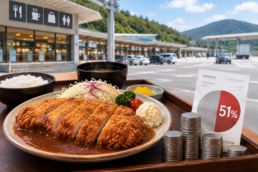
That hoarding habit has a name in the local press: jangrong-pon, or “wardrobe phones.” The scale is striking. Industry surveys suggest a large share of Korean households keep at least one unused device at home. Furthermore, the single biggest reason they give for not selling is not laziness. It is fear. In one widely cited survey, more than half of respondents pointed to a single concern. Specifically, 50.8 percent said worries about a personal-data leak kept their old phone locked away.
That fear is rational. A modern phone holds banking apps, private photos, messages, and biometric logins. As a result, the perceived risk of a botched factory reset outweighs the modest cash a two-year-old handset might fetch. For investors, this is the key insight of the Korea e-waste economy: the bottleneck is not supply, and it is not demand. Instead, the bottleneck is trust. Whoever solves the trust problem unlocks the drawer.
The Numbers Behind the Korea Used Phone Market
The supply trapped in those drawers is enormous, and the visible market is already large. The numbers come from the Korea Information Society Development Institute (KISDI), a government-affiliated research body. According to its data, individual used-phone transactions climbed from 6.2 million units in 2023 to 6.35 million in 2024. They then reached a record 6.81 million in 2025. You can explore KISDI’s broader research output on its official English site.
That is only the personal-resale slice, however. Once business buyers and refurbishers are included, the industry estimates total annual volume at roughly 10 million units. Furthermore, transaction value sits somewhere around ₩3 trillion. In other words, a market that barely registers in foreign coverage of Korean tech is already measured in the billions of dollars.
Several forces pushed the Korea refurbished smartphone market to this record. First, new flagship prices kept rising, nudging cost-conscious buyers toward used and certified-refurbished alternatives. Second, premium resale values held up, so Samsung and Apple mid-to-high-end handsets traded at meaningfully higher prices than before. Third, a major regulatory change rewired the entire mobile-buying culture almost overnight. We will get to that change shortly, because it is the hinge on which the modern story turns.
The Brand Split: A Tale of Two Residual Values
Not all drawer phones are created equal, and the gap is stark. According to secondhand price tracker UPM, the average used-trade price in December told the story. A Samsung Galaxy fetched about ₩188,000, while an Apple iPhone fetched roughly ₩705,000 — a difference of nearly 3.7 times. The same pattern shows up globally. Apple devices hold their value so well that the company commands an estimated 80 percent of the secondhand smartphone market by value. That figure is documented in a widely discussed Harvard Business School case study.
Why the gap? Apple’s advantage is structural rather than accidental. Its tightly managed operating system delivers years of updates, which keeps older models relevant and desirable. In addition, durable hardware and a powerful brand give iPhones high “residual value.” That is the term analysts use for how well a product holds its price over time. Consequently, an iPhone in a Korean drawer is often a meaningful asset, while an aging mid-range Android may be worth comparatively little.
Samsung has noticed. Therefore, the company has started treating used devices not as a disposal problem but as a strategy. It now operates an official “Galaxy Certified Re-Newed” program. Specifically, it puts handsets through more than a hundred quality checks and offers a two-year warranty on the result. In effect, this mirrors the high-residual-value ecosystem Apple spent a decade building. Korean consumer markets often behave in similar ways under price pressure. For broader context, Seoulz has mapped those dynamics in its coverage of the Korea Daiso empire and the country’s broader resale economy.
The Machine That Solved the Trust Problem
If trust is the lock, one peculiarly Korean machine has emerged as the master key. Walk into a large Samsung store, an electronics retailer, or a major supermarket, and you may notice a sleek, ATM-like kiosk standing near the entrance. This is a Mintit ATM, and it is the most visible face of the Korea e-waste economy in 2026.
The process feels almost surreal to a first-time foreign user. You open the deposit hatch and place your old phone inside. Then, using AI-based machine vision, the kiosk runs 31 separate tests on the device’s exterior and function, generating a real-time appraisal. If you accept the offer, the money is wired to your account within about three minutes. There is no haggling, no clerk, and no stranger meeting you at a subway exit. You can see how the company describes the flow on its English-language site.
Crucially, Mintit attacks the exact fear that keeps phones in drawers. The service uses a data-erasure process certified by ADISA, an international standard for secure data destruction. As a result, users do not have to trust their own factory reset. In June 2025, Mintit also became the first operator to pass a new “Safe Used Phone Transaction” certification. The program is jointly administered by Korea’s Ministry of Science and ICT and an affiliated promotion agency, according to its parent company, SK Networks. The machine is, in effect, a trust appliance.
Its footprint, moreover, is national. Roughly 6,600 Mintit ATMs now operate across the country. Moreover, the platform has cumulatively purchased around 4.5 million phones for about ₩87.6 billion as of late 2025. The hardware even won a Red Dot Design Award. For a country that pioneered the staffless storefront, the unmanned phone-buying kiosk fits right in. Indeed, Seoulz has traced that wider automation wave in its feature on Korea’s unmanned-store boom. There, the same untact instinct reshaped retail from ice-cream shops to laundromats.
 How a Repealed Law Lit the Fuse
None of this would matter as much without a quiet legal earthquake. For a decade, a regulation known as the Mobile Device Distribution Improvement Act — the “Dantong Act” — governed how Koreans bought phones. It capped subsidies and tied most purchases to carrier contracts. On July 22, 2024, the government repealed it.
The repeal mattered because it unshackled the jageupje, or unlocked-handset, market. With subsidy caps and contract lock-ins gone, more Koreans began buying phones outright, separate from a carrier plan. As a result, the entire mobile market loosened. When buyers are no longer chained to a two-year carrier contract, switching phones — and selling the old one — becomes far easier. In particular, a thriving unlocked market is the natural feeder system for a thriving used market.
This is where the threads converge. Higher prices pushed consumers toward used devices. The repeal made buying and reselling those devices frictionless. Meanwhile, AI kiosks dissolved the trust barrier. Together, these forces turned a pile of idle drawer phones into one of Korea’s more interesting circular-economy stories.
Why Manufacturers Suddenly Love Used Phones
There is a deeper commercial logic here, and it explains why Samsung and Apple are leaning in rather than fighting the trend. Both companies publicly frame trade-in and refurbishment around the environment, citing resource circulation and reduced electronic waste. That framing is genuine, but it is not the whole picture.
The blunter truth is that the new-phone market is saturating. Replacement cycles keep lengthening, premium prices keep suppressing volume, and meaningful year-over-year hardware leaps are getting harder to sell. Therefore, manufacturers have a strong incentive to monetize the second life of a device rather than cede it to grey-market resellers. A trade-in program lowers the effective price of a new flagship. At the same time, it captures the old device and keeps the customer inside the brand’s ecosystem. The refurbished handset can then be sold again, often to a price-sensitive buyer the company would never have reached at full retail.
Apple has run this playbook for over a decade, and the financial scale is remarkable. One Harvard Business School estimate is striking. It suggests Apple’s trade-in and services flywheel could generate tens of billions of dollars in annual revenue from the installed base of used-iPhone users. Its Daisy disassembly robot, meanwhile, can take apart up to 200 iPhones an hour. The machine recovers rare-earth metals, aluminum, and copper for reuse. In short, the end of a phone’s first life has become the beginning of a profitable second one. For investors, the lesson is that circularity is not only an environmental story. Rather, it is a margin and supply-chain story wearing a green jacket.
The Global Backdrop: A $97 Billion Opportunity
Korea’s drawer-phone problem is a local expression of a global boom. According to Mordor Intelligence, the worldwide used-and-refurbished smartphone market was worth roughly $65 billion in 2025. Moreover, it is projected to reach nearly $97 billion by 2031. You can review the firm’s methodology and figures in its public industry report. Notably, the Asia-Pacific region is forecast to grow fastest. The forces propelling it are exactly the ones visible in Korea: high new-device prices, expanding manufacturer trade-in programs, and tightening pressure to curb e-waste.
The environmental math is compelling. Industry estimates suggest that reusing a single smartphone instead of manufacturing a new one can avoid roughly 55 to 60 kilograms of carbon emissions. Multiply that across millions of drawer phones, and the climate stakes of Korea’s idle-device pile become clear. Every handset coaxed out of a drawer and back into circulation displaces a portion of new-device manufacturing somewhere down the chain.
For foreign investors weighing Korean consumer plays, the Korea trade-in economy offers a clean thesis. Several structural drivers all point the same direction. These include rising prices, longer replacement cycles, regulatory tailwinds, and a strong cultural comfort with app-based, automated transactions. Korea also serves as a useful preview market. The country tends to adopt automated, untact retail formats years before the West. As a result, its e-waste infrastructure is a live experiment in how circular electronics economies might scale elsewhere.
The Risks Hiding in the Drawer
The bull case is strong, but three risks deserve attention. First, valuation transparency cuts both ways. When manufacturers and their partners set large-scale trade-in prices, those quotes can start to function as a market benchmark. Critics worry about one scenario in particular. If official buyback prices are set low, they could drag down independent resale prices across the board, handing pricing power to a few large players.
Second, the “planned obsolescence” critique has not vanished. Some analysts argue that easy trade-ins could accelerate the upgrade treadmill, encouraging people to churn through devices faster and partly cancelling out the environmental gains. The counterargument is that reuse displaces new manufacturing regardless, but the tension is real and worth watching.
Third, accountability can get murky. In some official trade-in programs, the actual buyer is a third-party partner rather than the manufacturer itself. Consequently, it can blur who is responsible when a valuation or contract goes wrong. For consumers, the practical takeaway is to compare the kiosk quote, the manufacturer trade-in offer, and independent buyback shops before committing. The prices can differ substantially.
What the Drawer Phone Really Tells Us
Step back, and Kim Soo-jin’s three forgotten phones tell a bigger story than their resale value. They sit at the intersection of demographics, technology policy, consumer psychology, and a global push toward circular business models. The same structural forces — automation, untact culture, aging demographics, and relentless cost pressure — surface across modern Korea, from the solo-living economy to the country’s automated retail landscape.
Ultimately, the Korea e-waste economy poses a quiet test. It asks whether one of the world’s most advanced consumer societies can run its upgrade machine in both directions. Manufacturers want the second sale. Investors want the circular margins. Regulators want less electronic waste. And tens of millions of ordinary Koreans are sitting on a collective fortune they have been too nervous to cash in. The drawer, it turns out, was never just a drawer. It was a vault — and the country has finally started building the keys to open it.