

How Asung Daiso quietly turned a 100-yen-shop knockoff into a ₩10 trillion retail force — and what foreign investors should know before its inevitable IPO.
It was a Tuesday morning in mid-April 2026. South Korea’s largest dollar-store chain, Asung Daiso, quietly filed its 2025 annual results. The numbers told a story that Korea’s hypermarket operators had been dreading for two years. Revenue hit ₩4.5363 trillion — roughly $3.1 billion. Operating profit climbed 19.2 percent to ₩442.4 billion. As a result, the Korea Daiso empire 2026 has now overtaken Lotte Mart’s domestic grocery business in headline sales.
For most foreign analysts, the headline was a surprise. However, the more interesting line item sat one paragraph deeper. The company once dismissed as a Korean offshoot of Japan’s 100-yen shop chain has now grown larger than its Japanese investor — and bought that investor out entirely. This is the story of how a single retailer rewrote the rules of Korean offline commerce. Furthermore, it is the story of why three private equity firms in Seoul are quietly modeling its IPO.
📊 [INFOGRAPHIC 1: Korea Daiso revenue & operating profit growth, 2012-2025]
For context on similar Korean consumer industry deep dives, Seoulz has covered the Korea Convenience Store empire and Korea Quick Commerce 2026. The Daiso story sits at the intersection of both. Specifically, it shows what happens when offline retail discovers its own competitive advantage against e-commerce. Furthermore, the Korean Daiso has done it without raising a single round of venture capital.
From ASCO Plaza to ₩4.5T Empire: The Korean Daiso 27-Year Climb
The Korean Daiso did not begin as Daiso. Specifically, it began in 1992 when a former garment-industry executive named Park Jeong-bu founded a household goods company called Asung Industries. Five years later, in May 1997, he opened the first physical retail store in Cheonho-dong, eastern Seoul. The original name was ASCO Even Plaza.
The timing was unusually fortunate. In particular, the IMF currency crisis hit Korea in November 1997. As a result, Korean households slashed discretionary spending almost overnight. Meanwhile, ASCO’s flat-rate concept — a single price point for everyday household items — turned what had been a niche format into a daily necessity. Within four years, the chain had over 100 stores nationwide.
In 2001, the company entered into a joint venture with Japan’s Daiso Sangyo, the operator of the country’s largest 100-yen shop chain. Daiso Sangyo invested 400 million yen — about ₩3.8 billion at the time — for a 34.21 percent stake. As a result, ASCO Even Plaza rebranded as Asung Daiso. The Japanese partnership gave the Korean chain access to design templates, sourcing networks, and the Daiso brand name in Korea.
📊 [INFOGRAPHIC 2: Korean retail market cap comparison — Asungdaiso (est.) vs E-Mart vs Lotte Shopping vs Costco Korea]
Two decades later, the relationship had inverted completely. Revenue jumped from ₩637 billion in 2012 to ₩2.9 trillion in 2022. Furthermore, operating profit exploded from ₩1.1 billion to ₩239.3 billion over the same period. By 2024, Asung Daiso was selling more in Korea than most of Asia’s discount chains were selling across multiple countries. In other words, the Korean operation had outgrown its Japanese parent’s entire international footprint.
The Japanese Divorce: How the Korea Daiso Empire 2026 Became 100% Korean
In December 2023, the Korean parent of Asung Daiso — a holding company called AsungHMP — paid roughly ₩500 billion ($380 million) to acquire Daiso Sangyo’s entire 34.21 percent stake. As a result, the Korean Daiso became fully Korean-owned for the first time in 22 years.
Officially, the rationale was identity. “We will start anew with a strong identity as a Korean company,” the company said in its statement to The Korea Times. In particular, management cited a long-standing misperception that Asung Daiso was a Japanese chain. That misperception had cost the business during multiple Korea-Japan boycotts. Most notably, during the 2019 trade-restriction crisis, Japan curbed exports of three critical semiconductor materials to Seoul.
However, the strategic logic ran deeper. Specifically, Daiso Sangyo had not been engaged in the Korean operation’s management for years. Meanwhile, the Japanese partner had recently begun demanding both governance participation and expanded dividend payments. As a result, the buyback removed both governance friction and a structural cap on future capital allocation. For investors tracking the Korea Daiso empire 2026, the divorce also matters for one reason. It cleared the path for an eventual public listing.
The ownership structure today is straightforward. AsungHMP, chaired by founder Park Jeong-bu with 50.02 percent, holds 84.23 percent of Asung Daiso. Furthermore, Park’s two daughters together control the remaining 15.77 percent. In other words, Daiso Korea is now a wholly Korean family-controlled retail empire — without a single outside shareholder larger than the founder himself.
One additional detail matters for foreign readers. Specifically, the Daiso stores recently opening across the United States — including the new Miami location at Flagler Park Plaza in March 2026 — belong to Daiso Sangyo, the Japanese parent. They are not part of the Korean chain. In other words, “Daiso USA” and “Korea Daiso” are now two separate companies competing under a shared brand name. Consequently, the Korean operation’s international expansion strategy remains entirely undefined.
Six-Price Tiers and B-Grade Real Estate: Inside the Korean Daiso Operating Model
To understand the Korea Daiso empire 2026 numbers, you have to understand the operating model. Specifically, two design choices explain most of the margin advantage.
The first is the six-tier pricing structure. According to Korea Herald reporting, every product in a Daiso store carries one of six fixed prices: ₩500, ₩1,000, ₩1,500, ₩2,000, ₩3,000, or ₩5,000. Furthermore, over 80 percent of the roughly 30,000 SKUs are priced below ₩2,000. As a result, customers face zero pricing friction at the shelf. Meanwhile, the cashier process moves exceptionally fast.
This pricing discipline forces upstream cost engineering. In particular, vendors who supply Daiso know exactly what their bill of materials must come in at. As a result, the chain rejects items that cannot hit margin at the relevant price band. Furthermore, suppliers compete aggressively to enter the Daiso ecosystem because volume scales dramatically once a product is accepted.
The second design choice is real estate. Specifically, Daiso avoids prime ground-floor locations in high-rent retail strips. Instead, it targets so-called B-grade locations — side streets, basement floors, and second- or third-floor spaces above other tenants. For comparison, Starbucks Korea allocates roughly 8.2 percent of revenue to rent. Daiso operates at a meaningfully lower ratio. Consequently, the chain captured ₩4.5 trillion in 2025 sales while operating with fundamentally different real estate economics from Korea’s hypermarkets.
The result is a 9.4 percent operating margin — substantially higher than Shinsegae and Costco Korea, and roughly five times the average Korean hypermarket margin in 2024. For context, even Olive Young, the K-beauty channel widely admired by foreign investors, runs at a comparable but not dramatically higher margin band.
The 30,000-SKU Engine: Hanwell, Yiwu, and the China Sourcing Backbone
The second pillar of the Korea Daiso empire 2026 is supply chain. Specifically, Daiso’s parent group AsungHMP operates an in-house sourcing subsidiary called Hanwell. According to AsungHMP’s own corporate disclosure, Hanwell opened its first Chinese office in Shanghai in 1997. Furthermore, the network later expanded to Shenzhen in Guangdong Province and Yiwu in Zhejiang Province.
Yiwu is critical. In particular, the city is the world’s largest wholesale market for small commodity goods. Meanwhile, Hanwell’s local presence allows direct relationships with manufacturers rather than dependence on trading intermediaries. As a result, Asung Daiso sources roughly half its catalog through Hanwell-coordinated Chinese manufacturers. The remainder comes from Korean small and mid-sized vendors who supply private-brand goods on long-term contracts.
The supply chain advantage compounds at scale. For example, Daiso typically orders in volumes that allow individual product runs of hundreds of thousands of units. Furthermore, the chain pays vendors in cash on relatively short cycles, which is unusual in Korean retail. In addition, Hanwell’s Chinese presence allows rapid iteration on seasonal products such as Christmas merchandise, summer cooling goods, and character collaborations.
In other words, the Daiso supply chain is functionally a Chinese-manufactured private-label engine wrapped in Korean retail distribution. Furthermore, this structure is the reason competitors like Miniso never gained meaningful traction in Korea. They simply could not match Hanwell’s combination of local volume, vendor relationships, and price discipline.
The Korea Daiso Beauty Pivot: Why Olive Young Should Be Worried
The most underestimated chapter of the Korean Daiso story is what has happened in beauty since 2023.
For years, Korea’s beauty hierarchy seemed fixed. Specifically, CJ Olive Young sat at the center. According to Seoul Economic Daily reporting, Olive Young recorded ₩5.83 trillion in 2024 sales — a 21.8 percent jump from the prior year. Meanwhile, 28 percent of its offline revenue came from foreign tourists. In addition, the company operates over 1,370 stores. For most observers, the question was not whether Olive Young dominated K-beauty distribution but how dominant it had become.
📊 [INFOGRAPHIC 3: Daiso six-tier pricing structure & SKU distribution by price band]
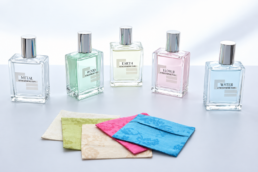
However, the Korea Daiso empire 2026 is now a credible distribution channel for cosmetics. Specifically, Daiso’s beauty category grew 85 percent year-over-year in 2023, with more than 250 products from 26 cosmetic brands on its shelves. Furthermore, the brands that have entered include not just budget labels but established names — Tonymoly, Nature Republic, VT Cosmetics, and CNP. Most strikingly, in January 2026, Korea Herald reported that Daiso launched “Zoom by Jung Saem Mool.” This is a Daiso-exclusive collaboration with one of Korea’s most respected artist-led beauty brands.
The strategic significance is sharp. In particular, Amorepacific and LG Household & Health Care — the two giants of Korean cosmetics — have both developed Daiso-exclusive product lines. As a result, the channel that began as a kitchenware seller now holds shelf-space relationships with serious premium brands. Just two years ago, those brands were considered structurally incompatible with discount retail.
For Olive Young, the threat is not immediate revenue cannibalization. Instead, it is gradual erosion of the entry-tier customer who once relied on Olive Young as the only credible affordable channel. Meanwhile, Olive Young’s premium positioning increasingly leaves the ₩1,000-3,000 cosmetic segment to Daiso. Consequently, the foreign-tourist trio sometimes called “Oldamu” — Olive Young, Daiso, and Musinsa — now reflects a real strategic split rather than a marketing slogan.
The Fashion Bet: $3.50 Windbreakers and 700 SKUs in 24 Months
The newest front in the Daiso expansion is fashion. Specifically, the chain has scaled apparel SKUs from roughly 270 at the end of 2023 to approximately 700 by the end of 2025. In other words, the catalog more than doubled in 24 months.
The pricing is the headline. For example, Daiso launched windbreakers priced at ₩5,000 — roughly $3.50 — in early 2026. Meanwhile, basic T-shirts and seasonal accessories sit at the ₩3,000 tier. As a result, the chain now competes directly against SPA fast-fashion entrants such as Uniqlo and SPAO on the lower price tiers.
However, fashion is structurally different from household goods. In particular, sizing complexity, returns, and seasonality all compress margins. Furthermore, fashion buying requires merchandising expertise that the Daiso operating system was not originally designed for. As a result, the apparel category is the test that will determine whether Daiso can extend its operating discipline beyond commoditized SKUs.
Early signals suggest the experiment is working. Specifically, Asung Daiso publicly attributed part of the 2025 revenue growth to expanded offerings in cosmetics, fashion, and health supplements. Meanwhile, seasonal lines — including summer cooling goods and Christmas collections — generated strong velocity. For investors tracking the Korean Daiso thesis, the fashion expansion matters for one reason. It is the clearest signal that the chain is no longer a single-category discounter.
The Logistics Mega-Bet: ₩400B Sejong Hub Powers the Next Phase
The cash flow data tells you what management actually believes about the future. According to recent regulatory filings, Asung Daiso generated ₩300.2 billion in operating cash flow in 2025. Furthermore, it deployed ₩303.7 billion on tangible asset acquisition. In other words, the company plowed nearly all of its operating cash directly into capital expenditure.
Most of that capex flowed into a single project — a mega-scale logistics center in Sejong City, with a total budget of roughly ₩400 billion ($273 million). Specifically, the facility is scheduled to come online in 2027. Furthermore, the company has announced a second hub in Yangju, Gyeonggi Province, planned for 2028. The two new facilities will join three existing distribution centers and dramatically expand the company’s e-commerce throughput.
The logistics investment matters for two reasons. First, Daiso has historically been an offline-led business. Meanwhile, its app-based same-day delivery service was launched relatively recently and remains under-developed compared to Coupang or Naver. As a result, the new hubs are the structural enabler for closing that gap. For more on Korea’s broader logistics race, see Seoulz’s coverage of Korea Quick Commerce 2026.
Second, the capex commitment is a clear signal of management’s growth posture. In particular, paying out ₩100 billion in dividends while reinvesting nearly all operating cash suggests the company is preparing for a step-change in scale. Furthermore, that profile is consistent with pre-IPO capital allocation rather than mature dividend-yield management. As a result, foreign investors should read the Sejong hub as a deliberate runway extension.
The IPO Question: Don Quijote at $7.9B Valuation
For foreign investors, the most concrete question is whether Asung Daiso eventually goes public. As of mid-2026, the company remains private. However, the analyst community has begun modeling its valuation in earnest.
According to KED Global reporting in August 2025, sell-side analysts estimate Asung Daiso’s corporate value at ₩10-11 trillion ($7.2-7.9 billion). The benchmark is Japan’s Pan Pacific International Holdings, the parent of the Don Quijote discount chain. Specifically, analysts apply Pan Pacific’s price-to-earnings ratio of 28.9 to Asung Daiso’s projected net profit. As a result, the implied enterprise value sits roughly five times the market capitalization of E-Mart Inc. Furthermore, it lands at 5.5 times Lotte Shopping’s market cap.
📊 [INFOGRAPHIC 4: Daiso store network growth & logistics expansion map, 2021-2028]
The Don Quijote comparison is intuitive. In particular, both chains operate in dense urban markets with a value-for-money positioning. Furthermore, both have built private-label engines that compress vendor margins. However, Daiso runs at higher operating margins on a per-store basis. As a result, the case for a premium multiple — rather than parity — is defensible.
Two structural questions remain. First, the Korean Daiso has not yet entered overseas markets. By contrast, the Daiso stores that recently opened in Miami and across the United States belong to Daiso Sangyo, the Japanese parent that was bought out in 2023. In other words, Asung Daiso’s international expansion is still ahead. Second, Korea’s IPO market remains volatile, with several high-profile listings underperforming in 2024-2025. Consequently, the listing timing decision is non-trivial — and the founder’s family-control structure gives management room to wait.
Foreign Investor Playbook: Three Ways to Play the Daiso Thesis
For foreign capital, direct exposure to the Korea Daiso empire 2026 is limited until an IPO. However, three indirect routes exist.
The first is the supply chain. Specifically, Korean small and mid-sized vendors that supply Daiso have benefited disproportionately from the chain’s growth. Furthermore, several have begun expanding into adjacent channels with the volume and operational discipline they built through the Daiso relationship. As a result, mid-cap consumer-goods names on the KOSDAQ are increasingly correlated with Daiso volume growth.
The second is competitive positioning. In particular, the Daiso channel has created opportunities for specific brand categories that previously could not access mass distribution. For example, dermo-cosmetic and pharmaceutical-backed beauty brands such as CNP and Dongkook Pharmaceutical have used Daiso as a distribution layer. Furthermore, foreign brands seeking entry into Korea may find Daiso a more efficient channel than traditional department-store partnerships. The implication is straightforward — Daiso is now part of the standard Korean retail entry playbook for value-tier brands.
The third route is the broader retail thesis. Specifically, Daiso’s outperformance is part of a wider story about Korean consumer behavior. For broader context, see Seoulz’s coverage of Korea Feelconomy 2026 and the Korea Recommerce Market 2026. Both stories share a common thread with Daiso. In particular, Korean consumers under economic pressure are shifting spend toward channels that offer high perceived value at low price points. Furthermore, this pattern has held up through the country’s 2024-2025 consumer downturn.
Risks: Don Quijote Entry, Premium Drift, and PB Margin Compression
The bull case is strong. However, three structural risks deserve explicit attention.
The first risk is foreign competition. In particular, Don Quijote’s parent — Pan Pacific International Holdings — opened a pop-up at The Hyundai Seoul in July 2025. Furthermore, the company has signaled interest in formal Korean entry. Meanwhile, Action, the Dutch discount chain that has scaled aggressively across Europe, is also reportedly studying the Korean market. As a result, the discount-retail competitive landscape in Korea may not remain a single-player story for much longer.
The second risk is premium drift. Specifically, every successful discount chain eventually faces pressure to upgrade product quality and adjust pricing upward. For example, Costco moved from a pure discount model toward curated premium goods. Furthermore, Don Quijote has expanded its private brand “Jonetz” into upper-tier products. As a result, the discipline that has driven Daiso’s ₩2,000 average ticket may erode as the chain courts older and higher-income shoppers. In other words, the next price tier — ₩7,000 or ₩10,000 — would be a meaningful strategic Rubicon.
The third risk is private-brand margin compression. In particular, as more premium beauty and apparel brands enter Daiso, the chain’s bargaining position with traditional suppliers may shift. Meanwhile, the company faces growing scrutiny from Korean small and mid-sized vendors who depend on Daiso volumes. As a result, regulatory action on vendor terms — similar to the Fair Trade Commission’s history with hypermarkets — is plausible over the next 18-24 months.
Conclusion: Why the Korea Daiso Empire 2026 Is the Quiet Winner of Korea’s Retail Decade
In 2026, the Korean retail landscape is bifurcating. At the top, luxury continues to grow at the high end. For deeper context on that end of the market, see Seoulz’s coverage of the Korea Luxury Market 2026. At the bottom, the Korea Daiso empire 2026 has emerged as the dominant force in the value tier.
The middle, increasingly, is hollow. As a result, the chains that occupied the middle — Lotte Mart, E-Mart, Homeplus — are restructuring or shrinking. Meanwhile, Daiso continues to add stores, expand categories, and build logistics capacity. In other words, the chain that nobody outside Korea took seriously a decade ago is now the most operationally disciplined retailer in the country.
For foreign investors, the immediate takeaway is that direct exposure remains limited but the IPO window is widening. Furthermore, the indirect exposure routes — supply chain, channel partnership, and broader retail thesis — are all open in 2026. In short, the Korean Daiso is no longer a curiosity. Instead, it is the test case for what a disciplined, family-controlled, fully Korean retail empire looks like at $3 billion in revenue and counting.
Whether Asung Daiso eventually lists publicly in Seoul, lists in New York, or remains private indefinitely, one fact is now settled. Specifically, the company is no longer a Japanese 100-yen-shop copy. Instead, it is the original. And in 2026, the original is winning.