KASA deputy chief outlines LEO constellation options, NEONSAT expansion
Kwon Hyun-joon presented three satellite-communications scenarios and plans for in-orbit data-center demonstrations by 2030.
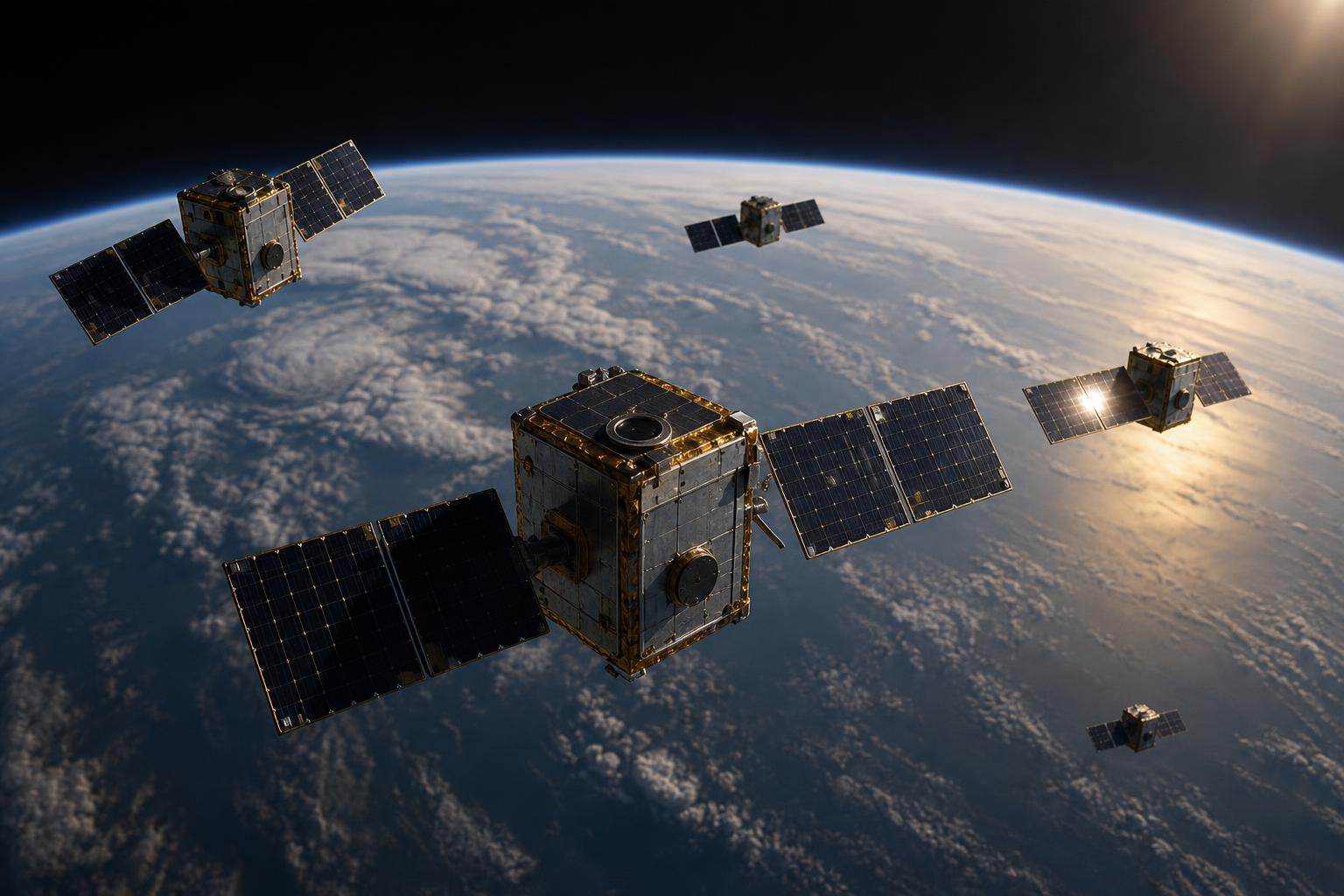
Korea AeroSpace Administration (KASA) Deputy Administrator Kwon Hyun-joon said South Korea is shifting from operating single large satellites to constellation-based models, speaking Oct. 28 at the second K-Space Forum in Seoul.
Kwon's presentation, titled "LEO economy era, Korea's space policy direction," outlined plans for low-Earth-orbit satellite communications and microsatellite expansion, according to UnicornFactory.
The recent fifth Nuri launch carried five NEONSAT microsatellites, and five more planned for the sixth Nuri launch next year would complete South Korea's first 10-satellite constellation system, Kwon said.
South Korea plans to launch 44 microsatellites by 2030, he added.
Kwon presented three non-final low-Earth-orbit satellite-communications options: 128 satellites at 1,280 km costing $3.01 billion (4 trillion won), 256 satellites at 888 km costing $5.59 billion (7.42 trillion won), and 512 satellites at 1,280 km costing $10.7 billion (14.26 trillion won).
The government plans to demonstrate thermal-control and power-control technologies for a space data center by 2030, Kwon said.
The second K-Space Forum was hosted by MoneyToday's startup media platform UnicornFactory under the theme "Low-Earth-Orbit Industrial Revolution: Transformation of the Space Ecosystem," with more than 200 people attending.