KASA Hosts Workshop to Expand Role in NASA Moon Base Construction
The Korea AeroSpace Administration gathered 50 experts from 18 domestic institutions to explore strategic contributions to NASA's Moon Base project.
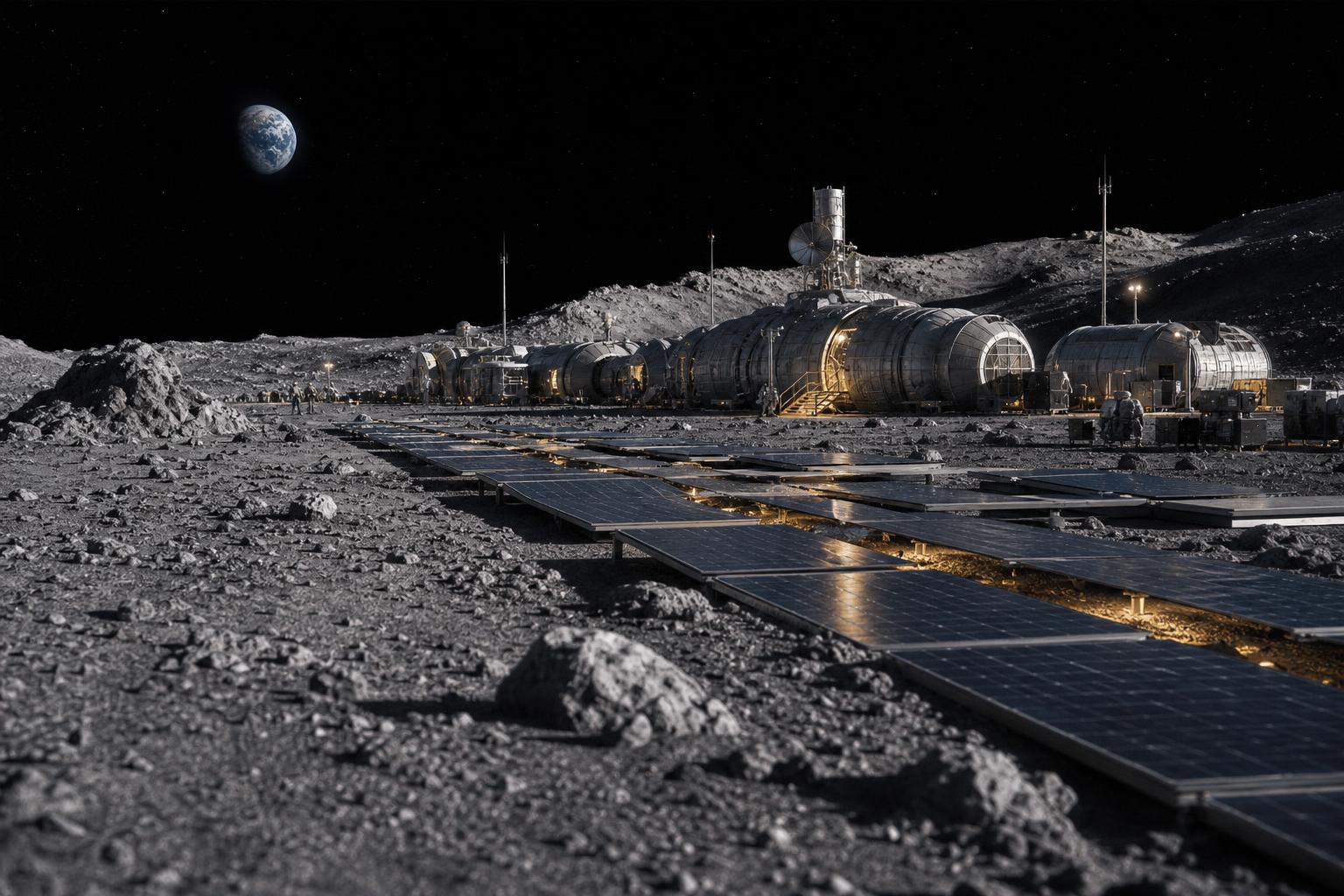
The Korea AeroSpace Administration (KASA) held an international cooperation workshop on Nov. 13 at the Korea Astronomy and Space Science Institute's Jang Yeong-sil Hall to explore strategic contribution measures for NASA's Moon Base construction.
The workshop brought together about 50 experts from 18 domestic research institutes, universities, and companies, according to KASA.
The event was organized to broadly identify domestic and international research and technology capabilities and complementary cooperation needs amid the rapidly changing global space exploration environment, and to concretize future national-level independent space exploration and Korea-U.S. cooperation agendas.
During the workshop, participants shared outstanding technologies and research achievements held by domestic industry, academia, and research institutes, and intensively discussed practical cooperation measures to enhance national space exploration competitiveness.
In particular, capabilities across various technology fields—including astronomy and space science, landing and transportation, communications and navigation, power, construction and infrastructure, materials, robotics and mobility, life sciences, and space environment—were assessed in depth.
Based on these discussions, participants explored complementary linkages to overcome limitations of individual institutions and confirmed new cooperation possibilities from multiple angles.
KASA plans to solidify an organic cooperation system among domestic industry, academia, and research institutes while concretizing independent lunar exploration and international cooperation strategies.
KASA Administrator Oh Tae-seok said, "This workshop is a meaningful occasion to gather the excellent research and technology capabilities of domestic industry, academia, and research institutes and seek complementary cooperation measures."
He added, "Based on the core technology capabilities accumulated so far, we will expand the domestic cooperation network overseas and further solidify future space exploration capabilities."