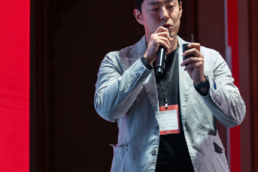


On a cool October morning in Gyeongju, Donald Trump stood inside a museum hall while President Lee Jae Myung draped a sash across his shoulder. At the end of that sash hung the Grand Order of Mugunghwa, the highest honor the Republic of Korea can bestow on anyone. Cameras clicked. Officials smiled. However, almost nobody in that room mentioned the strangest fact about the award: the Korea national flower it is named after has never once been made official by a single line of Korean law.
That gap between reverence and paperwork runs through the whole story. Because the mugunghwa is everywhere in this country. It sits on the shoulder of every police officer and on the badge of every lawmaker. Furthermore, it appears on the seal of the Supreme Court, on satellites in geostationary orbit, and on the side of the cheapest long-distance train in the nation. Meanwhile, the legal basis for calling it the national flower simply does not exist.
For a foreigner arriving in Seoul, this is one of the more useful things to understand about Korea. The country runs on symbols that were never legislated, only agreed upon. Once you learn to spot the five-petaled bloom, you start reading the machinery of the state in a completely different way.
The Korea National Flower That No Law Ever Named
Start with the paperwork, because the paperwork is where the surprise lives.
South Korea’s flag is protected by an actual statute. The National Flag Act spells out its proportions, its colors, its handling and its display. In addition, the national anthem has a designated status through government regulation. Yet when you look for the equivalent document for the flower, you find nothing at all.
There is no National Flower Act. The Seoul Economic Daily put it bluntly. The flag is governed by law, the paper noted, yet “there is no legal basis for the mugunghwa being the national flower.” Instead, the flower’s status rests on custom and habit. Roughly 130 years of everybody simply agreeing has been enough.
Lawmakers have noticed. Since 2012, several bills have tried to close the gap. Representatives Park Wan-ju and Lee Myoung-soo introduced a National Flower Act that expired when the parliamentary term ended. Then Lee No-keun tried again in 2015, and that bill died too. Afterward, in 2016, Park and Lee refiled while Hong Moon-pyo introduced a parallel bill under a slightly different name. Each attempt stalled in committee. Consequently, the 22nd National Assembly inherited the same unfinished business.
Meanwhile, the government behaves as though the matter were settled. The Ministry of the Interior and Safety lists the mugunghwa on its official English-language page of national symbols, right alongside the flag and the anthem. Furthermore, the ministry notes that the flower already appears on “flags of government and national organizations, decorations, and badges.” So the state uses the symbol constantly. Meanwhile it never quite legislates it.
The Mugunghwa That Japan Burned
To understand why Koreans do not particularly care about the missing law, you have to go back to the colonial period.
The mugunghwa entered modern Korean consciousness during the late Joseon reform era. Around the 1890s, as the country scrambled to define itself against Chinese and Japanese pressure, intellectuals reached for a botanical emblem. The chorus of the national anthem still carries the result. Mugunghwa samcheolli hwaryeo gangsan, it runs — “mugunghwa, three thousand li of splendid rivers and mountains.” Every Korean learns that line as a child. Therefore the flower arrived attached to the anthem rather than to any statute.
Japan understood exactly what the flower meant. During the colonial occupation, the mugunghwa became contraband in everything but name. Schools were discouraged from planting it. Officials even spread a rumor that touching the blooms caused eye infections. The Rose of Sharon, in other words, was smeared rather than banned outright. Meanwhile, cherry trees went into the ground across the peninsula.
One man pushed back hard enough to get arrested for it. Namgung Eok, a journalist and educator, retired to the village of Mogok-ri in Hongcheon County in 1918 and built a school there. Behind the school he built something more subversive: a nursery. From that nursery he shipped mugunghwa seedlings to schools and churches across the country, effectively running a distribution network for a banned national symbol.
Japanese police shut it down in December 1933. They arrested Namgung, held him in Seodaemun Prison for eight months, forced his school into the public system, and burned roughly 80,000 seedlings. He died in 1939, before liberation.
That is the emotional collateral behind the Korean national symbol. A statute would feel almost redundant next to a bonfire of 80,000 saplings.
Where the Korea National Flower Hides in Plain Sight
Here is where the story becomes genuinely useful for visitors. Once you know the shape of the bloom, you will start seeing it several times a day.
On every police shoulder: a career measured in mugunghwa
Korean police rank insignia is built entirely from the flower. Junior officers wear a mugunghwa bud, wrapped in two leaves and sitting above a taegeuk symbol. That covers the three ranks from Senior Police Officer up to Assistant Inspector. Then, at Inspector level and above, the bud opens into a full bloom with a taegeuk at its center. Finally, the four senior command ranks wear that same open bloom ringed by five more.
In other words, a Korean officer’s entire career is measured in flowers. The bud becomes a blossom, and the blossom acquires a garden.
On every lawmaker’s chest: the gold mugunghwa badge
Members of the National Assembly wear a small gold badge on the left lapel. The badge is a mugunghwa, and inside it sits the word for “National Assembly.” Notably, that inner text was written in Chinese characters for decades. In 2014, after a long campaign, it finally switched to hangul.
On courts, seals and passports: the Rose of Sharon as state typeface
The Supreme Court logo uses the flower. So does the presidential emblem, where a pair of phoenixes flank a central mugunghwa. Additionally, agencies from the prosecution service to the national intelligence service have worked the Rose of Sharon into their crests. Even the diplomatic passport carries it.
Consequently, the Korea national flower functions less like a botanical mascot and more like a typeface for state authority. If something is official, the flower is usually somewhere on it.
The Korea National Flower in Orbit
Now for the part that surprises even long-term residents. Korea has been launching the mugunghwa into space since 1995.
The country’s commercial communications satellites are named Mugunghwa. Koreasat is simply the English branding; domestically the fleet has always been the mugunghwa series. Moreover, the program’s origin story is a small national trauma.
Mugunghwa 1 lifted off from Cape Canaveral on 5 August 1995. Unfortunately, a booster malfunction left the satellite short of its intended orbit. Consequently, the spacecraft had to burn its own fuel climbing the rest of the way. As a result, a planned ten-year mission collapsed to roughly four years and four months. For a country staging its debut in commercial space, the failure stung.
The program recovered. Three decades later, on 11 November 2024, Thales Alenia Space confirmed that Mugunghwa 6A had reached geostationary orbit at 116° East aboard a SpaceX Falcon 9. Operated by KT SAT, the satellite carries a fifteen-year design life. In addition, it hosts a Satellite-Based Augmentation System payload for the Korea Augmentation Satellite System. That payload sharpens GPS accuracy for aviation, shipping and logistics across the region.
So the flower that colonial police once burned now corrects satellite navigation errors above the Pacific. That arc says a great deal about how quickly this country moved. Our profiles of Korea’s deep tech startups and three hidden AI giants cover the ground-level version of that story.
The Korea National Flower on Rails
The mugunghwa also gave its name to a train, and that train encodes an entire chapter of Korean political history.
For most of the twentieth century, Korean rail classes were named after national projects, arranged in a strict hierarchy. At the bottom ran the Bidulgi-ho, the “dove.” Above it came the Tongil-ho, the “unification.” Then came the Mugunghwa-ho, the national flower. At the top sat the Saemaeul-ho, named for the New Village Movement, the rural modernization campaign of the 1970s.
Read that ladder from bottom to top and you get a compressed ideology of the developmental state: peace, then reunification, then national identity, then economic modernization. Passengers were literally buying tickets into a ranked list of state aspirations.
The Mugunghwa-ho began in 1980 under the name Udeung, meaning “superior class,” before adopting the flower. Today it occupies an odd position. Since every cheaper class has been retired, the mugunghwa train is now the budget option by default. Nothing sits beneath it anymore. Journeys take roughly twice as long as the KTX. Nevertheless, the fares stay low and the seats recline generously. On many rural lines, moreover, it remains the only passenger service running at all.
That era is ending. Korail has been rolling out the ITX-Maum to replace the aging fleet, and the operator placed a further order for 146 cars to accelerate the swap. Notably, the replacement is named “Maum,” meaning “heart” or “mind.” That is a marketing word rather than a state project. The ideological train names are giving way to emotional ones, which is arguably the most 2026 thing imaginable. We traced the same shift across Korean consumer culture in our look at the emotion-first Feelconomy.
If you want to ride a Mugunghwa-ho, do it soon. The Gyeongbuk Line and several other provincial routes still run them daily.
How Squid Game Made the Mugunghwa a Global Phrase
Millions of people worldwide can recite a sentence about the Korea national flower without knowing what it means.
In Squid Game, the first contest is a childhood game the show translates as Red Light, Green Light. The Korean name is mugunghwa kkochi pieotseumnida — “the mugunghwa flower has bloomed.” Young-hee, the enormous animatronic doll, chants the line while players sprint toward her. Then she turns, and everyone still moving is eliminated.
The phrase itself is ordinary. Korean children have chanted it for generations, and the line functions purely as a timer; you must freeze before the sentence ends. However, the show’s framing gave it a second life. The sentence describes a national symbol blooming. Meanwhile the players die under it. As a result, the scene reads as a grim joke about national development.
That reading may be more coincidence than intention. Still, the result is remarkable: the single most globally recognized reference to Korea’s national flower arrived through a Netflix drama rather than through any government campaign. Seoul spent decades promoting the mugunghwa with festivals and roadside plantings. Meanwhile, one streaming series did more for global recognition in a month. Our breakdown of Korean Netflix originals in 2026 covers how that content machine now operates.
Why the Korea National Flower Bill Keeps Dying
So why can’t the National Assembly simply pass the law?
Part of the answer is priority. A bill that changes nothing in practice rarely survives a crowded legislative calendar. Since the flower already appears on every government crest, legislators struggle to argue urgency.
Another part is genuine disagreement. A persistent minority argues that Hibiscus syriacus is not native to the peninsula at all. They point to the plant’s natural range across China and South Asia. Critics also question the old references to Korea as “Geunhwahyang,” the land of the mugunghwa. Those citations come mostly from Chinese sources rather than Korean ones. Consequently, some scholars have floated alternatives. The Korean rose bay and the mountain azalea appear most often on those lists.
Then there is the practical complaint, which you will hear from any Korean gardener. The mugunghwa attracts aphids. It needs regular pruning. Municipalities that planted it along highways in the 1980s often quietly replaced it with hardier species. As a result, a flower that Koreans revere in the abstract can be surprisingly rare on an actual city block.
Defenders answer that the resilience is the point. As Korea.net puts it, the plant grows quickly, tolerates damage and asks for very little — qualities that map neatly onto the national self-image. Furthermore, each individual bloom lasts a single day. Even so, a mature shrub flowers continuously from July through September. The name itself, 無窮花, means roughly “the flower without end.”
The Grand Order of Mugunghwa: Gold, Rubies and Irony
Which brings us back to Gyeongju.
The Grand Order of Mugunghwa is the top rank in Korea’s honors system. It goes to the president, to presidential spouses, and to heads of allied states. Since 2008, Korean presidents have generally received it on the way out rather than on the way in. The insignia combines gold, silver, ruby and amethyst. As of 2013, the state mint priced a single set at roughly 20 million won.
Trump received his on 29 October 2025 at the Gyeongju National Museum during the APEC summit, presented by President Lee Jae Myung. Alongside the medal came a replica Silla crown, modeled on the Cheonmachong artifact and crafted by heritage specialist Kim Jin-bae. As The Korea Times reported, the crown promptly became a meme back home. “No Kings” protests had filled American streets only weeks earlier. Indonesian President Prabowo Subianto received the same order during a separate visit.
There is a quiet irony in all this. Korea’s highest state honor is worth tens of thousands of dollars in materials alone. Yet it is named after a flower that no Korean law has ever designated. The country hands out gold medals in the name of a symbol that exists purely by consensus.
A Field Guide to Spotting the Korea National Flower
Practically speaking, here is how to find it during a normal week in Seoul.
Look at police uniforms. Officers stand outside embassies, government complexes and major intersections. Check the shoulder boards, and count the flowers.
Look at official buildings. The Supreme Court in Seocho-gu, the National Assembly on Yeouido, and most district offices display the crest somewhere near the entrance.
Look at Seoul Station departure boards. Mugunghwa-ho services still appear in the listings, printed among the KTX and ITX trains.
Look at coins and documents. Older Korean banknotes and various official forms carry the bloom as a watermark or border element.
Visit in August. The flower peaks in mid-summer, and the Korea Forest Service runs mugunghwa festivals nationwide during that window. Blossoms open early in the morning and close by evening, so plan accordingly.
For anyone spending longer here — founders, students, transplants — reading the symbol vocabulary pays off quickly. Government paperwork, agency branding and official ceremony all draw from the same visual grammar. Our foreign founder’s survival guide covers the bureaucratic side of that learning curve in more detail.
The Korea National Flower Never Needed Permission
Korea is a country that legislates carefully. It has statutes for the flag, regulations for the anthem, and detailed rules for the state seal. Yet its flower operates on nothing but a century of shared agreement, and it operates extremely well.
Perhaps that is the real lesson. The mugunghwa survived a colonial burn pile, an anthem, a failed satellite, a dying train class and a Netflix death game. Along the way it never once required a law to make it real. Meanwhile, six separate bills to formalize it have quietly expired in committee.
Somewhere in Hongcheon, on the site of Namgung Eok’s old school, the seedlings keep coming back. So does the argument. And every August, without waiting for anyone’s approval, the Korea national flower blooms again.