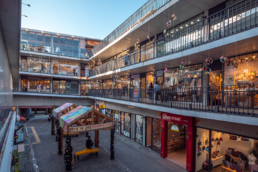


It is just past 8 p.m. on a Friday in Sinchon, and Yonsei-ro should be loud. A decade ago, this 500-meter stretch ran from Sinchon Station to the gates of Yonsei University. It was one of the busiest nightlife corridors in Seoul. Students packed the soju tents, the noraebang neon buzzed overhead, and vendors could barely keep up. Today, however, the picture is different. “For Rent” banners hang in ground-floor windows that once held the country’s most coveted leases. The Sinchon Seoul decline is no longer a rumor whispered by shopkeepers. Instead, it is a measurable, structural collapse that has turned a landmark into a case study.
For foreign investors, founders, and anyone reading Korea’s consumer economy, this matters more than nostalgia. Sinchon is where you can watch, in real time, how a “guaranteed” commercial district dies. Moreover, the same forces hollowing out this Seoul university district are reshaping retail nationwide. This is the story of how Seoul’s most reliable foot-traffic machine stalled. It also asks who absorbed the customers, and what the wreckage tells anyone betting on Korean real estate.
A Quick Map: What “Sinchon” Actually Means
Before we get into the numbers, some context helps, because most foreign readers picture Sinchon as a single street. In reality, it is a dense university cluster in Seodaemun District. It is ringed by Yonsei University, Ewha Womans University, Sogang University, and Hongik University. The commercial heart runs along Yonsei-ro and spills toward the Ewha shopping alleys. Those alleys were long famous as a women’s fashion mecca. For decades, this geography looked like a license to print money. After all, it held tens of thousands of students within walking distance, all year, every year.
That assumption is exactly what broke. As a result, understanding the Sinchon commercial district today means understanding why proximity to students stopped being enough.
The Numbers Behind the Sinchon Vacancy Rate
Let’s start with the data, because the Sinchon vacancy rate is where the story stops being anecdotal. According to the Korea Real Estate Board, small commercial properties in the Sinchon and Ewha area hit a vacancy rate of 18.3% in late 2023. That was nearly three times the Seoul average of 5.8% at the time. In some quarters the figure climbed even higher, touching 22%. Such a number would have been unthinkable in the mid-2010s. Back then the same streets posted a vacancy rate of effectively zero for more than two years straight.
To put that in perspective, this district went from “no empty storefronts, ever” to “one in five shops dark” in roughly a decade. Furthermore, the pain was not evenly spread. The Ewha Womans University shopping street, once a destination in its own right, saw long stretches of shuttered apparel shops. One 300-meter run alone held double-digit vacancies. Meanwhile, premium symbols of the old Sinchon fell one by one. The first branch of a major coffee franchise, opened in 2002, closed in late 2024. A long-running burger outlet at the Sinchon rotary shut its doors in early 2025. When flagship locations with that much symbolic weight cannot make rent, the signal is loud.
Even the area’s residential brand value took a hit. In one telling move, an apartment complex in nearby Daeheung-dong rebranded to drop the word “Sinchon” from its name. The owners worried that the district’s fading reputation would drag down unit prices. In other words, a place name that once added value had started to subtract it.
Cause One: The Students Left First
So what actually happened? The first crack, and arguably the deepest, was demographic. For generations, the entire Sinchon model rested on a captive student population. However, that base began thinning in 2010. That year, Yonsei required incoming freshmen to spend their first year at its International Campus in Songdo, an hour west in Incheon. Overnight, a meaningful slice of the district’s daily foot traffic simply relocated.
Then the broader demographic math caught up. Korea’s freshman enrollment fell from roughly 575,000 in 2016 to about 440,000 by 2024. This was a direct consequence of the country’s collapsing birth rate. For a deeper look at that crisis, our earlier coverage of South Korea’s birth rate emergency maps how a fertility figure near 0.65 is reshaping every consumer category. In short, the core customer of the Seoul university district is being demographically deleted. Sinchon was simply one of the first places to feel it.
Cause Two: COVID Rewired How Students Spend
The pandemic did not start the Sinchon Seoul decline, but it accelerated it brutally. When campuses went remote, the daily ritual that powered the district — class, then food, then drinks, then noraebang — evaporated. Students who stayed home discovered delivery apps and online shopping, and many never fully came back to the streets.
This shift hit Korea’s university districts harder than almost anywhere else, because their entire value proposition was physical presence. As a result, when presence became optional, the foot-traffic premium that justified Sinchon’s sky-high rents lost its foundation. For context on how Korea’s nightlife economy has changed, our piece on Korea’s sober shift is useful. It traces how falling alcohol consumption is gutting the bar belts that districts like Sinchon were built on.
Cause Three: Newer, Cooler Neighborhoods Stole the Crowd
Demographics and COVID explain why fewer people came. The third cause explains where they went instead. While Sinchon stood still, Seoul’s center of cultural gravity migrated elsewhere. It moved to experience-driven neighborhoods like Seongsu-dong, Yeonnam-dong, and Seongsu’s pop-up corridors. These areas offered what a franchise-saturated college strip could not: novelty, distinctive design, and Instagram-ready spaces.
The contrast is stark. Seongsu-dong, a former factory district, has become what local press calls an “invincible” commercial zone. Foreign card spending there reportedly surged 226% year-on-year at one point. Meanwhile, Sinchon’s storefronts increasingly read like a directory of national chains: interchangeable, forgettable, and easy to skip. In particular, younger consumers now treat a neighborhood as a destination to experience rather than a convenient cluster of shops. On that test, Sinchon kept losing. To see how Korea’s retail winners are built, our analysis of Korea’s convenience store empire shows how format and experience, not just location, now decide who survives.
Cause Four: The Rent That Refused to Fall
Here is the part that frustrates economists most. Even as foot traffic collapsed, many Sinchon landlords held rents high. The belief that “Sinchon always comes back” kept asking prices sticky. As a result, empty storefronts stayed empty rather than re-letting at a market-clearing price.
Local agents describe a standoff. Tenants cannot make the numbers work, landlords will not blink, and so the banners stay up. Consequently, what could have been a painful-but-quick reset became a slow bleed instead. By contrast, districts that recovered include nearby Hongdae and Apgujeong Rodeo. They did so partly because landlords and tenants negotiated rents down and re-tuned the tenant mix toward what younger shoppers actually wanted. Where Sinchon clung to old pricing, the vacancies simply compounded.
A Cautionary Tale in Urban Planning: The Yonsei-ro Experiment
No account of the Sinchon commercial district is complete without the Yonsei-ro saga. It deserves attention precisely because it shows how hard reversing a decline can be. In 2014, Seoul turned the 500-meter Yonsei-ro into the city’s first “transit-only” zone. The plan banned private cars to create a pedestrian-and-bus corridor. For a while it worked beautifully. The area hosted hundreds of festivals a year, foot traffic rose, and nearby monthly sales climbed nearly 19% between 2015 and 2017.
Then sentiment soured. Merchants increasingly blamed the car ban for poor access. After years of lobbying, Seoul scrapped the transit-only designation on January 1, 2025. The expectation was a rebound. Instead, the SBS reporting that followed found the opposite. In the first quarter after cars returned, average monthly sales near Sinchon Station actually fell compared to the year before. Daily foot traffic dropped by roughly 8,000 people. Tellingly, Hongdae kept its own car-free street and saw sales rise over the same window. The lesson for planners is uncomfortable. By the time a district has declined this far, tweaking traffic rules is treating a symptom, not the disease.
The Winners: Where Sinchon’s Customers Went
To understand the Sinchon Seoul decline fully, it helps to look at who is thriving, because Seoul’s retail map has not shrunk — it has redistributed. Three patterns stand out.
First, tourism-anchored districts roared back. Myeongdong saw vacancy spike toward 50% during the pandemic. It then recovered to single digits as foreign visitors returned for K-beauty and medical tourism. Korea welcomed a record 18.9 million foreign tourists in 2025, up nearly 16% year-on-year. That money flowed to districts built around experiences travelers actually want. The dynamics there echo what we covered in K-Beauty 2.0, where retail and medical tourism increasingly drive street-level demand.
Second, experience-led neighborhoods like Seongsu kept winning by manufacturing novelty through pop-ups and flagship stores. Global brands now treat Seongsu as a launchpad. That keeps the area fresh in a way a fixed cluster of student-oriented chains never could.
Third, the polarization cuts both ways. Garosu-gil, once a luxury fashion strip in Gangnam, collapsed to a staggering 45% vacancy rate. That proves even prestige addresses are not immune. The common thread is clear. Districts that offered a reason to make a special trip survived. Those that relied on convenience and habit, Sinchon’s old formula, did not.
What the Sinchon Vacancy Rate Teaches Investors
For anyone deploying capital into Korean retail or commercial real estate, Sinchon offers several durable lessons. To begin with, proximity is no longer a moat. A captive audience next door means little when that audience shops online and chooses destinations by vibe rather than distance.
In addition, demographic exposure is now a primary risk factor, not a footnote. Any asset whose model depends on a steady supply of young Koreans sits on a shrinking base. Underwriting should price that in. Furthermore, rent rigidity can be fatal. A landlord who refuses to reset pricing during a downturn may convert a temporary dip into permanent vacancy.
Finally, content beats location. The districts that recovered did so by curating tenants, experiences, and reasons to visit. They did not simply wait for the old foot traffic to return. For investors, that reframes the core question. The issue is no longer “where is the crowd today?” but “what would make a crowd choose this place tomorrow?” On current evidence, that is a question the Sinchon commercial district has yet to answer.
Can Sinchon Come Back?
There are faint signs of life. The small-store vacancy rate in the Sinchon and Ewha area eased from 9.5% in late 2024 to 8.4% in early 2025. Parts of Yonsei-ro now show fresh interior construction as new tenants test the waters. Severance Hospital and the surrounding universities still anchor enormous daily footfall, and that institutional gravity will not disappear.
Still, the honest read is that Sinchon faces structural reinvention, not a simple cyclical rebound. The students are fewer, the spending has moved online, and the neighborhoods that stole the crowd are not giving it back. The next chapter depends on a hard question. Can Seodaemun District and local landlords reposition the area around something other than discount student retail, such as healthcare, tourism, or distinctive independent culture? For now, the Sinchon Seoul decline stands as Seoul’s clearest warning. In modern Korea, no commercial district is too big, too central, or too beloved to fail.