Two Korean War Heroes Return to Their Daughters After 70 Years
The remains of two soldiers who left young daughters behind were identified and returned to their families in a joint ceremony in Ulsan.
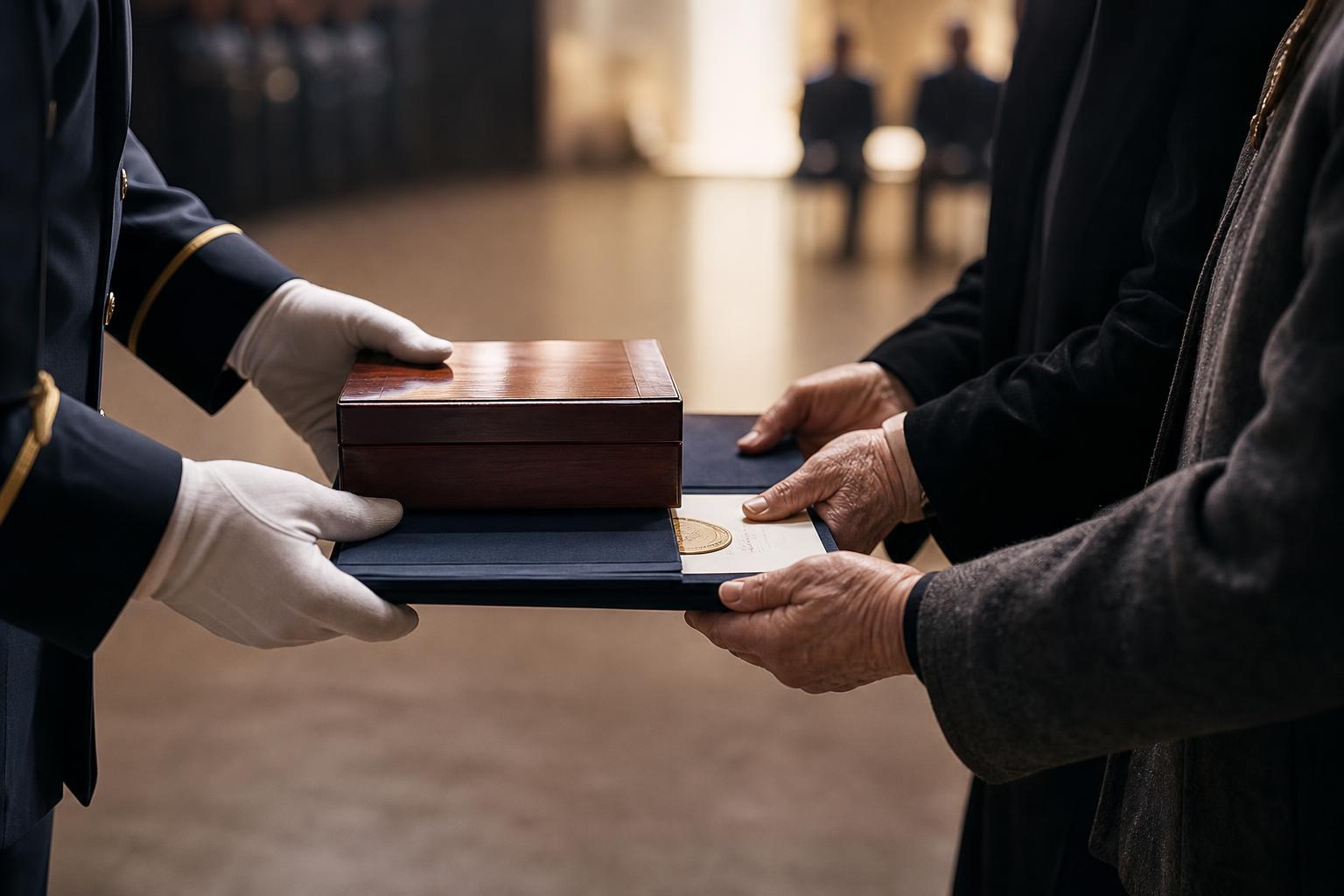
The remains of two Korean War soldiers who left young daughters behind when they enlisted were returned to their families in a joint ceremony in Ulsan on Oct. 14, the Ministry of National Defense announced.
The fallen soldiers were identified as Cpl. Jin Seong-dae, who served with the 8th Infantry Division, and Sgt. Lee Seok-woo of the 7th Infantry Division, according to the ministry.
The Ministry of National Defense Agency for KIA Recovery and Identification (MAKRI) recovered Jin's remains in April 2017 in Yeongcheon, North Gyeongsang Province, and Lee's remains in April 2026 in Inje, Gangwon Province.
Jin is the 279th Korean War casualty returned to his family since the excavation project began in April 2000, and Lee is the 281st, the ministry said. They are the 11th and 13th soldiers identified by MAKRI this year.
Jin's remains were first spotted during a preliminary survey before a full excavation with the 50th Infantry Division at Hill 440 in Nohang-ri, Yeongcheon. A humerus bone was initially identified, and a MAKRI team later recovered the remains.
His daughter, Jin Jeong-ja, provided a DNA sample in January 2024 at the recommendation of a reserve force company commander. MAKRI confirmed the father-daughter relationship through DNA analysis between 2025 and April of this year.
Jin, born in September 1929 in Gyeongju, North Gyeongsang Province, enlisted in December 1948, leaving behind his wife and unborn daughter. His daughter was born in May 1949, six months after his enlistment.
He is believed to have been killed in action on Sept. 13, 1950, during the Battle of Yeongcheon, a turning point in the Korean War. He was posthumously awarded the Hwarang Order of Military Merit on Dec. 30, 1950.
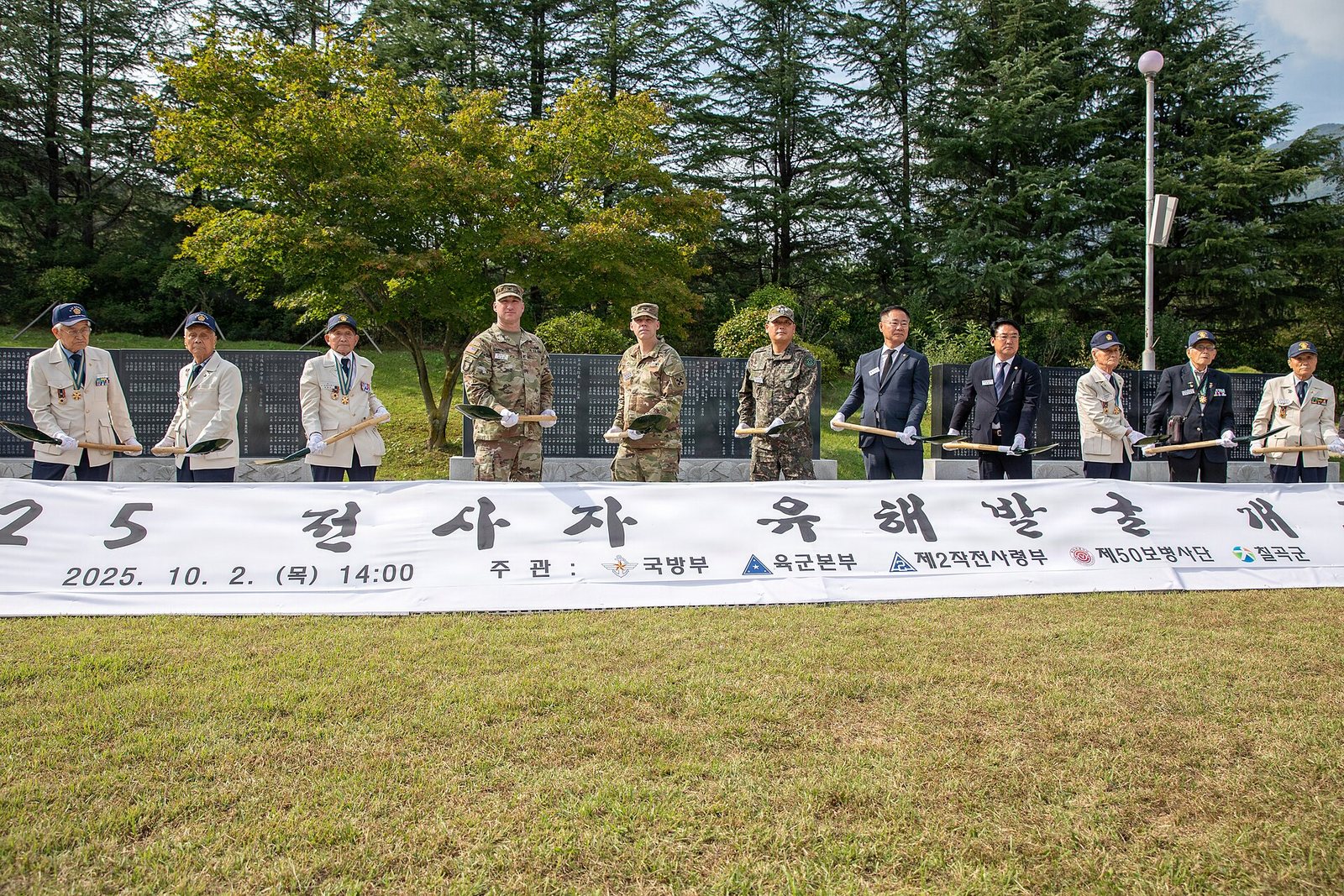
Lee's remains were recovered during a six-week excavation that began March 24 last year at Hill 452 in Wolhak-ri, Inje, conducted with the 20th Armored Brigade. His remains were found near a concrete bunker at the hill's summit.
DNA samples from Lee's two daughters and younger brother, collected between 2009 and 2020, played a decisive role in identifying him, according to the ministry.
Lee, born in April 1924 in Gyeongju, enlisted in September 1950 at the Army Training Center in Busan and was assigned to the 7th Infantry Division. He was killed in action in April 1951 during a battle near the Soyang River.
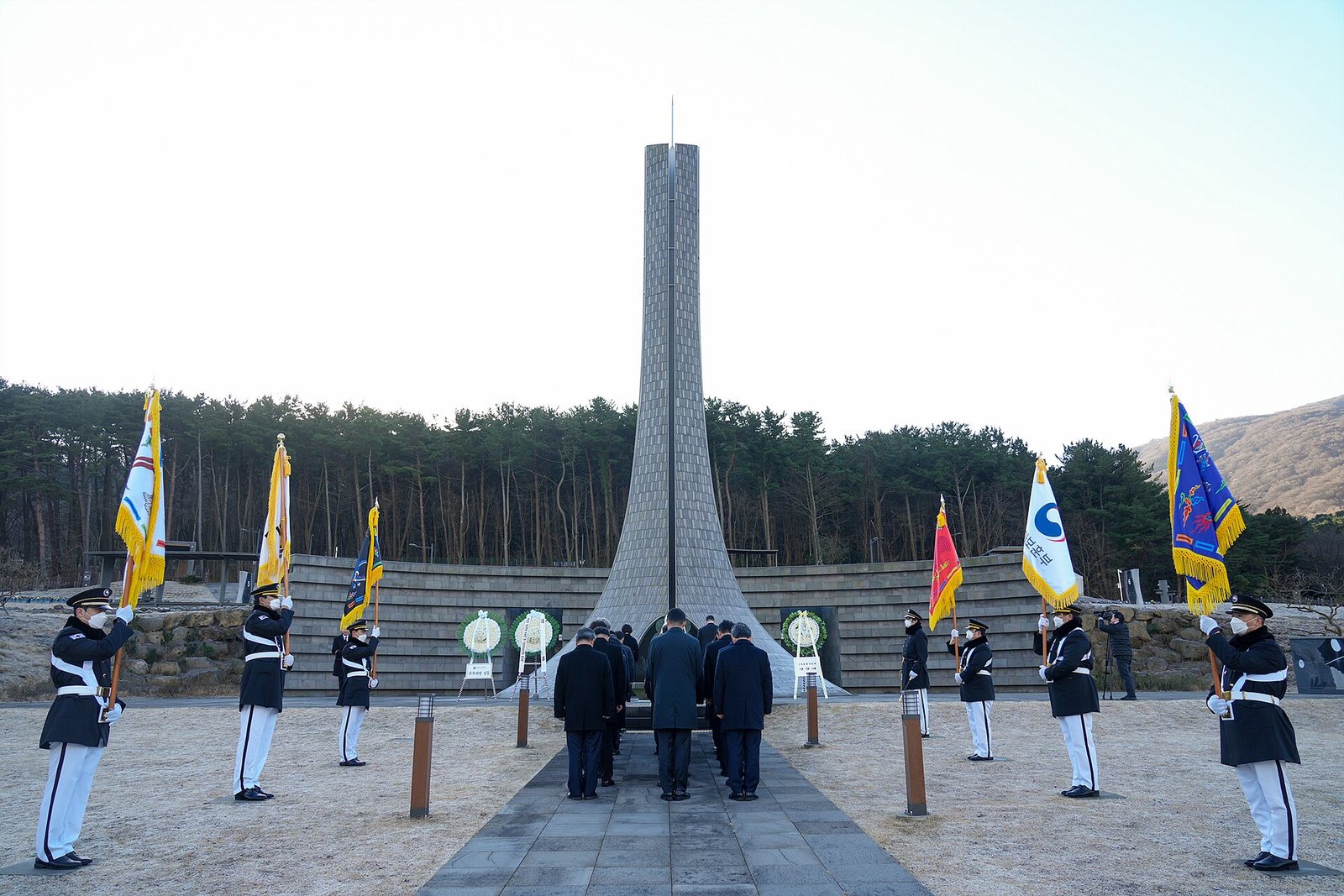
At the ceremony, MAKRI Director Jeon Byeong-hee presented the families with a return plaque, identification notice, and a box containing recovered personal effects.
Jin's daughter, Jin Jeong-ja, 77, said she still cannot believe her father's remains were found and that she wants to bury him at a national cemetery so she can visit often.
Lee's daughter, Lee Bok-pil, 80, said she was envious of families whose fathers were buried when she visited Seoul National Cemetery each June, and that she is happy to finally bury her father.
The ministry urged surviving family members of Korean War casualties to provide DNA samples, noting that relatives up to the eighth degree of kinship are eligible. A reward of $7,455 (10 million won) is offered when a soldier is identified.
Those unable to visit in person can call 1577-5625 to arrange for MAKRI personnel to collect DNA samples at their location, the ministry said.