Korean War Hero Identified After 75 Years, Laid to Rest in Jeju
Sgt. Park Jang-su, killed in 1951 at age 16, was buried at Jeju National Cemetery after DNA matching with his sister.
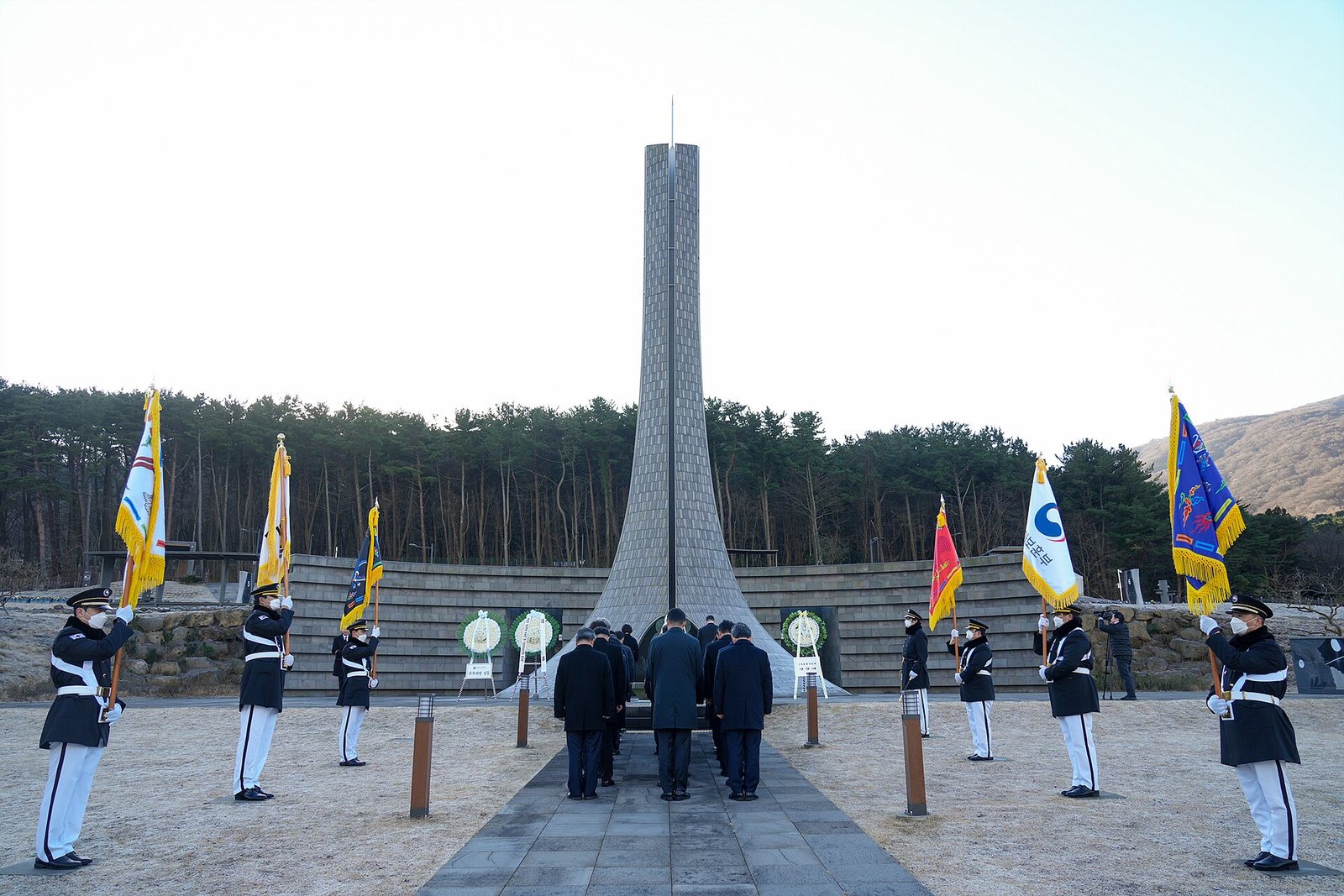
The remains of a South Korean soldier killed in the Korean War were identified and buried in his hometown of Jeju on Nov. 12, 75 years after his death, the Ministry of National Defense announced.
Sgt. Park Jang-su, who died at age 16 during the Yangyang-Ganseong advance battle on May 13, 1951, was laid to rest at Jeju National Cemetery in a ceremony attended by about 150 people, including family members, military officials, the Jeju vice governor and veterans groups.
Park is the 12th fallen service member identified this year by the ministry's Agency for KIA Recovery and Identification, and the 280th to be returned to his family since the excavation project began in April 2000.
His remains were recovered in September 2011 from the Sinsunbong area of Goseong County, Gangwon Province, after local residents reported that villagers had buried South Korean soldiers there. The excavation team found partial remains, including a femur and tibia.
DNA analysis at the time could not confirm his identity because no family DNA samples were available. In March this year, during a special Jeju family search campaign, investigators collected a DNA sample from his younger sister, Park Jang-suk, 74. The agency collected samples from 384 family members over five days.
Park was born in February 1935 in Pyoseon-myeon, Seogwipo, Jeju, as the eldest of nine siblings. He enlisted on Sept. 1, 1950, and served in the 11th Division. He was posthumously awarded the Hwarang Order of Military Merit in 1954.
Before the burial, agency director Jeon Byeong-hee presented the family with a return plaque, identification notice and a box containing recovered personal effects.
"When I heard the news that my brother's remains had been found, I cried endlessly, wondering if it was a dream or reality," Park Jang-suk said. "I will lay him to rest peacefully at the Chungnyeong Cemetery in Pyoseon-myeon where he lived. I thank the Ministry of National Defense for finding his remains."
Jeon said, "I express deep respect for the noble sacrifice and dedication of the deceased, who left his hometown at a young age and willingly gave his life on the unfamiliar battlefield of Gangwon Province. I hope he now rests peacefully in his hometown, by his family's side."
The ministry urged families of missing Korean War soldiers to provide DNA samples. Relatives up to the eighth degree of kinship are eligible. If identification is confirmed, a reward of $7,480 (10 million won) is paid. Those unable to travel can call 1577-5625 for home collection.