Korean Air Aerospace readies LOWUS loyal-wingman demonstrator for first flight by year-end
The company plans to enter the Low Observable Wingman Uncrewed Aerial Vehicle System in South Korea's upcoming Collaborative Combat Aircraft competition, with full-scale development targeted for 2029.
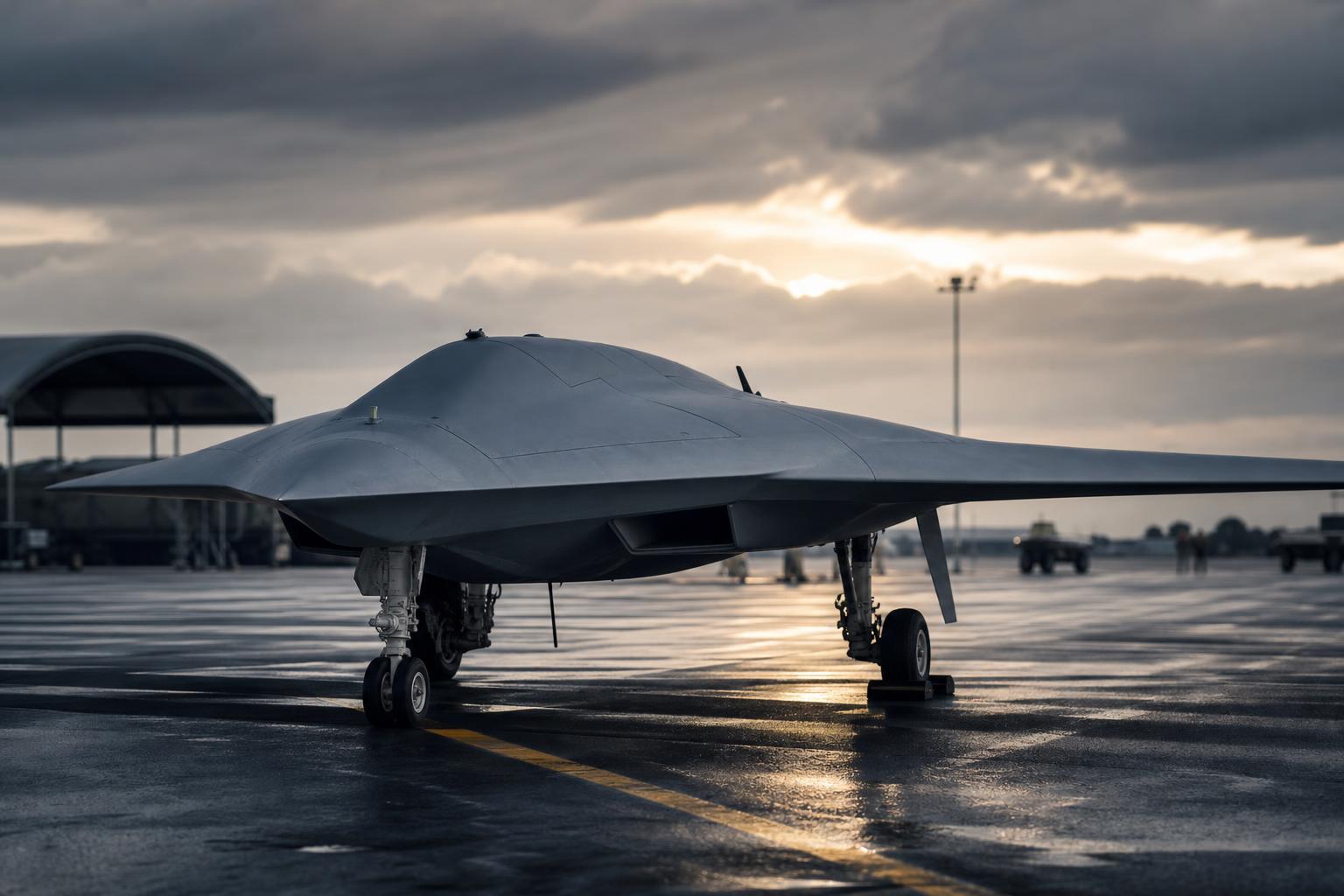
Korean Air Aerospace Division is preparing its Low Observable Wingman Uncrewed Aerial Vehicle System, or LOWUS, for a first flight by the end of the year, Breaking Defense reported on Nov. 9.
Korean Air executives briefed media on LOWUS during a visit to the company's research and development facility in South Korea at the end of October, according to Breaking Defense.
The company plans to enter LOWUS as its contender for South Korea's upcoming Collaborative Combat Aircraft competition, Breaking Defense reported.
KE-ASD Director of International Business Haneul Kim said the company delivered its CCA platform last year and will conduct flight tests at the end of this year, Breaking Defense reported.
Two LOWUS technology demonstrator aircraft have been handed over to South Korea's Agency for Defense Development, according to Breaking Defense.
LOWUS is 10.4 meters long with a 9.4-meter wingspan, and full-scale development is due to begin in 2029 after initial trials, Breaking Defense reported.
A 5,500-lbf turbofan engine under development by the Agency for Defense Development and Hanwha is expected to be ready in 2032 for LOWUS, enabling speeds of up to Mach 0.8 and endurance of up to three hours, according to Breaking Defense.
That engine will replace the Ukrainian AI-222 engine powering the initial LOWUS aircraft, Breaking Defense reported.
LOWUS will carry an Active Electronically Scanned Array Radar and electro-optical systems, with an initial reconnaissance mission set that could later expand to strike and other combat missions in contested airspace, Breaking Defense reported.
Daily Defense reported on Nov. 10 that KE-ASD's LOWUS will use the technology demonstrators for flight tests and then proceed to Manned-Unmanned Teaming trials with an ADD-operated KT-1 turboprop trainer scheduled to begin at the end of 2027.