KASA hosts workshop on space object fall and collision disaster management
Officials discussed sharing precise orbital data and building a national collision avoidance coordination system amid rising orbital debris risks.
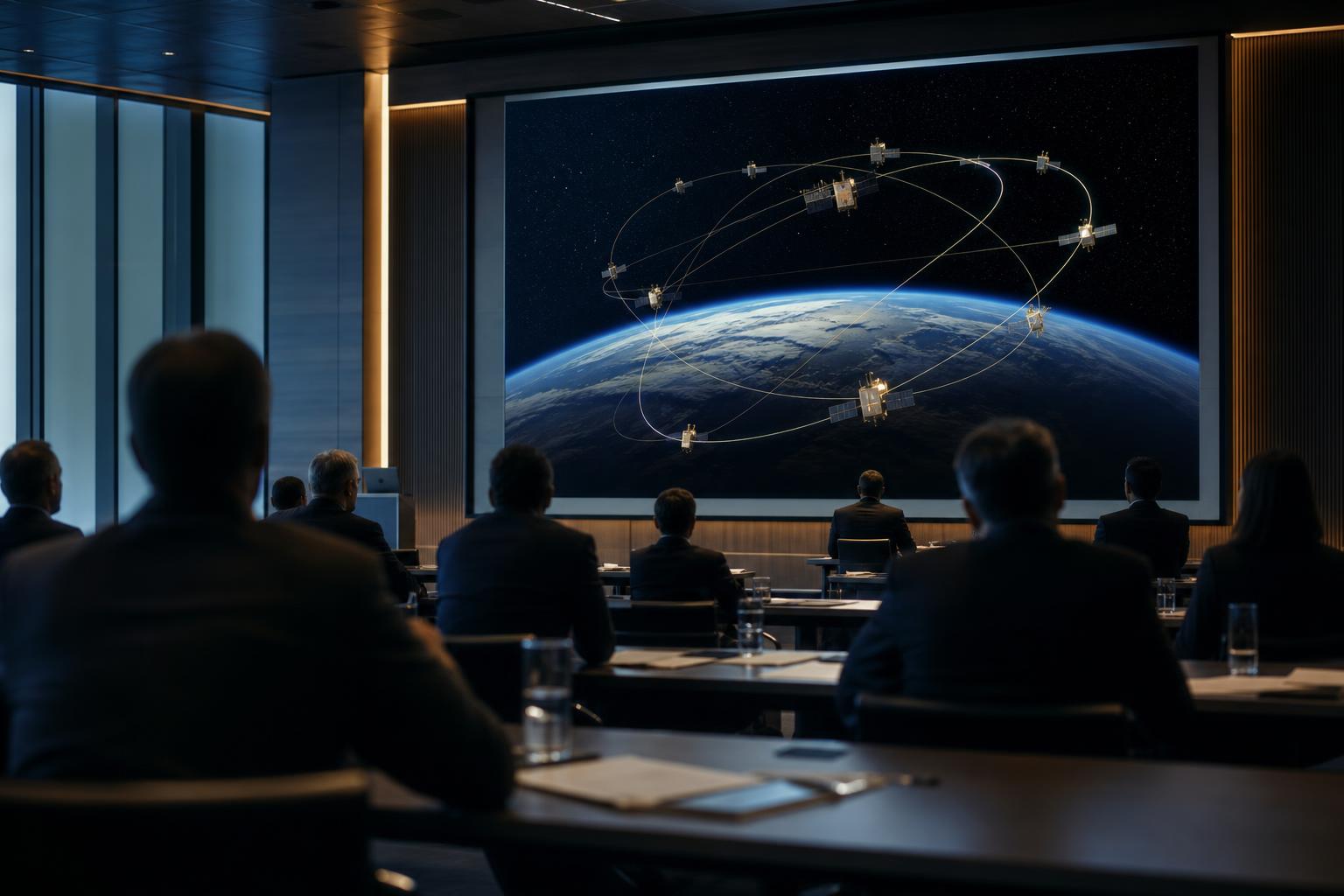
The Korea AeroSpace Administration (KASA) held a workshop on strengthening the disaster management system for space object falls and collisions on Nov. 25 at the Daejeon Intercity Hotel, with participation from the Korea Aerospace Research Institute, the Korea Astronomy and Space Science Institute, the Joint Chiefs of Staff, Hanwha Systems and related agencies.
The workshop was organized to review roles and cooperation measures among agencies to improve the effectiveness of the national space risk management system, as the rapid increase in orbital objects, including large low-Earth orbit satellite constellations, has heightened the need for proactive responses to space risks such as satellite collisions and falling debris.
Recent cases cited include the discovery of micro-cracks presumed to be caused by space debris impact on China's Shenzhou-20 spacecraft in November 2025, and the 2009 in-orbit collision between the U.S. Iridium-33 communications satellite and Russia's defunct Cosmos-2251 satellite, which generated more than 2,000 pieces of debris.
Expert presentations covered the current status and challenges of collision risk response from satellite operators' perspectives, technologies and development directions for analyzing space object fall and collision risks, and third-party liability and space insurance related to in-orbit collisions.
In the subsequent comprehensive discussion, participants focused on sharing precise ephemeris data held by satellite operators, agency-specific response procedures when collision risks occur, and building a national-level collision avoidance coordination system.
Participants agreed that sharing orbital information between satellite operators and the government and maintaining a constant cooperation system are necessary to identify collision risks early and make timely avoidance maneuver decisions.
Lee Jae-heun, director general of the Space Aviation Policy Bureau at KASA, said, "As satellite operations increase, it is important to systematically respond to space risks such as space object falls and collisions," adding that the agency will strengthen national space risk response capabilities based on opinions from experts and related agencies and continue to prepare management system and institutional improvement measures for safe and sustainable space activities.