KASA hosts workshop on astrophysics simulations and AI for space missions
Researchers discussed using numerical models and artificial intelligence to plan and validate future space exploration missions.
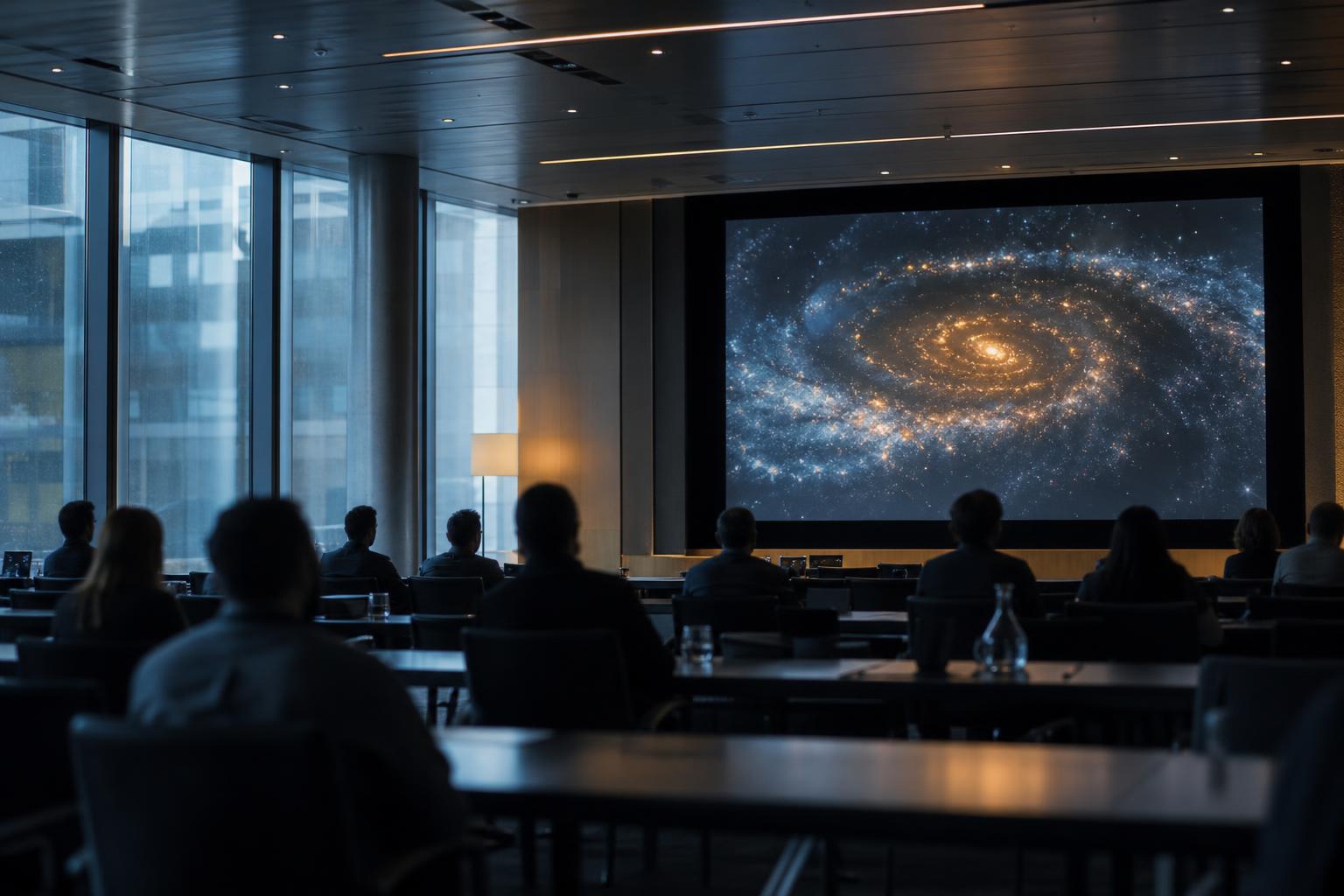
The Korea AeroSpace Administration (KASA) held a workshop on Nov. 19 at KT Human Resource Development Center in Daejeon to explore ways to use astrophysics numerical models and artificial intelligence (AI) in space exploration missions.
About 50 researchers from universities and research institutes attended the event, which reviewed the current state of numerical modeling research in astrophysics and space science and discussed possibilities for integrating AI, according to KASA.
Numerical models are computer simulations based on physical laws that reproduce and predict celestial phenomena. They allow mission planners to test observation strategies and designs before launch, when costs are high and post-launch modifications are difficult.
KASA noted that such models were used in preparation for major international missions such as the James Webb Space Telescope and the Square Kilometre Array. The large-scale simulated data generated by numerical models also serves as a foundation for training AI systems.
Presentations covered large-scale simulations of cosmic evolution, galaxy formation, and gravitational waves, as well as applications for future space telescopes and lunar surface telescopes. Researchers from Kangwon National University and Gyeongsang National University discussed planetary collision and evolution studies, and the interaction between lunar lander engine exhaust plumes and the lunar surface.
Plume analysis can be used in lander design and landing site safety assessment. Researchers from Ulsan National Institute of Science and Technology (UNIST) introduced Korean space environment modeling related to the safety of spacecraft and astronauts.
The Korea Institute of Science and Technology Information (KISTI) presented the status of national supercomputing resources, the Institute for Basic Science (IBS) introduced its high-performance computing shared infrastructure, and the Korea Astronomy and Space Science Institute described an AI collaboration platform under development.
In a general discussion, participants exchanged views on computing resource support methods and ways to link research outcomes to exploration missions. KASA said it will use the collected opinions as basic data for planning space science exploration missions and establishing policies.
Kang Kyung-in, head of KASA's space science exploration division, said numerical models are an important research tool for understanding cosmic phenomena that are difficult to grasp through observation alone and for previewing the feasibility of exploration missions, and they are also the foundation of AI research. He added that KASA will use the field opinions shared at the workshop as a basis for future mission planning and will continue to communicate with researchers.