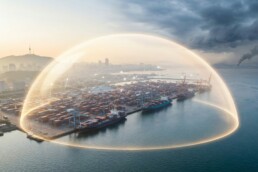


South Korea is globally recognized for its semiconductors and vibrant pop culture. However, a new technological wave is quietly building along its coastlines. Specifically, the government is heavily investing in the blue economy. As a result, the Maritime AI Korea initiative is officially taking off. The Ministry of Oceans and Fisheries (MOF) recently announced a massive funding project. In particular, they are injecting 40 billion KRW (roughly $30 million USD) into promising enterprises. Therefore, this is a golden opportunity for foreign investors watching the Asian market.
For decades, the maritime industry relied on traditional methods. Meanwhile, artificial intelligence has revolutionized other sectors. Consequently, the Korean government wants to bridge this gap. They aim to commercialize AI products within one to two years. Furthermore, this rapid commercialization strategy is perfect for agile ocean tech startups. By integrating AI into daily operations, the industry can solve real-world problems. Indeed, this approach will create entirely new markets for Korean fisheries AI.
The Scope of Maritime AI Korea
The Maritime AI Korea project targets seven distinct sectors. First, it covers ocean engineering and marine resources. Second, it includes marine environment and observation forecasting. Third, maritime and port logistics will see significant upgrades. In addition, marine safety and traffic systems are a major priority. Furthermore, aquaculture and fisheries production will become smarter. Finally, the marine bio sector rounds out the list. For instance, AI could predict optimal feeding times for fish farms. Similarly, it might optimize shipping routes to reduce carbon emissions.
A Strategic Play for Ocean Tech Startups
How exactly does the funding work? The government divided the support into two main types. Type 1 provides 2 billion KRW over one year to five selected projects. On the other hand, Type 2 offers 1 billion KRW annually for two years to fifteen projects. However, there is a catch. Participating companies must cover at least 30% of the total project cost. As a result, this private matching requirement ensures that founders have skin in the game. Moreover, only domestic companies can act as the primary organizers. Yet, they can form consortiums with universities or public institutions. Foreign investors should take note of these local partnerships. You can learn more about navigating the local landscape in our guide to the Korean startup ecosystem.
The Future of Korean Fisheries AI
The application window runs from March 19 to April 20, 2026. During this time, the Korea Institute of Marine Science & Technology Promotion (KIMST) will oversee the entire process. Furthermore, they will manage everything from selection to final evaluations. Consequently, this structured approach minimizes risks for early-stage investors. If you are interested in broader tech trends, check out our insights on investing in Korea.
In conclusion, the intersection of AI and maritime industries offers massive untapped potential. Therefore, keeping an eye on these developments is crucial. The global push for sustainable oceans is growing, as highlighted by the World Economic Forum. At the same time, AI innovations are accelerating globally, frequently covered by outlets like TechCrunch. For official details on government policies, visit the Ministry of Oceans and Fisheries. Ultimately, the Maritime AI Korea project is not just a local policy. It is a clear signal that the future of the ocean is digital.