

A World Where America No Longer Foots the Bill
For decades, South Korea built its economic miracle on a quiet assumption: America would keep the seas open, the alliances intact, and the trade lanes flowing. That assumption is now officially under review. The Korea supply chain — from memory chips in Xi’an to biotech raw materials sourced in Wuhan — is caught in the crossfire of a rapidly redrawing global order.
Donald Trump’s return to the White House has introduced a doctrine that goes well beyond tariffs. His administration is widely expected to use the 2025 National Security Strategy (NSS) to formally declare the end of an era in which the United States acted as the guarantor of global public goods. In other words, America is done subsidizing everyone else’s security.
The implications for Korean firms are immediate. However, they are also structural — and far harder to fix with a quick policy patch.
The 5% Demand: What It Actually Means for Korea
NATO allies have already agreed to raise defense spending to 5% of GDP by 2035. That translates to more than $1 trillion in additional annual defense outlays across the alliance. South Korea, though not a NATO member, faces the same pressure bilaterally. Trump has made clear he expects Seoul to follow suit.
Korea’s current defense spending sits at roughly 2.8% of GDP. Jumping to 5% would represent one of the largest peacetime fiscal shifts in the country’s modern history. That money has to come from somewhere — and it almost certainly means less fiscal room for industrial subsidies, R&D support, and the kind of state-backed investment that has long underpinned Korean tech champions.
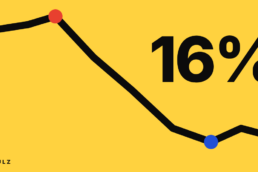
The geopolitical math is brutal. Korea’s exports to the United States accounted for 18.8% of total outbound trade in 2024. Washington, in effect, holds enormous leverage — and it knows it.
Furthermore, the Trump administration’s position is not simply about burden-sharing in the traditional sense. The new framework treats trade imbalances and security “free-riding” as linked problems. In practice, this means Korea could face simultaneous pressure on tariffs and defense contributions — a two-front squeeze that previous administrations kept carefully separate.
Korea Supply Chain at the Center of the Chip War
Nowhere is the tension more acute than in semiconductors. Samsung Electronics’ NAND flash factory in Xi’an, China, accounts for roughly 35% of the company’s global NAND output. SK Hynix’s DRAM plant in Wuxi handles approximately 40% of the firm’s DRAM production. Both facilities sit squarely in the crosshairs of U.S. export controls.
The U.S. government recently granted Samsung and SK Hynix licenses to continue importing chipmaking equipment into their Chinese plants through 2026. That is, on the surface, a relief. However, the relief comes with a catch: licenses must be renewed annually, replacing the previous blanket “Verified End User” (VEU) status that gave companies long-term certainty.
One industry insider put it plainly: semiconductor equipment is not plug-and-play. Stabilizing a new tool installation takes months. Annual license reviews introduce a level of operational uncertainty that makes long-term production planning extraordinarily difficult.
The message from Washington is clear, even if unspoken. Korean chipmakers are being nudged — firmly — toward reducing their China exposure. The only question is how fast, and at what cost.
In addition, the FY2026 National Defense Authorization Act (NDAA) — recently passed into law — restricts U.S. persons from investing in Chinese advanced technology sectors. The list includes advanced semiconductors, artificial intelligence, and quantum computing. For Korean firms with U.S.-listed shares or American institutional investors, this creates new compliance headaches that legal teams are only beginning to map.
The Biosecure Act: Threat and Opportunity, Simultaneously
The same NDAA also contains provisions barring federal contracts with companies deemed “concerning biotech entities” — a category that effectively targets Chinese contract development and manufacturing organizations (CDMOs) such as WuXi Biologics and BGI.
This is a rare case where U.S. decoupling policy hands Korean firms a direct commercial advantage. A striking 79% of U.S. biotech companies currently rely on Chinese CDMOs for drug development and manufacturing. As those relationships become legally untenable, a massive demand shift is in motion.
Korean CDMOs — including Samsung Biologics and Celltrion — are well-positioned to absorb a portion of that displaced demand. KoreaBIO’s center director Oh Ki-hwan described the Biosecure Act as part of a broader power struggle to identify and block military-linked entities disguised as biotech firms. For Korean players, however, the practical effect is a widening market opportunity in the United States.
The biotech window may be the single clearest upside Korea gets from the entire Trump policy package.
Nevertheless, Korean pharma and biotech companies face their own supply chain audit. Many domestic firms rely on Chinese raw materials and active pharmaceutical ingredients (APIs). Replacing those inputs — quietly, efficiently, and without disrupting production — is a task that will take years, not months.
Europe Is Not a Safe Harbor Either
Some Korean executives have looked to the European Union as a hedge against U.S. unpredictability. However, Brussels is moving in a similar direction. The EU’s recent Joint Communication on Economic Security makes explicit its intent to prioritize European firms, reduce dependency on foreign critical materials, and build domestic leadership in defense and key technologies.
In short, the two largest Western markets are both erecting walls — just with different architectural styles. For Korea, a country whose economic model depends on open export markets, this is a structural problem that no single trade negotiation can solve.
The global supply chain is bifurcating. On one side: the U.S.-centered alliance network. On the other: a China-anchored bloc. Korea, by geography and history, sits uncomfortably between the two — and the middle ground is shrinking.
What Korean Firms Are Actually Doing
Behind closed boardroom doors, the strategic conversation in Korea has shifted from “how do we manage China risk?” to “how fast can we reduce it?” The direction is clear, even if the timeline is contested.
Samsung and SK Hynix are both accelerating investment in non-China facilities. Samsung’s Taylor, Texas fab — supported by U.S. CHIPS Act incentives — represents one vector of this diversification. SK Hynix’s planned Indiana plant is another. Meanwhile, both companies are quietly exploring options in Southeast Asia and Eastern Europe as additional buffers.
For smaller Korean manufacturers in the automotive, chemical, and materials sectors, the calculus is more painful. They lack the balance sheets to build parallel supply chains quickly. As a result, many are lobbying hard for bilateral trade exceptions and tariff carve-outs through Korea’s Ministry of Trade, Industry and Energy (MOTIE) — the government body responsible for industrial policy and export promotion.
Korea’s trade negotiators are, in effect, running a permanent crisis management operation.
The Ministry of Foreign Affairs’ Economic Security Diplomacy Center, which published the Economic Security Review report flagging these risks, is one of several government bodies now dedicated to mapping and mitigating supply chain exposure. Its existence — a relatively new institutional addition — signals how seriously Seoul is taking the structural shift underway.
The Long Game: Economic Security as National Strategy
Korea needs more than reactive diplomacy. The country’s long-term economic security strategy must address three parallel challenges: securing tariff exceptions in Washington, diversifying export markets beyond the U.S. and China, and building domestic industrial resilience that can withstand external shocks.
None of those tasks is quick. However, the cost of delay is rising with every new piece of U.S. legislation and every EU policy announcement. For investors watching Korea, the companies best positioned are those already reducing China concentration in their supply chains, building U.S. manufacturing presence, and diversifying their customer base across Southeast Asia, the Middle East, and Europe.
The firms most at risk are those still betting that the old rules — open markets, stable alliances, predictable U.S. policy — will somehow return. They will not.
The era of frictionless globalization is over. For Korean companies, the question is not whether to adapt, but how quickly they can afford to.