

1. The May 2026 Pivot: When the Money Moved
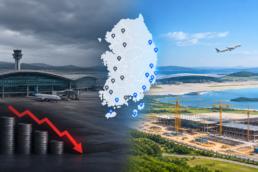
The Korea robotics stocks 2026 story arrived as a capital rotation, not a press release. In the first week of May, foreign investors sold more than 4 trillion won — roughly $2.9 billion — in Samsung Electronics and SK hynix. Those two stocks have anchored every foreign fund’s Korea allocation for two decades. Meanwhile, the same investors poured fresh capital into a basket of names most Western asset managers could not have placed on a map twelve months earlier.
The top three net buys between May 4 and May 8 were not chip stocks. Instead, they were robot stocks. Hyundai Motor led with 324 billion won in foreign net purchases. Doosan Robotics followed at 316 billion won, and Rainbow Robotics logged 177 billion won. In other words, more than 800 billion won — close to $590 million — flowed from semiconductors into Korean robot stocks in a single trading week.
For long-time observers of the Seoul market, this rotation is the headline. However, the underlying story is bigger than one week of flows. Specifically, 36 listed Korean robotics companies climbed from 25.27 trillion won in late 2025 to 44.5 trillion won by April 2026. That is a 65 percent surge in six months. As a result, the K-robotics rally has gone from a side-bet to a core pillar of the country’s industrial future.
This article maps the structural shift. We profile the four names absorbing most of the foreign money. The piece also walks through the Korea robot IPO wave and the risks investors should price before chasing momentum.
2. Why Korea Robotics Stocks 2026 Are Re-Rating
The simplest answer is timing. Three forces converged in 2026, and each one is independent of the others.
First, the global humanoid robot market is finally getting a price tag. As of early 2026, market researchers estimate global humanoid sector revenue at roughly $4.3 billion. By 2032, projections push that figure close to $70 billion. In particular, this means the asset class is moving from “interesting research project” to “investable category.” Korean industrials are positioning themselves at the front of the line.
Second, Korean policy is actively pushing capital into the sector. The Lee Jae-myung administration has expanded the national fund-of-funds to 2 trillion won, with a dedicated robotics and physical AI allocation. Furthermore, the K-Humanoid Alliance formally launched a dedicated pavilion at CES 2026 in Las Vegas. The consortium spans more than 40 organizations. Members include Seoul National University, KAIST, POSTECH, Rainbow Robotics, Doosan Robotics, LG Electronics, and HD Hyundai Robotics. The pavilion is not a marketing exercise. Rather, it is the public face of a national plan to make Korea a humanoid leader by 2030.
Third, the foundation is already in place. According to the International Federation of Robotics, Korea has the world’s highest robot density. The country runs 1,012 robots per 10,000 workers — more than triple the United States. That figure is a structural advantage no other Asian market can match. Meanwhile, Korean chaebols have spent the past five years systematically building out humanoid platforms through acquisitions, call options, and dedicated divisions.
In short, the K-robotics rally is not a theme trade. Specifically, it is what one analyst called a “structural re-rating” — the market shifting its mental model of what Korea exports. For the past three decades, the answer was chips and cars. As of 2026, the answer increasingly includes the machines that build those chips and cars.
For broader context on how Korean capital deployment is reinforcing similar deep-tech themes, see Seoulz’s earlier analysis of the Korea AI data center boom and the Korea defense startups ecosystem. Both stories follow the same arc. Domestic policy and chaebol capital align behind a deep-tech vertical at the same moment foreign investors take notice.
3. Doosan Robotics: The Cobot Pure-Play
If foreign investors want clean exposure to Korea’s collaborative robot business, Doosan Robotics is the entry point. The company went public on the KOSPI main board in October 2023, raising approximately $318 million at a valuation north of $2 billion. At the time of listing, Doosan was already the fourth-largest collaborative robot maker globally outside China, with roughly 5.4 percent market share.
By April 2026, the market capitalization had climbed to approximately 6.5 trillion won — almost triple its IPO valuation. However, the fundamentals tell a more complicated story. Doosan posted a consolidated operating loss of 12.069 billion won in the first quarter of 2026. As a result, the stock has effectively become a bet on future humanoid production rather than current cobot revenue.
Doosan’s strategic logic is straightforward. In particular, the company is using its existing cobot infrastructure as a base to layer humanoid capability on top. Furthermore, Doosan is a founding member of the K-Humanoid Alliance and has announced a major new R&D facility focused on full humanoid platforms. The company has also been a key partner in SK Telecom’s AI-backed barista robot deployments. That partnership signals a service robotics line moving from prototype to commercial reality.
For foreign investors, the trade is binary. Doosan’s cobot business generates real revenue and exports to Europe and North America. Meanwhile, the humanoid pivot remains unproven. If the humanoid program delivers a credible commercial product by 2027, the stock looks cheap at current levels. However, if Doosan remains a cobot company that talks about humanoids, the market’s patience has limits. A 6.5 trillion won valuation on declining sales becomes hard to justify.
Indeed, this is the key question hanging over Doosan in 2026. Does the company execute the humanoid transition, or does it become the Korean version of every other industrial robotics name that promised more than it delivered?
4. Rainbow Robotics: Samsung’s Humanoid Trojan Horse
By April 2026, Rainbow Robotics had a market capitalization of roughly 12.99 trillion won, making it the fourth-largest stock on the KOSDAQ junior market. For context, that puts a humanoid robotics company with fewer than 100 employees in the same valuation bracket as some of Korea’s largest game studios. The reason is simple: Samsung Electronics owns 35 percent of it.
Founded in 2011 by researchers from the KAIST Humanoid Robot Research Center, Rainbow Robotics carries one of the deepest pedigrees in Asian humanoid research. The founding team developed HUBO, Korea’s first two-legged walking robot, in 2005. As a result, when Samsung began looking for a domestic robotics anchor in 2022, Rainbow was the obvious choice.
The accumulation was deliberate. Samsung first acquired a 10.22 percent stake in January 2022 for 59 billion won, then added another 27.8 billion won in March 2022. By 2023, Samsung had reached a 14.7 percent stake at a total investment of roughly 86.8 billion won. Most importantly, the 2023 deal included a call option. On December 31, 2024, Samsung exercised that option, paying an additional 267 billion won (about $181 million) to take its stake to 35 percent. Consequently, Rainbow Robotics became a consolidated subsidiary of Samsung Electronics in February 2025. The full timeline is laid out in Samsung’s official announcement.
Samsung simultaneously launched a Future Robotics Office reporting directly to its CEO. Dr. Jun-Ho Oh — Rainbow co-founder, KAIST honorary professor, and the engineer behind HUBO — leads the new division. In practical terms, Samsung now has a vertically integrated humanoid stack. The stack includes KAIST research lineage, manufactured hardware, in-house AI, and global distribution.
For foreign investors, Rainbow is therefore a proxy. Specifically, buying Rainbow Robotics is the cleanest way to express a view on Samsung’s humanoid ambition. Investors get that exposure without owning the entire Samsung Electronics share base. The valuation reflects that. Meanwhile, the risks are genuine. Samsung’s robotics strategy may proceed slower than its valuation premium implies. The synergies between consumer electronics and humanoid hardware may also turn out smaller than expected.
5. Hyundai Motor: The Hidden Robot Story Hiding in an Automaker
The most undervalued name in Korea robotics stocks 2026, at least in the view of several KB Securities analysts, is not a robotics pure-play. Instead, it is Hyundai Motor.
In December 2020, Hyundai paid roughly $1.1 billion to acquire an 80 percent controlling stake in Boston Dynamics from SoftBank. The transaction was the largest robotics M&A deal in Asian history at the time. For four years, the acquisition looked expensive. Boston Dynamics burned cash, Atlas remained a research robot, and Hyundai’s stock kept getting valued on automotive multiples.
Then, in March 2026, the story changed. The Robot Report and major US broadcasters carried footage of Atlas autonomously sorting roof racks on a live Hyundai assembly line. The clip marked the first public demonstration of the robot performing real factory work outside a lab. Hyundai’s Korean-listed shares jumped nearly 3 percent on the news. By May, foreign investors had made Hyundai Motor their single largest net buy in Korea, with 324 billion won in net purchases in one week.
The KB Securities thesis is direct. Analyst Kang Seon-jin argued that Hyundai deserves a growth-stock premium as a leading robotics company. The traditional automaker value-stock framing no longer fits. Notably, Hyundai’s forward P/E was just 15.9 times in early May 2026. Tesla, which is also pursuing a humanoid line through Optimus, traded above 100 times trailing EBITDA. Even short-seller Jim Chanos publicly flagged the valuation gap between the two stocks in April 2026.
In addition, Hyundai operates a separate Hyundai Robotics division focused on industrial cobots and material handling. The group also collaborates with Rainbow Robotics through Hyundai Rotem on quadruped and autonomous platforms. As a result, Hyundai is effectively running three parallel robotics businesses. Boston Dynamics covers humanoids. Hyundai Robotics covers industrial. Rotem partnerships cover defense-adjacent platforms. For foreign investors who can stomach the auto cycle exposure, that diversification is the most under-priced robotics optionality in the Korean market.
6. The Korea Robot IPO Wave: Phase Two Is Loading
The first phase of the Korea robot IPO wave ran from late 2023 through 2024. Doosan Robotics led in October 2023. Neuromeka — a Seoul-based cobot maker now expanding into US ship welding markets in the first half of 2026 — followed on the KOSDAQ. CloBot, focused on service robotics, listed in early 2024. Furthermore, dozens of smaller component suppliers and AI-enabled systems integrators completed listings during the same window.
A second phase is now forming. Here are the most-watched candidates:
- CMES Robotics — A vision-AI specialist that has emerged as a key tooling supplier for Korean cobot makers. Currently privately held, CMES has been flagged as an IPO candidate for 2026–2027.
- Galaxy Corporation — An AI entertainment-tech startup building humanoid K-pop performers. Galaxy has publicly announced plans for a 2026 dual listing in Seoul and New York.
- Hyundai Robotics carve-out — Industry observers have repeatedly speculated that Hyundai Motor could spin out its standalone robotics division to crystallize the Boston Dynamics value. Hyundai has not confirmed such a plan. However, the conditions — high comparable multiples, foreign investor demand, capital needs for humanoid scaling — increasingly favor it.
- Polaris AI and adjacent physical AI plays — A cluster of smaller pre-IPO names is approaching listing readiness. Specifically, actuators, end-effectors, and tactile sensors are the active sub-segments.
For investors tracking earlier-stage exposure, the Tracxn startup database lists 62 industrial robotics startups in South Korea, 31 of which are funded and 15 of which have reached Series A or later. This is a deeper bench than most Western analysts realize. Indeed, the pattern resembles Korea’s broader scale-up pipeline — meaning the next two years will produce more listings, more M&A, and more chaebol consolidation, not less. For a closer look at the deep-tech names that made global headlines this winter, see Seoulz’s coverage of the three Seoul innovators at CES 2026.
7. What Could Break the Thesis
No re-rating is unconditional, and Korea robotics stocks 2026 are not without genuine risks. Three deserve particular attention.
Valuation versus earnings. The combined 2025 sales of the 35 listed Korean robotics companies came to just 2.265 trillion won. By April 2026, the combined market capitalization had climbed to 41.7 trillion won. That implies a price-to-sales ratio of roughly 18.4 times. For comparison, mature industrial automation names in Japan and Germany trade at 2 to 4 times sales. Consequently, even modest disappointment in humanoid commercialization could trigger a sharp re-rating in the other direction.
Chinese competition. Unitree, UBTECH, Xiaomi, and a cluster of Shenzhen-based humanoid startups are scaling faster than most Korean players. UBTECH has already launched the Walker S2 with battery-swap functionality. Tesla, meanwhile, is targeting meaningful Optimus production volumes by mid-decade. In contrast, Korean humanoids have impressive lineage but limited deployment data. Therefore, the Korean re-rating depends partly on the assumption that Korean players can hold a meaningful slice of the global market against well-capitalized Chinese and US competitors.
Liquidity and disclosure gaps. The Korean equity market remains a relatively thin venue for foreign capital, and disclosure standards for emerging-tech listings are still catching up with developed-market norms. The recent expansion of English-language disclosure for major KOSPI companies helps. However, the KOSDAQ — where Rainbow Robotics, Neuromeka, and many smaller players are listed — has lower trading volumes, more retail-driven volatility, and patchier English coverage. As a result, foreign institutional positioning can move prices more sharply on the way out than on the way in.
Domestically, the disconnect between retail and foreign positioning is itself a yellow flag. Specifically, in the same May 2026 week that foreign investors were net buying robots and selling chips, Korean retail investors did the opposite. They bought 946 billion won of SK hynix and 860 billion won of Samsung preferred shares. When retail and foreign positioning diverge this sharply, one side is usually wrong.
8. The Foreign Investor Playbook
For foreign investors considering exposure to the K-robotics rally, four practical takeaways follow from the data.
First, separate performance from expectation. Doosan Robotics is the cleanest cobot exposure, with real revenue, real exports, and a defined humanoid pivot. Meanwhile, Rainbow Robotics is an expectation trade — a leveraged bet on Samsung’s humanoid roadmap. Both can work, but they should be sized differently in a portfolio. Specifically, Doosan rewards patience, while Rainbow rewards conviction.
Second, do not overlook Hyundai Motor. The Boston Dynamics asset is real, the commercial deployment evidence is now visible, and the valuation remains anchored to automotive multiples. As a result, for investors who can model the auto cycle separately, Hyundai is the most asymmetric robotics trade in Korea.
Third, watch the Korea robot IPO wave through 2027. CMES Robotics, Galaxy Corporation, and a potential Hyundai Robotics carve-out are the names to track. In addition, monitor smaller component suppliers — actuator makers, vision sensor specialists, and motion-control software firms — for M&A premiums as the chaebols consolidate the stack.
Fourth, watch the talent layer. As we covered in our analysis of Korea military tech talent, Korea’s alternative military service program routes elite engineers directly into approved tech companies. Several of the most active Korean robotics startups sit on the approved-employer list. Their effective R&D cost per engineer is materially lower than comparable teams in the US, Europe, or China. For investors evaluating burn rates and runway, this is a structural advantage that rarely shows up in pitch decks.
The May 2026 capital rotation may turn out to be the moment foreign money decided that the next Korea export miracle would be machines rather than memory. In any case, the K-robotics rally is no longer a theme trade. Instead, it is a structural call on what Korea will sell to the world for the next decade. For foreign investors who lived through the chip cycle, the question is simple. Be early to the next one, or wait for proof points and pay up later. As of May 2026, the smartest money in the world has already made that choice.