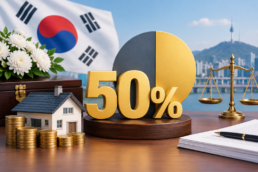


For roughly two decades, Korean homeowners have been sorted by a single number: how many apartments they hold. One home made you an ordinary citizen. Three made you a speculator, and the tax code treated you accordingly. On August 3, 2026, the finance ministry proposed throwing that logic out. Under the Korea property tax 2026 package, the government will stop counting homes and start pricing them.
That sounds technical. In practice, it reorganizes the wealth of an entire country. Korean households hold far more of their net worth in housing than American or Japanese ones do. Because of that, a change in the holding-tax formula lands somewhere between a policy tweak and a personal financial event. Furthermore, it arrives during the sharpest run-up in Seoul apartment values in five years.
The package spans eleven separate tax laws. Most foreign coverage reduced it to a headline about rich people paying more. Yet the actual design is stranger, more targeted, and considerably more consequential than that. Let us walk through what changed, who it hits, and why the mayor of Seoul called it a tax hell within twenty-four hours.
What the Korea Property Tax 2026 Overhaul Actually Changes
Start with the single sentence that matters. The comprehensive real estate holding tax — Koreans call it jongbuse — will shift from a system based on the number of homes owned to one based on their combined value.
Under the current rules, owners of one or two homes face rates between 0.5 and 2.7 percent, while owners of three or more face a separate schedule reaching 5.0 percent. Consequently, a landlord with three cheap provincial apartments could pay a heavier rate than someone sitting on a single Gangnam penthouse worth five times as much. Critics have pointed at that gap for years. The 2026 reform closes it.
Three mechanical changes carry the load.
The basic deduction splits by residence. Currently, a single-home owner deducts 1.2 billion won of assessed value before tax applies, and a multiple-home owner deducts 900 million. Going forward, a single-home owner who actually lives in the property deducts 1.4 billion won — roughly 2 billion won in market terms. Meanwhile a sole home the owner does not occupy drops to 900 million. Multiple-home owners face a rebuilt formula: a 400 million won base, plus up to 500 million more depending on how much of their total portfolio value sits in the home they personally live in.
The fair market value ratio climbs. This obscure multiplier decides how much of your post-deduction assessed value actually enters the tax base. For years it has sat at 60 percent. From 2027, owner-occupiers move to 70 percent, while owners of three or more homes and those holding property inside regulated zones go to 70 percent in 2027 and 80 percent in 2028. To see why that matters, take one billion won of value remaining after deductions. At 60 percent, the rate applies to 600 million. At 80 percent, it applies to 800 million — the same house, a third more tax, no rate change announced.
Four billion won becomes the new line. Once the value-based system takes effect, an owner of a single home worth about that much will face rates comparable to a multiple-home owner. In other words, the reform does not merely tax landlords harder. Instead, it quietly redefines the expensive owner-occupied apartment as a taxable asset rather than a protected residence.
The changes take effect on January 1, 2027, which gives the market roughly seventeen months to react.
Jongbuse Explained: Korea’s Real Estate Tax for Beginners
Non-Korean readers usually stumble here, so a short detour helps.
Korea levies two separate annual taxes on housing. The first is an ordinary local property tax, familiar to anyone who owns real estate anywhere. The second is jongbuse, a national surtax introduced in 2005 that applies only above a generous value threshold. Because of that threshold, most Korean households never pay it at all. Roughly speaking, it functions as a wealth tax wearing a property tax costume.
That design makes jongbuse politically explosive in a way ordinary property taxes are not. Since only a minority pays, raising it is electorally cheap. However, the minority who pay are concentrated in Seoul, vocal, and well represented in media and business. Every Korean administration since 2005 has therefore either loosened or tightened jongbuse, and the direction reliably reverses when power changes hands. The last full redesign came in December 2022. This is the first since.
One more piece of context matters for the Korea real estate tax debate. Officially assessed apartment prices in Seoul rose 18.67 percent in 2026, far above the roughly 9 percent annual average of recent years. Assessed values feed directly into both taxes. As a result, many owners were already facing a substantially larger bill before a single rule changed.
Winners, Losers, and the Four Billion Won Line
Government simulations sketch a fairly clear map, and it is not the map most people expected.
| Home value (owner-occupied, single) | Direction of holding tax |
|---|---|
| Up to about 3 billion won | Falls |
| Roughly 4 to 5 billion won | Broadly unchanged |
| Above 5 billion won | Rises, and rises steeply |
| Sole home, owner does not live there | Rises via smaller deduction |
| Multiple homes | Rises via rebuilt deduction and higher ratio |
Notice the shape. Korea property tax 2026 is not a blanket increase. Nor is it the across-the-board cut the previous administration favored. Rather, it is a wedge driven between two categories that Korean tax law has historically treated as one: the home you sleep in and the home you own.
The market read the wedge immediately. Within days of the announcement, buyer interest concentrated on apartments priced under 3 billion won near subway stations — Dangsan-dong in Yeongdeungpo, Ahyeon-dong and Sinsu-dong in Mapo, Godeok-dong in Gangdong. Those are precisely the complexes that sit safely below the new penalty zone. Meanwhile the ultra-premium segment, where a single apartment can carry a brand name recognized across the country, absorbs the heaviest new burden. If you want to understand why that segment exists at all, our piece on Korean apartment brands unpacks the status hierarchy behind the price tags.
There is an uncomfortable second-order effect here. Because the deduction now rewards living in your property, owners of expensive homes have a fresh incentive to move into them, and a fresh disincentive to rent them out. Rental supply in Seoul has already been tightening as landlords shift away from the lump-sum deposit model, a transition we traced in Seoul’s monthly rent overtaking jeonse. Adding a residence-linked tax break on top of that trend is not obviously neutral for tenants.
The Capital Gains Rewrite Inside Korea Property Tax 2026
Holding taxes grabbed the headlines. The capital gains changes may matter more.
Korea currently grants single-home sellers a long-term deduction built from two halves. One half gives 4 percent for each year of ownership, capped at 40 percent. The other gives 4 percent for each year of residence, also capped at 40 percent. Combined, a long-tenured owner can shelter up to 80 percent of the gain. From 2029, that structure collapses into one: 8 percent for each year of residence, capped at the same 80 percent. Ownership alone stops earning anything.
For multiple-home owners outside regulated areas, the parallel deduction of 2 percent per year of ownership, capped at 30 percent, converts to 2 percent per year of residence with the same cap. Inside regulated areas, multiple-home sellers get no deduction under either the old rules or the new ones.
Then comes the ceiling. The government will cap the long-term residence deduction in absolute won terms — 2 billion in 2028, tightening to 1 billion from 2029. Until now, the deduction scaled without limit, which meant the largest gains produced the largest shelters. Under the cap, an owner who bought in Banpo two decades ago and sells for a multi-billion-won profit can no longer shelter proportionally as much as a suburban seller.
To keep the market from freezing solid, the package also temporarily eases capital gains surcharges on multiple-home owners selling inside regulated areas through 2028. That is the escape hatch. Holding gets more expensive, so selling gets briefly cheaper, and the government hopes the arithmetic pushes inventory onto the market. Critics call the hatch a familiar concession to the very owners the reform targets, and they note that Korea has opened it before without producing durable results.
Fairness or Price Control? What the Ministry Says
Officials have been unusually careful about the framing, and the care is revealing.
Finance Minister Koo Yun-cheol, who is also deputy prime minister, presented the package around a single principle: a home should function as somewhere to live rather than as an instrument to accumulate. He described the goal as bringing taxation on homes in the 4 to 5 billion won range closer to normal levels while trimming excessive benefits elsewhere. Notably, he did not promise lower prices.
Cho Man-hee, who runs tax policy at the ministry, was blunter. He told reporters that the Korean property tax reform aimed primarily at scaling back excessive benefits rather than at stabilizing prices. Still, he allowed that prices could soften if multiple-home owners and rental operators list more properties. The full briefing materials sit on the ministry’s English press centre for anyone who wants the primary source.
That hedging is not accidental. President Lee Jae Myung has repeatedly said the objective is normalizing the market rather than crashing it. At a cabinet meeting in July, he described windfall real estate profits as the biggest culprit behind Korea’s collapsing sense of fairness. Housing, in his telling, drives inequality, household debt, and the isolation of young people alike. He then did something no Korean president had done before: he sat through a nationally televised public forum on property policy, taking questions and writing down numbers.
Independent economists are less sanguine about the outcome. Kim Kwang-seok of the Korea Economic and Industrial Research Institute warned that heavier holding taxes, combined with already-tight lending rules, could suppress ownership demand in the near term. Nevertheless, he flagged the sting in the tail: fewer owner-landlords eventually means less rental stock, which pushes tenants back toward deposits and raises housing insecurity rather than lowering it.
The Mayor Versus the President
One day after the announcement, Seoul Mayor Oh Se-hoon opened fire on Facebook.
His argument was straightforward. The government keeps promising more supply, he wrote, yet the plan delivers stronger tax codes and no visible construction. Raising taxes does not automatically stabilize prices; instead, he argued, it makes the market more volatile. He also disputed the government’s core behavioral assumption, contending that higher holding taxes are more likely to freeze listings than to unlock them. Korean media condensed his position into two words: tax hell.
Oh has an obvious political interest, since he governs the city that pays most of the bill. Even so, his supply numbers are difficult to dismiss.
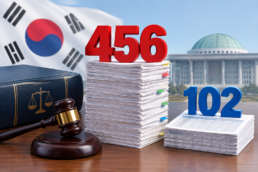
Seoul contains 472 designated redevelopment zones. Seventy of them have cleared their management and disposal approvals and still have not broken ground. Apartment construction starts in the city fell 25.3 percent year on year over the first five months of 2026. Behind that stall sits a stack of overlapping constraints: project financing shortages, relocation loan limits, mandatory rental housing ratios, restrictions on transferring union membership, and the reconstruction excess profit levy. Redevelopment does work when it finishes. Seoul added a net 55,270 homes through such projects over six years. However, the average project runs more than eight years from planning to completion, and some stretch past twenty.
So the two sides are arguing about different things. The president is arguing about who deserves to profit from housing. The mayor is arguing about whether housing gets built. Both can be right at once, which is exactly why the dispute will not resolve.
Does a Korean Real Estate Tax Actually Create Sellers?
This is the empirical question underneath everything, and Korea has run the experiment before.
Between 2017 and 2021, the previous progressive administration announced a long series of demand-side measures, including sharply heavier holding and transfer taxes on multiple-home owners. Seoul apartment prices rose anyway, and by a lot. The standard explanation is a trap the current package inherits: when you raise holding taxes and transfer taxes simultaneously, you make owning expensive and selling expensive at the same time. Owners respond by doing neither. They gift properties to family, restructure ownership, or simply wait for the next election.
<!– IMAGE SLOT 7 — Infographic 4: korea-property-tax-2026-revenue-effect.png –>
The 2026 design clearly learned something from that history, since the temporary capital gains relief exists precisely to keep the exit door open. Whether seventeen months of relief outweighs a permanent increase in holding costs is genuinely unknown. Meanwhile the regulatory environment surrounding any transaction has grown dense. All twenty-five Seoul districts now sit inside both regulated zones and land transaction permit zones. The latter designation requires prior approval plus two years of owner residence. Mortgage caps, meanwhile, stand at 600 million won for homes up to 1.5 billion, then 400 million above that, and 200 million above 2.5 billion. Those lending limits arrived in 2025 and have not loosened since.
Layer those rules together and a pattern emerges. Buyers who need financing have been progressively squeezed out, while buyers paying cash have not. For a market already accused of favoring inherited wealth, that is an awkward equilibrium. It also connects to the mobility question behind our coverage of the Korea housing crisis and the jeonse collapse.
What Korea Property Tax 2026 Means for Foreign Residents
Several provisions land directly on non-Koreans, and they cut both ways.
The flat tax for foreign workers rises. Foreign employees in Korea may elect a flat income tax rate instead of the progressive schedule, which tops out at 45 percent. That flat rate moves from 19 percent to 21 percent. In exchange, the eligibility window extends significantly: workers starting employment in Korea through the end of 2029, rather than 2026, can choose the option. Anyone electing the flat rate forfeits deductions and credits entirely, so the calculation depends heavily on salary and family situation.
Renters get a slightly better deal. The annual ceiling on the monthly rent tax credit rises from 10 million to 12 million won. For foreign residents paying Seoul rents, that is small but real.
Buyers face the residence test. Because deductions now hinge on actually living in the property, the foreign investor who buys a Seoul apartment and rents it out sits squarely in the penalized category. Foreign purchasers already navigate a separate permit regime, which we covered in detail in our guide to Korea’s foreign property rules. Add the new holding-tax math and the passive rental strategy looks considerably weaker than it did a year ago.
Everyone else feels it through rent. If landlords exit, rental supply tightens. Single-person households, who already occupy the most fragile end of the market, would feel that first — a segment we profiled in our look at the Korea solo economy.
The Calendar That Decides Everything
None of this is law yet, and the distinction matters enormously.
The bills went out for public comment through August 11. Vice-ministerial review follows on August 27, cabinet approval on September 1, and submission to the National Assembly by September 3. From there, the package enters ordinary legislative combat during the autumn session. The government projects a net revenue gain of 3.44 trillion won year on year. Cumulatively, that reaches 13.3 trillion won between 2027 and 2031. Fiscal stakes that size guarantee a fight.
Watch three things.
First, watch whether the four-billion-won threshold survives committee. Thresholds are where lobbying concentrates, and even a modest upward revision would exempt thousands of apartments in Gangnam, Seocho, Songpa, and Yongsan.
Second, watch the temporary capital gains relief. If it gets extended beyond 2028, the reform’s whole theory of change — heavier holding costs pushing inventory out — loses its deadline.
Third, watch the supply side. A reconstruction levy amendment sponsored by an opposition lawmaker recently attracted a senior ruling-party co-sponsor, which is unusual, since easing that levy has been near-taboo for the governing bloc. Cross-party movement there would signal that the supply argument is finally winning ground inside the coalition.
Reading the Signal
Strip away the brackets and ratios and one idea sits underneath the whole package: Korea is trying to legislate a distinction between shelter and asset.
The attempt is coherent. It is also, historically, the point where Korean housing policy tends to run into trouble, because the apartment has never been only one of those things. It is a residence, a retirement plan, a marriage prerequisite, a proxy for social standing, and the single largest line on most household balance sheets. Taxing the asset without touching the home requires a precision the tax code may not possess.
What happens next depends less on the formula than on the concrete. If starts recover and completions arrive, the tax reform becomes a footnote in a normalizing market. If construction stays stalled while holding costs climb, Korea gets the worst combination available — expensive to own, expensive to sell, and nothing new to buy. Investors watching from outside should treat Seoul construction starts, not tax brackets, as the leading indicator. The proptech platforms tracking those transactions in real time, which we profiled in our piece on Korea housing tech, will register the answer long before the National Assembly does.
In Korea, the price of an apartment shapes whether people marry and whether they have children at all. That dynamic is visible in the collapse of the Korean wedding industry. So the stakes here extend well past the revenue line. Korea property tax 2026 is a tax bill on paper. In practice, it is an argument about what an apartment is for.