

The Asan Factory Apple Cannot Replace
The Korea OLED display 2026 story begins with a question Apple will not answer in its keynote. When the company unveils its 2026 MacBook Pro this fall, the headlines will go to the M6 Pro chip and the thinner chassis. However, the more consequential change sits beneath the glass. For the first time since the original Retina display arrived in 2012, Apple is rebuilding the visual identity of the Mac from the panel up. The 14-inch and 16-inch Pro models are moving from mini-LED — the backlit technology Apple introduced in 2021 — to OLED.
Here is the part Apple will not say in the keynote. In the spring of 2026, exactly one factory in the world can produce these panels at Apple’s quality bar. It sits in Asan, a quiet city of 330,000 people in South Chungcheong Province, about 90 minutes south of Seoul. The fab is called Samsung Display A6. For the next 18 months, it is the only facility on the planet capable of cutting laptop-sized OLED panels from 8.6-generation glass at scale. As a result, the Korea OLED display 2026 story is not a side note for industry analysts. Rather, it is the supply chain story sitting inside every premium laptop you will see on a coffee shop table in 2027.
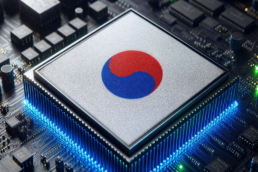
For foreign readers who follow Korea through K-pop or Squid Game, this is the part of the country most outsiders never see. Korea is not just a content exporter. In addition, it sits at a small set of choke points in global hardware — high-bandwidth memory, advanced lithography materials, premium biopharma manufacturing, the hydrogen industry buildout, and now premium OLED. Apple’s MacBook Pro decision pulls one of those choke points into the open. Furthermore, it sets up a five-year competition between Korean panel makers and a wave of Chinese rivals that is closing faster than most Western analysts expect.
This is the full story of how a sleepy Korean industrial town became Apple’s lifeline. Furthermore, it explains why the Korea OLED display 2026 cycle will define premium consumer hardware through the end of the decade.
What 8.6-Generation OLED Actually Means for the Korea Display Industry
Before going further, a short translation for non-specialists. In display manufacturing, a “generation” describes the size of the glass sheet a factory cuts panels from. Higher numbers mean larger sheets. Larger sheets mean more screens carved per substrate. Consequently, larger sheets mean lower per-unit cost.
Smartphone OLED panels, including the ones in every iPhone since 2017, are cut from 6th-generation glass roughly 1,500 by 1,850 millimetres. That sheet size works for phones because phone displays are small and the per-sheet cost gets spread across many panels. However, scale that same process up to a laptop screen, and the math collapses. A 14-inch MacBook Pro panel is roughly seven times the area of an iPhone 16 panel. Cut from 6th-generation glass, you get only a handful of usable panels per sheet. The defect rate goes up. Furthermore, the cost per panel runs near three times an equivalent LCD.
For instance, this is exactly why Apple waited 17 years to bring OLED to the Mac. The technology was ready. The economics were not. As one UBI Research analyst put it bluntly, 8.6-generation investments are too large to survive without an anchor customer. In particular, the MacBook Pro decision is that anchor.
The 8.6-generation glass used in Samsung Display’s A6 line measures 2,250 by 2,600 millimetres. That is more than double the area of a 6th-gen sheet. As a result, the per-panel cost of a laptop-sized OLED finally drops toward LCD range for the first time in display history. Industry researchers describe this leap as the moment OLED became commercially viable for the entire premium IT segment — laptops, tablets, and eventually monitors.
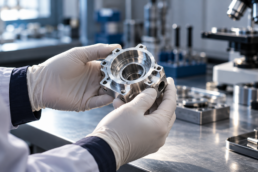
Meanwhile, the technical demands are brutal. To run an 8.6-generation OLED line, you need vapour deposition machines large enough to handle the bigger glass without temperature variance across the sheet. You also need cleanroom architecture that maintains tolerances over a doubled work area. Furthermore, you need yield rates above 80% before the line is commercially viable. Below that threshold, the cost of scrapped panels eats your margin alive.
Today, exactly one company in the world has hit those numbers. The Korea OLED display 2026 race begins there.
Samsung Display A6: The $2.8 Billion Bet on Asan
In April 2023, Samsung Display made a decision that looked aggressive at the time. Specifically, the company committed roughly 4.1 trillion won — about $2.8 billion — to a single project. The goal was to convert a building at the Asan campus into the world’s first 8.6-generation OLED IT line. The project was code-named A6.
For context, $2.8 billion is roughly the entire annual research and development budget of a mid-sized European auto maker. Samsung Display, however, is not a mid-sized European auto maker. It is the global leader in small and medium OLED, with roughly 43% market share in the third quarter of 2025 according to industry trackers. In addition, the company supplies more than half of Apple’s iPhone OLED panels every year. The A6 investment was a calculated bet that Apple would, sooner or later, need a partner who could deliver laptop OLED at premium quality and global scale.
Furthermore, Apple agreed to that partnership before the line was finished. According to industry reports, Apple signed an exclusive supply agreement with Samsung Display for touch AMOLED displays on the 2026 MacBook Pro — both 14-inch and 16-inch models. As one supply chain analyst noted, that exclusivity is the single most valuable position in premium IT display today.
The exclusivity will not last forever. Industry estimates put Apple’s 2026 panel order at roughly 2 million units. Meanwhile, Samsung Display is already building the operational case for adding LG Display as a second source from 2027 onward. However, for the launch year, the A6 line is the only path. As a result, the Korea OLED display 2026 supply chain has a single point of failure — and that point sits in Asan.
The Yield Race That Defines Korea OLED Display 2026
Inside the display industry, yield is the metric that separates demos from products. Specifically, yield is the percentage of panels off the line that pass quality inspection. A line running at 50% yield is throwing away half its glass. A line running at 90% — what the industry calls “golden yield” — is commercially mature.
Samsung Display began trial production at A6 in late 2025. By March 2026, Korean industry sources reported yields above 70%. Furthermore, a follow-up report later that month put the figure above 80%. By April, yields had climbed into the mid-80% range, approaching the 90% threshold that signals stable mass production. Apple’s order is estimated at 2 million panels for the year. As a result, the line is on track to begin full mass production by mid-2026.
To appreciate how fast that ramp is, consider the historical baseline. In particular, large OLED lines typically take 12 to 24 months to reach golden yield from initial trial runs. Samsung Display compressed that curve into roughly six months. The reason matters. The A6 line uses an evaporation process, the same technology Samsung has refined for over a decade in smartphone OLED. Consequently, the company brought decades of process engineering to bear on a much larger glass size. By contrast, a Chinese rival starting from scratch would face a steeper learning curve, even with comparable equipment.
However, the ramp has not been frictionless. Some reports in March 2026 suggested Samsung Display was slowing the buildout due to a combination of technical challenges and softer-than-expected demand. Meanwhile, other reports placed the production timeline firmly at June 2026. The gap between those reports illustrates how compressed and contested the Korea OLED display 2026 timeline has become. For Apple, even a one-quarter delay would push panel deliveries into the early shipping window for the 2026 MacBook Pro launch.
For now, the most reliable signal is Apple’s order book. Specifically, Apple does not commit to 2 million panels at launch volume unless it has internal confidence in the supply.
Why Apple Waited 17 Years for the OLED Switch
Apple is famously cautious about display transitions. The company moved iPhones to OLED in 2017 — five years after Samsung’s Galaxy line had already standardised on the technology. Apple brought OLED to the iPad Pro only in 2024. Furthermore, the Mac waited until 2026.
The reason is simple. For Apple, every display transition carries reputational risk. In particular, OLED panels have well-documented weaknesses — burn-in on static images, lifetime degradation, and historically higher cost. A laptop sees more static content than a phone. As a result, the burn-in problem is worse for productivity machines than for handheld devices. Apple needed two things before pulling the trigger. First, the company needed cost parity with mini-LED. Second, it needed a supplier whose process could guarantee panel lifetime under heavy productivity workloads.
The 8.6-generation glass solved the first problem. Specifically, the per-panel cost of a 14-inch OLED at 8.6-gen scale finally falls into competitive range with the mini-LED panels Apple has used since 2021. Meanwhile, Samsung Display’s process maturity solved the second. The company’s smartphone OLED yields have run at golden levels for years. Consequently, those process controls translate into the IT-scale line with predictable degradation curves.
Furthermore, the laptop OLED transition aligns with a broader Apple strategy. Specifically, OLED enables thinner industrial design, lower power consumption in mixed-use scenarios, and richer colour reproduction for creative professional workflows. As a result, the MacBook Pro becomes a more differentiated product against Windows competitors that still rely on mini-LED or standard LCD. For Apple, the 2026 launch is less about catching up and more about widening a category lead.
There is also a quieter strategic reason behind the Korea OLED display 2026 cycle. As Korean industry analysts have noted, OLED adoption on the MacBook Pro creates pricing leverage for Apple across its entire IT supply chain. Once an 8.6-generation panel is qualified for the MacBook Pro, other laptop manufacturers face pressure to follow. In addition, Korean OLED panel makers see demand expansion across the entire premium PC segment — not just Apple devices.
LG Display’s Counter-Move: Why Korean OLED Panel Makers Are Splitting the Apple Pie
While Samsung Display takes the spotlight on the MacBook Pro, the second pillar of Korea’s display industry is making its own moves. LG Display, long associated with TV OLED and smartphone supply, is positioning for a different angle of the same market.
In November 2025, LG Display announced a $925 million investment plan. Most of those funds are earmarked for the E6 production fab expansion at the company’s Paju campus, north of Seoul. The line currently produces 45,000 6th-generation substrates per month. The expansion will push that capacity to 60,000 substrates monthly. Meanwhile, the company hopes to finalise the buildout in the second half of 2026. As a result, the new capacity could come online in time to supply smartphone OLEDs for Apple’s iPhone 18 lineup.
Furthermore, LG Display is preparing for what may become its biggest single project in the smartphone segment. Industry reports in late 2025 indicate that Apple has tentatively allocated roughly ten production lines to LG Display for the 20th-anniversary iPhone, expected in 2027. The panel itself is described as a four-sided bending OLED requiring thinner encapsulation than any current display. As a result, LG Display is reportedly evaluating a $300 million modification to existing lines just for that project.
The strategic split between the two Korean leaders is now clear. Samsung Display owns the 8.6-generation IT segment for the next 18 months. Meanwhile, LG Display is doubling down on smartphone capacity and the next wave of foldable and bendable architectures. In particular, LG Display also dominates large OLED for TV and is the early leader in 51-inch automotive Pillar-to-Pillar displays. The company demonstrated this expanded automotive lineup at CES 2026 — including a Slidable OLED dashboard concept that hides a 33-inch panel inside the car when not in use.
For investors tracking the Korea display industry, this division of labour matters. Specifically, neither company is fighting the other for the same dollar. Instead, each is anchoring a different segment of Apple’s supply chain — and by extension, the broader premium consumer hardware market.
BOE’s Gen 8.6 Push: Two Years Behind, But Closing
The Chinese challenge to Korean OLED dominance is real, well funded, and accelerating. However, the gap is wider than headlines often suggest.
BOE Technology Group, China’s largest panel maker, announced in 2024 that it would invest roughly $9 billion in an 8.6-generation OLED IT line in Chengdu, Sichuan Province. The project is the centrepiece of China’s effort to replicate in OLED what it accomplished in LCD a decade ago. Furthermore, BOE confirmed in April 2026 that it had sent 8.6-generation panel samples to customers for validation. The company aims to begin mass production in the second half of 2026. Its planned monthly capacity at full buildout is 30,000 sheets — roughly double Samsung Display’s A6 line capacity.
The investment numbers are eye-watering. According to research firm Counterpoint Research, China is on track to account for 83% of global OLED capital expenditure by 2027. That figure is roughly six times Korea’s share. In addition, Visionox — China’s third-largest OLED maker — committed $7.6 billion to its own 8.6-generation line. Notably, 80% of that capital came as a subsidy from the Hefei provincial government. TCL CSOT followed with a $4 billion investment in an 8.6-generation inkjet-printed OLED line in Guangzhou. Combined Chinese investment in 8.6-generation OLED has now passed $20 billion.
However, capital is not the only variable. The gap between Korean and Chinese OLED competitiveness comes down to two deeper issues. First, equipment. Specifically, the core evaporation machines used in OLED production are made by only two firms in the world — Canon Tokki in Japan and Sunic System in Korea. Industry research firm WitDisplay reported that Samsung Display had pre-booked Canon Tokki’s deposition capacity through 2026. Meanwhile, BOE locked up Sunic System’s capacity over the same window. As a result, smaller Chinese players face a multi-year wait for tooling.
Second, yields. As of late 2025, BOE had failed to meet quality thresholds for Apple’s iPhone 17 OLED supply. Apple subsequently reassigned those orders to Samsung Display and LG Display. That track record affects how Apple — and other premium OEMs — evaluate Chinese panels for laptop applications. As Lee Mi-hye, a senior researcher at the Export-Import Bank of Korea, assessed in March 2026, Korea was still roughly two years ahead of China in IT OLED. That is narrower than her 2023 estimate of three to four years, but the lead remains decisive for the 2026 launch cycle.
Furthermore, the financial profile of Chinese panel makers raises questions about long-term viability. Visionox posted a cost-of-sales ratio of 102.3% in 2025 — meaning the company loses money on every panel sold. Everdisplay was even worse at 135.8%. By contrast, Samsung Display and LG Display both run profitably. As one Korean industry source put it, Chinese OLED expansion is effectively sustained by subsidies rather than internal earnings. Whether that model can survive a downturn is the open question.
For the 2026 MacBook Pro cycle, however, the answer is settled. Apple is buying Korean.
Beyond Laptops: Cars, Foldables, and the Next Frontier
The Korea OLED display 2026 story does not end with the MacBook Pro. In fact, the laptop segment is just the most visible piece of a broader expansion across three new application domains.
The first is automotive. Cars have become rolling display platforms over the past decade. As a result, a single premium vehicle can now contain three to seven OLED panels. Specifically, those screens span the instrument cluster, central infotainment, passenger displays, head-up displays, and rear seat entertainment. According to market tracker Omdia, automotive OLED panel shipments will double from 3 million units in 2025 to 6 million units in 2026. Meanwhile, Samsung Display already holds roughly 70% of the automotive OLED market. Furthermore, Hyundai’s Genesis brand will introduce the GV90 SUV in 2026 with Samsung Display OLED, and the next-generation GV80 in 2027 will follow the same path.
The second is foldables. Apple is widely expected to launch its first foldable iPhone in 2026. In addition, Samsung Display has secured an exclusive supply agreement for the OLED panels in that device for at least two years. In particular, Samsung Display already holds roughly 52% of the global foldable OLED market by shipments in Q2 2025. Meanwhile, BOE sits at 26%, CSOT at 13%, and Visionox at 7%. With Apple entering the foldable category, annual global foldable shipments could surpass 30 million units by 2027.
The third is the next generation of ultra-thin displays. Samsung Display has confirmed mass production of 0.6mm OLED panels in 2026 — roughly 30% thinner than today’s premium smartphone displays. The new architecture, called Color Filter on Encapsulation or CoE, is the leading candidate for Apple’s iPhone Air 2 in 2027. Furthermore, both Samsung Display and LG Display are racing to qualify CoE production capacity ahead of Apple’s third-quarter 2026 decision deadline.
The fourth, slightly further out, is monitors and large IT. Specifically, OLED monitor shipments grew 84% year over year in 2025, reaching 2.6 million units. Omdia projects laptop OLED shipments alone will hit 14 million units in 2026 — double the 2025 figure — and surge to 28 million units in 2027. Each of these segments will eventually run on 8.6-generation glass, and each represents a potential anchor for additional Korean capacity.
Taken together, the Korea OLED display 2026 cycle is not a single product launch. Rather, it is the opening move in a five-year expansion of OLED into every premium screen category that currently uses LCD or mini-LED.
What Foreign Investors Should Watch in the Korea Display Industry
For overseas investors evaluating the Korean display industry, three signals will define the next 18 months.
First, the A6 yield curve. Specifically, Samsung Display’s progression from 70% to 90% yield is the single most important metric in the sector. Furthermore, every percentage point of yield improvement reduces the cost per panel and strengthens the company’s pricing power in negotiations with Apple and other premium OEMs. Investors can track quarterly disclosures and supply chain reports for confirmation.
Second, BOE’s 2026 mass production timeline. If BOE hits its second-half 2026 launch target with usable yields, the Korea-China gap narrows faster than Counterpoint’s two-year estimate suggests. Meanwhile, BOE could slip into 2027 — a delay the company’s iPhone supply track record suggests is plausible. As a result, Korean panel makers gain another full year of pricing leverage on premium contracts.
Third, Apple’s CoE decision. Apple’s third-quarter 2026 internal deadline on whether to adopt Color Filter on Encapsulation for the 2027 iPhone Air will reshape the smartphone OLED supply chain. As a result, both Samsung Display and LG Display are mobilising capacity ahead of that decision. The chosen winner will likely lock in two or more years of premium iPhone supply. By contrast, BOE was excluded from the iPhone 17 OLED supply chain after failing to meet LTPO yield standards. As a result, the CoE decision is effectively a Korea-only race.
For broader sector exposure, foreign investors have several routes. Specifically, Samsung Electronics and LG Electronics carry display subsidiaries inside their consolidated structure. Korean institutional investors track both companies’ display segments separately. In addition, Korean equipment suppliers offer a more concentrated bet. Specifically, those firms make deposition machinery, encapsulation materials, and inspection systems for the Korea OLED display 2026 buildout. Furthermore, the Seoulz coverage of Korea’s Top 10 Scale-Ups 2026 and the Korea AI chip startups 2026 provides broader industrial context. In particular, those pieces show how display fits into the country’s hardware export portfolio.
For investors with longer horizons, the question is durability. The Korea LCD industry once held a 50-percentage-point lead over China before losing the segment over a decade. Today, that gap in OLED stands at roughly two years and is narrowing. As a result, the next five years will determine the answer. Either the Korean display industry holds a structural premium position, or it becomes another cautionary tale in East Asian manufacturing.
The Korean Discount Meets the Korean Premium
For decades, foreign investors have applied a “Korea discount” to Korean equities. Specifically, this is a structural haircut tied to chaebol governance, opaque cross-holdings, and minority shareholder concerns. However, the Korea OLED display 2026 story illustrates the counter-narrative now emerging across multiple Korean industries. Specifically, in the segments where Korea controls a global supply chain choke point, the country commands a premium that no discount can erase.
Apple is not buying MacBook Pro OLED panels from Asan because Samsung Display is cheap. The company is buying because no alternative exists at the required quality. Furthermore, the same logic applies to high-bandwidth memory, advanced semiconductor packaging, premium foldable OLED, and a growing list of automotive display formats. In each case, Korean firms occupy a position where global hardware ecosystems cannot route around them — at least not yet.
For foreign readers, the takeaway is twofold. First, the most consequential Korean industries in 2026 are not the ones generating cultural headlines. Rather, they are the ones embedded in your next laptop, phone, car, and AI server. Second, the technology gap that defines those positions is real, measurable, and being defended through aggressive capital deployment by both Korea and China. As a result, the next five years will determine which side of that gap holds.
For now, the answer is clear. When you open the new MacBook Pro this fall, the OLED screen will flicker to life for the first time. Furthermore, the photons travelling through the glass will have been emitted in a fab in Asan. In addition, the Korean display industry will have just delivered its most consequential product in twenty years.
The Korea OLED display 2026 race is on. Furthermore, it is far from over.