


On a Wednesday at noon in November 2025, hundreds of people lined up along Bishop Street in downtown Honolulu. They were not waiting for an iPhone launch or a celebrity chef opening. Instead, they were queuing for a convenience store. More precisely, they were queuing for the CU Hawaii convenience store. This was Korea’s first convenience store ever to open in the United States.
The location, 1088 Bishop Street, sits in the same building where a Longs Drugs and an 88 Mart used to operate. Downtown office workers passed it daily for years without noticing. However, on November 12, 2025, it became something else entirely. Specifically, it became a 2,900-square-foot beachhead for one of the world’s most ambitious retail exports. For Korean retail watchers, the moment carried unusual weight. After all, the modern convenience store format was invented in the United States in 1927. Now, almost a century later, a Korean chain was opening its first store in the format’s birthplace.
This is the story of how a Korean convenience store landed in Hawaii. Furthermore, it is the story of why the BGF Retail playbook behind it could reshape global retail in the next five years.
The Day Korea Came to American Convenience Retail
Robert Kurisu, CEO of CU Hawaii LLC, did not understate the significance. “Downtown Honolulu is the perfect place for us to open our first CU Hawaii,” he said at the grand opening. The ceremony itself was anchored by a traditional Hawaiian blessing. Meanwhile, Hong Jung-kook, BGF Retail’s vice chairman, used different language at the same event. He called the United States “the birthplace of the modern convenience store.” In addition, he described the launch as a milestone for Korean retail abroad.
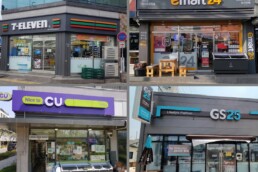
The numbers behind that statement are remarkable. CU operates roughly 18,500 stores in South Korea. As a result, it is the country’s largest convenience store chain by location count. In addition, the brand runs about 730 stores across Mongolia, Malaysia, Kazakhstan, and now Hawaii. Consequently, CU’s parent BGF Retail posted $6.16 billion in 2024 sales and $176 million in operating income. This decisively outpaced rival GS25 in profitability for the first time. CU started in 1990 as a licensee of Japan’s FamilyMart. Furthermore, it only rebranded as CU in 2012. For a chain with that history, the trajectory is striking.
However, what makes the CU Hawaii convenience store noteworthy is not the financial firepower. It is the strategic logic of the location itself. Hawaii is not a typical American retail market. Instead, it is a high-traffic crossroads where Asian, Pacific Islander, and mainland American consumers intersect. The state hosts roughly 10 million tourists annually. Furthermore, average daily spending per visitor reaches about $235, according to Hawaii Tourism Authority data. In addition, K-pop and Korean food have built unusually deep roots in Hawaii’s cultural fabric. Specifically, those roots run far deeper than in most U.S. metros.
In short, BGF Retail did not pick Hawaii to compete with 7-Eleven. Instead, it picked Hawaii to learn how Americans respond to a Korean convenience store before scaling to the mainland. As a result, the Honolulu store functions as something between a flagship and a controlled experiment. Specifically, it is a place where Korean convenience store culture meets American consumer expectations under low-stakes conditions.
Why Hawaii? The Strategic Logic Behind the CU Hawaii Convenience Store
The CU Hawaii expansion did not happen accidentally. According to Kurisu, BGF Retail began planning the entry in 2023, two full years before the store opened. The company recognized something specific about Hawaiian retail culture that mainland strategists often miss. Specifically, it spotted the “community store” model.
“Community store is also ingrained in Hawaii culture here,” Kurisu told Hawaii News Now at the opening. “We just thought we’d bring in something a little bit new and fresh.” In other words, Hawaii already understands the format CU is selling. Small footprint. Fresh prepared food. Extended hours. Multiple service touchpoints. These are not foreign concepts in Honolulu. By contrast, the closest cultural reference in Atlanta or Chicago would be a 7-Eleven attached to a gas station. That is a category operating on entirely different consumer expectations.
Furthermore, the demographic case for Hawaii is unusually strong. The state has the highest concentration of Asian Americans in the country at roughly 37% of the population. Meanwhile, Korean visitors alone account for a substantial share of inbound tourism. In addition, direct flights connect Honolulu to Seoul daily. Consequently, the CU Hawaii convenience store opens with a built-in customer base of three groups. First come Koreans who already know the brand. Second come locals familiar with the convenience store format. Third come tourists looking for something Instagram-worthy.
Compare that with the alternative — opening in Los Angeles, New York, or Texas — and the calculus becomes obvious. A Los Angeles Koreatown launch would force CU to compete directly against entrenched Korean grocery infrastructure. Meanwhile, a Manhattan launch would face crushing real estate costs. Texas, by contrast, would impose the gas-station model on consumer expectations. Hawaii avoids all three traps. Moreover, it offers a smaller, more contained market for testing and iteration before any mainland push.
Inside the Store: 2,900 Square Feet of Korean-American Hybrid
Walk into the CU Hawaii convenience store and the first thing you notice is the wall. Specifically, the ramyun wall — a vertical display of dozens of Korean instant noodle varieties. The selection ranges from Shin Ramyun to Buldak to Ottogi specialties. Next to it sits a self-cooking station. There, customers can heat their chosen ramen on-site and eat it at one of the in-store tables. It is the same “Han River Ramyeon” experience that has become a viral fixture on TikTok. Now, that K-convenience experience has been transplanted faithfully to Honolulu.
In addition, the store includes several elements that have no clear American precedent:
- The Delaffe station — a self-service drinks bar where customers grab cups filled with ice and mix flavored pouches to create their own beverages. The iced coffee with banana-flavored milk has emerged as an early customer favorite, according to Aloha State Daily.
- A K-beauty zone with more than 40 cosmetic products, ranging from toners to sheet masks. For context, this is a category that 7-Eleven and Circle K do not carry at any meaningful scale.
- DIY tteokbokki kits that let customers assemble their own version of the spicy rice cake dish at home.
- A photo booth featuring CU’s brand mascot K-Roo. This element is designed for the social-media-driven retail behavior that defines Korean shopping culture.
Furthermore, the store stocks roughly 200 PBick items — CU’s exclusive private-label snack line. The lineup includes churro cookies with chocolate dipping sauce, crispy shrimp chips, and chili-butter corn chips. PBick was launched in 2024 as part of BGF Retail’s broader push to expand private-brand sales. Notably, those private-brand sales now account for 29.5% of CU’s domestic sales, according to Digital Today. For the CU Hawaii convenience store, PBick functions as both a margin engine and a differentiator. In particular, these are products customers cannot buy anywhere else in the state.
The bakery section deserves separate mention. Specifically, CU’s flagship cream-filled bread series sits in a dedicated refrigerated case. In Korea, the line is known as the Yonsei Milk Cream Bread. Furthermore, this product alone has sold more than 50 million units since its 2022 launch. As a result, it now accounts for roughly 60% of CU’s total refrigerated dessert sales. In Honolulu, it represents an early test. Specifically, the test asks whether Korean dessert formats translate to American sweet preferences.
The Local Playbook: Sheldon Simeon, Sig Zane, and the Ho’ina Line
Critically, the CU Hawaii convenience store is not a copy-paste of a Seoul store. Instead, BGF Retail built deliberate localization into the design from day one. Three local partnerships anchor that strategy.
Chef Sheldon Simeon is a two-time finalist on Bravo’s Top Chef. Furthermore, he is one of Hawaii’s most recognizable culinary figures. Simeon consulted on the store’s exclusive grab-and-go food line, branded Ho’ina (Hawaiian for “to return home”). The line includes Simeon’s celebrated garlic noodles, smoked ahi onigiri, kalbi bento, and kimchi rice Spam musubi. According to Gina Haverly, president of CU Hawaii, the team made a deliberate choice. Specifically, they chose not to alter the Korean menu for local tastes. Instead, they created Ho’ina as a parallel product line. “We haven’t adjusted the recipes to the local palate,” she told KHON2. “What we’ve done instead for our local palate is we created a line called Ho’ina.”
This is a subtle but important strategic distinction. In short, CU Hawaii preserves Korean authenticity for one customer segment. Meanwhile, it adds genuinely local options for another. By contrast, many global retail brands try to “blend” their offering. Often, this approach produces a watered-down version of both.
The second partnership involves Kūha’o Zane of Sig Zane Designs, a renowned Hilo-based design studio. The collaboration extends far beyond signage. Specifically, Zane’s distinctive ramen-noodle leaf pattern appears throughout the space. The pattern shows up on staff uniforms, totes, mugs, water bottles, and even the store’s interior architecture. Tote bags retail at $2.99 to $4.99, while branded color-changing mugs sell at $14.99. As a result, the store functions as three things at once. It is a retail outlet, a souvenir shop, and a brand statement simultaneously. Specifically, these are three functions Korean convenience stores routinely serve in Seoul. However, they rarely combine in American retail.
The third partnership ties the CU Hawaii convenience store to Island Vintage Coffee and Lin’s Lei Shop. Island Vintage supplies the brewed coffee program. Meanwhile, Lin’s provides fresh leis sold at the counter. Critically, no Korean convenience store stocks lei because no Korean shopper would buy one. In particular, the lei display is a signal. It shows that BGF Retail is not just translating its Korean playbook. Rather, it is genuinely adapting to Hawaiian retail expectations.
The 50-Store Plan: Waikiki, Ala Moana, and the Three-Year Map
CU Hawaii LLC has been explicit about its expansion ambitions. Specifically, the company plans to open 50 stores across Hawaii within three years. Furthermore, at least nine more locations are scheduled within the first year after the Honolulu launch. According to BGF Retail, the next sites under consideration include:
- Waikiki Beach — the state’s primary tourist district. Average daily foot traffic here exceeds anywhere else on the islands.
- Ala Moana — the central commercial corridor. It is anchored by one of the largest open-air shopping centers in the United States.
- Kahala — an upscale residential and resort area on Honolulu’s southeast coast.
- Premium residential neighborhoods elsewhere on Oahu. Subsequent expansion will target neighbor islands.
Furthermore, the company has launched a dedicated CU Hawaii loyalty app. The app mirrors the engagement mechanics of Korean retail apps. New users receive 250 points on signup, redeemable for drinks and food. As of early 2026, the app is the foundation of CU’s customer data strategy in Hawaii. In effect, it gathers basket-level information for product mix refinement. Specifically, BGF Retail can use this data to refine its mainland push later. For more on how Korean retailers approach data-driven retail, see our coverage of Korea’s live commerce market.
The pacing of this expansion matters. In particular, 50 stores in three years is aggressive for any new market entrant in Hawaii. The challenge is even greater for an entrant without an existing logistics network. Moreover, BGF Retail will need to do several things in parallel. Specifically, it must build cold-chain capacity, train franchise operators, and source ingredients for the Ho’ina line at scale. As a result, the first year will likely focus on logistics infrastructure as much as on store openings.
Meanwhile in India and Saudi Arabia: The Wider K-Convenience Push
The CU Hawaii convenience store is the most visible piece of a broader Korean convenience store global expansion. Furthermore, two parallel initiatives launched in 2025 deserve attention.
First, Emart24 is the smallest of the four major Korean chains. The company is a Shinsegae Group affiliate. In mid-2025, Emart24 announced it would open the first Korean convenience store in India. The launch partner is Jung Brothers Hospitality and the Solitaire Group. The first Indian location is scheduled for Pune, Maharashtra. Subsequent expansion will target Tier-1 cities. This is a significant move for two reasons. For one, India represents one of the largest untapped retail markets globally. In addition, Emart24’s existing footprint provides a regional supply chain template. Specifically, over 100 stores in Malaysia and a recent Cambodia entry support the Indian launch.
Second, GS25 is operated by GS Retail and is CU’s primary domestic rival. GS25 is establishing a legal entity in Saudi Arabia. This marks the first Korean convenience store entry into the Middle East, according to AJU Press. The Saudi market matters strategically. Specifically, it sits at the intersection of three trends. Those are a young population, rising disposable income, and intense interest in Korean culture, particularly K-pop and K-drama. Meanwhile, GS25 already operates 355 stores in Vietnam and 274 in Mongolia. As a result, the chain has a track record of operating in markets without convenience store traditions. For more on GS Retail’s broader strategy, see our analysis of Korea’s top 10 scale-ups for 2026.
Together, the three initiatives represent the most coordinated overseas push in the history of Korean convenience retail. Specifically, those initiatives are CU in Hawaii, Emart24 in India, and GS25 in Saudi Arabia. Moreover, all three were announced or executed within an 18-month window. As a result, 2025 to 2026 will likely be remembered as an inflection year. This is the year when Korean convenience store culture became a global export category. It is no longer just a domestic phenomenon.
Can Korea Beat 7-Eleven on Its Home Turf?
The American convenience store market is not a small target. Specifically, the U.S. industry generated $45.9 billion in 2026 revenue across roughly 152,000 locations, according to IBISWorld. Furthermore, the market is dominated by three players. 7-Eleven runs 12,325 stores. Alimentation Couche-Tard / Circle K operates 6,852 Couche-Tard stores plus 6,846 Circle K stores. Meanwhile, Casey’s General Stores runs about 2,807 locations. For context, CU’s entire U.S. footprint after three years will likely be one one-thousandth of 7-Eleven’s existing scale.
However, the story is more nuanced than the raw store count suggests. For one thing, 7-Eleven and Circle K are largely gas-station convenience stores. By contrast, CU is a walk-in urban format. Consequently, the two models compete only at the margins. Moreover, the U.S. industry is in the middle of a significant transformation. In August 2025, Couche-Tard’s $47 billion takeover bid for 7-Eleven’s parent Seven & i Holdings collapsed. Following that collapse, 7-Eleven announced an aggressive new plan. Specifically, the chain plans to open 1,300 new large-format, food-focused U.S. stores by 2030, according to CSP Daily News. In particular, the focus on prepared food is a tacit acknowledgement. The Korean and Japanese convenience store models — fresh meals, extensive bakery, premium drinks — outperform the American gas-station model on per-store revenue.
In other words, 7-Eleven is moving toward CU’s playbook, not away from it. Furthermore, the CU Hawaii convenience store opens at the precise right moment. Specifically, American consumers — particularly millennials and Gen Z — are increasingly receptive to fresh-prepared, internationally inflected convenience food. Wawa, Sheetz, and Kwik Trip have built strong regional businesses on exactly this premise. As a result, CU Hawaii enters a culturally primed market. Specifically, viral TikTok content showing Korean convenience store food has prepped American consumers for years. Foreign customer sales at CU stores in Korea rose 101.2% year-over-year in 2025, according to SeoulKoreaAsia. That figure shows just how aggressively the format has been adopted by international visitors.
That said, CU’s Hawaiian foothold faces real challenges. First, the labor cost structure in Hawaii is significantly higher than in Korea. As a result, this compresses the unit economics of a 24-hour fresh-food model. Second, U.S. food safety regulations for prepared meals are different and often more demanding than Korean standards. In addition, sourcing Korean ingredients at scale across 50 locations will require infrastructure investment. Specifically, BGF Retail must build either local production capacity or a robust import logistics chain. Third, the CU Hawaii convenience store must achieve real density to capture Korean-style impulse traffic. Specifically, a single store in downtown Honolulu cannot replicate Korean convenience store culture. The Korean model depends on a “five-minute walk” infrastructure. As a result, the 50-store target is not just an ambition. Rather, it is the minimum required for the format to function as designed.
What CU Hawaii Tells Us About the Future of Korean Retail
The CU Hawaii convenience store is small. Specifically, 2,900 square feet, 20 employees, one location. BGF Retail’s domestic footprint stretches to 18,500 stores. Compared to that scale, the Hawaii operation represents a rounding error in revenue terms. However, the strategic significance is much larger.
For one, the Honolulu store is a proof-of-concept. It tests whether Korean convenience store culture can travel beyond Asia. Mongolia, Malaysia, and Kazakhstan demonstrated that the format works in emerging markets. Those markets had limited existing convenience infrastructure. By contrast, Hawaii is a different test entirely. It places CU in a developed retail market, against established American competitors. Furthermore, the test runs under American consumer expectations and American regulatory frameworks. If it succeeds, the mainland U.S. push becomes a question of execution rather than concept.
In addition, the CU Hawaii expansion provides a template that other Korean retailers will study closely. Specifically, three reusable patterns emerge. First, the master franchise structure with WKF Inc. provides a model for U.S. partnerships. Second, deliberate localization through Sheldon Simeon and Sig Zane shows how to honor local culture. Third, the parallel-product approach preserves Korean authenticity while adding local lines. As a result, the next Korean retail brand entering the U.S. will benefit from these lessons. Possible candidates include Olive Young, Daiso Korea, or a coffee chain like Mega MGC.
Furthermore, the broader strategic context cannot be ignored. Korea’s domestic convenience store market posted its first-ever decline in store count in 2025. Specifically, the four major chains shed a combined 1,586 locations. In other words, domestic saturation is no longer hypothetical. It is structural. Consequently, overseas expansion is no longer optional for chains like BGF Retail. Instead, it is the only meaningful path to long-term growth. The CU Hawaii convenience store is the highest-profile expression of that strategic necessity.
For investors and observers, the question to watch over the next 24 months is straightforward. Specifically, how quickly can BGF Retail get to 50 stores? Furthermore, what will the second-year same-store revenue look like? If the Honolulu store can build a loyal local base and attract repeat tourist visits, the economics will support broader expansion. However, if the novelty wears off without converting to habitual purchase patterns, the 50-store target will need significant revision.
Closing the Loop: A Korean Convenience Store in the Birthplace of the Format
In 1927, J.C. Thompson started selling milk, bread, and eggs from an icehouse dock in Dallas, Texas. That moment is generally credited as the birth of the modern convenience store. Almost a century later, on Bishop Street in Honolulu, a Korean chain opened a different kind of store. Specifically, it would have been unimaginable to Thompson. The 2,900-square-foot space stocks K-beauty masks, Sheldon Simeon’s smoked ahi onigiri, a self-service ramen wall, and Sig Zane-designed merchandise.
The arc from one store to the other is a remarkable story. It is about what convenience retail can become when shaped by a different culture’s assumptions. Specifically, those assumptions concern food, urban density, and daily routine. In 1927, convenience meant the ability to buy milk after the grocery store closed. By contrast, in 2026, convenience means a hot meal, a private-label snack, an Instagrammable drink, and a souvenir tote. All of that fits in a single 100-square-meter footprint. Moreover, it is available within a five-minute walk of where you happen to be.
The CU Hawaii convenience store is the moment that exported model arrived on American soil. Whether it scales to 50 stores or to 500, it has already accomplished one thing. Specifically, it has reframed what a convenience store can be in the country where the format was born. For that reason alone, it is worth watching.





Excellent explanation, thanks!