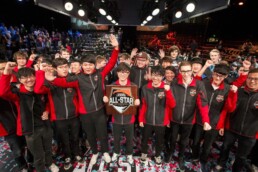


It was a Sunday afternoon in Riyadh when Gen.G’s players lifted the League of Legends trophy at the 2025 Esports World Cup. They had just beaten a Chinese squad in a five-game final. Meanwhile, 3.2 million online viewers sat locked to their screens. In addition, the Korean team walked away with $600,000 in prize money. That payout came entirely from a sovereign wealth fund. In a country where public gaming was barely legal a decade ago.
That moment, however, was not a coincidence. It was the product of a calculated, multi-billion-dollar geopolitical bet. As a result, Saudi Arabia has quietly become the most powerful financial force in competitive gaming — and Korea its biggest beneficiary. Korea esports investment is now at the center of a global power shift. Most sports business analysts have yet to fully map it. This article breaks down how Saudi oil money is flowing into Korean teams. It explains why Korean organizations are winning that race. Moreover, it maps out what all this means for investors watching from the outside.

The $75 Million Question: What Is the Esports World Cup?
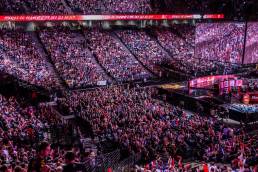
To understand why Korea esports investment matters, you first need to understand the tournament reshaping the entire industry. The Esports World Cup (EWC) is not just another gaming competition. It is, by total prize pool, the largest esports event in the world. Moreover, it takes place every summer in Riyadh, Saudi Arabia.
In 2024, the inaugural EWC featured a prize pool of over $60 million. In 2025, that figure grew to $71.5 million. For 2026, which runs from July 6 to August 23, the EWC Foundation has announced a total prize pool of $75 million. That covers 25 tournaments across 24 game titles. The Club Championship alone — a cross-game competition rewarding organizations across multiple titles — carries a $30 million allocation. The winning club takes home $7 million.
For context, the Super Bowl pays the winning team roughly $150,000 per player. The EWC Club Champion, by comparison, takes home institutional-level money. That prize funds entire organizations for a year. Moreover, the EWC is not just a prize machine. It is a visibility engine. The 2025 edition reached 750 million viewers worldwide. It generated 350 million hours watched. As a result, any team that competes seriously at EWC gains global brand exposure that no other esports calendar event can replicate.
How Saudi Arabia Bought the Esports World
The EWC does not exist in a vacuum. It is the most visible product of a sweeping, state-backed strategy. Saudi Arabia wants to become the global hub for games and esports. In September 2022, Crown Prince Mohammed bin Salman launched the National Gaming and Esports Strategy. It was backed by a $38 billion commitment from the Public Investment Fund (PIF). PIF is one of the largest sovereign wealth funds in the world, with $925 billion in assets.
PIF’s gaming vehicle is called Savvy Games Group (SGG). Since its establishment, SGG has moved aggressively. In January 2022, it acquired ESL and FACEIT — the two largest esports tournament operators on the planet — for $1.5 billion. It merged them into the ESL FACEIT Group (EFG). EFG now produces the EWC itself. As a result, Saudi Arabia is both the funder and the organizer of the world’s biggest esports stage. Furthermore, SGG acquired Japanese developer SNK. It also took a $4.9 billion stake in mobile games giant Scopely. In addition, it secured minority positions in Nintendo, Capcom, Take-Two Interactive, and Electronic Arts. By Savvy’s own count in its 2023 annual report, the company holds a 40% stake in the global esports industry.
In late 2025, reporting emerged that PIF was pursuing a 93% ownership stake in Electronic Arts. The deal was valued at approximately $29 billion. If completed, it would bring EA’s competitive titles — including Apex Legends, Battlefield, and EA Sports FC — under Saudi control. The full scope of this acquisition remains in flux. However, the direction is clear: Saudi Arabia is not buying into esports. It is buying esports.

Korea’s Seat at the Table
Into this Saudi-funded arena, Korean teams have walked with a level of dominance that no other country can match. The numbers tell the story clearly. At EWC 2024, T1 won the League of Legends tournament. They defeated China’s Top Esports 3-1 in the final. Their prize: $400,000. At EWC 2025, Gen.G went one step further. They won the same tournament after a dramatic 3-2 comeback against a Chinese squad. Their payout: $600,000. T1 finished third in the 2025 edition, collecting additional prize money in the process.
In addition to League of Legends, the Korean presence at EWC 2025 extended across multiple titles. Nongshim placed third in PUBG Mobile. The Overwatch 2 event was won by Team Falcons — a Saudi team whose entire Overwatch roster was, in fact, Korean. That detail deserves a closer look. When Saudi Arabia’s own national esports organization fields its most competitive roster, it recruits Korean players. In other words, Korean talent is so globally sought-after that it supplies not only Korean teams — it supplies everyone else’s teams too.
For 2026, the stakes are even higher. The EWC Club Championship prize has grown to $7 million for the winning organization. T1 and Gen.G have both been confirmed as part of the 40-club EWC Club Partner Program. As a result, they receive annual financial support from the EWC Foundation. This comes in addition to tournament prize money. That support can reach up to $1 million per organization — paid simply for being elite, consistent competitors.
T1’s $58.8M Year — What Korean Esports Teams Are Actually Earning
Prize money is only part of the story. The more important data point is what Korean organizations are building commercially. Specifically, they are converting Korea esports investment momentum — EWC exposure, World Championship wins — into long-term business revenue.
T1’s 2025 financial results, disclosed in early 2026, reveal a stunning transformation. The organization reported revenue of $58.8 million (88.6 billion Korean won). That figure represents an increase of over 80% from the $32.5 million recorded in 2024. More significantly, 2025 was the first year in T1’s history that the company recorded an operating profit — at $1.7 million. For years, T1 was celebrated as a championship team that nonetheless lost money. However, the combination of three consecutive World Championship wins, EWC exposure, and disciplined commercial expansion finally pushed the organization into the black.
The geographic breakdown of that growth is particularly interesting. T1’s sales in America nearly doubled from 2024 to 2025. European revenue grew by 50%. Asian revenue — already the largest segment — grew by an additional 36%. This pattern suggests that EWC’s global broadcast reach is directly converting into merchandise sales, sponsorship deals, and digital content revenue for Korean organizations. In particular, Faker’s continued excellence at age 29 is virtually unheard-of in professional esports. He keeps T1’s international brand alive in ways that no marketing spend could replicate.
T1 is structured as a joint venture between SK Telecom’s investment arm SK Square (55.4%) and US media conglomerate Comcast (34.3%). That ownership structure means Korean esports is already deeply integrated with American institutional capital. As a result, T1 functions less like a traditional esports team. It operates more like an entertainment company with a gaming core. In structure, it resembles the Dallas Cowboys — simultaneously a sports franchise and a media business.
Gen.G tells a similar story from a different angle. Founded in 2017 and headquartered in both Seoul and Los Angeles, Gen.G has built a genuinely global footprint. The organization operates teams across League of Legends, Valorant, and other titles. Its 2025 League of Legends roster had one of the most dominant seasons in LCK history. The team went 23-0 before the EWC. It won the MSI title, then claimed the EWC trophy. Gen.G’s dual-city structure gives it credibility with Korean fans and American sponsors alike. Purely domestic organizations cannot replicate that positioning.
The China Factor: LPL vs LCK and Why Saudi Money Changes the Equation
No analysis of Korea esports investment is complete without understanding the China dynamic. The League of Legends Pro League (LPL) is the only regional competition that consistently challenges the LCK’s dominance at international events. China has more total players and a larger domestic prize pool. It also has arguably deeper organizational infrastructure than Korea in some titles. However, Korea maintains a structural edge that money alone cannot close: its player development pipeline produces individual mechanical skill at a level no other country has replicated.
At the 2025 World Championship, hosted in China, LCK teams produced an 83% win rate in inter-regional matchups. All four Korean teams advanced through the Swiss stage. The final was an all-LCK matchup between T1 and KT Rolster. That outcome peaked at 6.7 million concurrent viewers — the highest non-Asian Games esports audience in history. Meanwhile, China’s teams fell short of producing either finalist, despite home-crowd advantage and deep organizational support.
The Saudi EWC framework, meanwhile, has introduced a new competitive dimension that benefits Korea directly: the Club Championship. Because the Club Championship rewards performance across multiple titles — not just one game — Korean organizations that field strong rosters across League of Legends, Valorant, and other titles can accumulate points in ways that single-game specialists cannot. Furthermore, the $7 million Club Championship prize incentivizes exactly the kind of multi-title organizational investment that T1 and Gen.G are already pursuing. In this environment, Saudi money is not neutral. By setting the largest prize pools in games where Korean teams dominate, the EWC has effectively created a revenue transfer mechanism from Gulf oil capital to Korean esports organizations.
EWC 2026: $75 Million and Korea’s Next Move
The 2026 Esports World Cup runs from July 6 to August 23 in Riyadh. For Korean esports organizations, it represents the largest single commercial opportunity of the year. The League of Legends tournament at EWC 2026 carries an individual prize pool — specific allocations are distributed during the event — as part of a three-year partnership between Riot Games and the EWC Foundation that runs through 2027. Valorant and Counter-Strike 2 have also seen their prize pools increased to $2 million each for 2026.
In addition to the existing game lineup, EWC 2026 introduces the Esports Nations Cup (ENC) — a $20 million tournament running November 2 to 29, 2026 in Riyadh, structured around national representation rather than club organizations. For the first time, Korea will field official national teams across 16 titles, competing for country-level glory in a format explicitly modeled on the Olympics. South Korea has already selected coaches for key events, including former KT Rolster head coach Kang “Hirai” Dong-hoon for the League of Legends national team, which will aim to defend its 2022 Asian Games gold medal.
The ENC matters for the Korea esports investment thesis because it institutionalizes national-level competition in ways that create permanent infrastructure demand. Countries need training centers, national coaching staffs, and player pipelines. For Korea, where that infrastructure already exists through KeSPA and decades of professional league development, the ENC is an opportunity to monetize an existing asset. For countries that lack that infrastructure, the ENC creates pressure to build it — often by hiring Korean coaches.
Meanwhile, T1 and Gen.G are both positioned within the EWC Club Partner Program for 2026, receiving organizational support from the EWC Foundation. The 40-club program has distributed over $100 million to partner organizations across the first three years of the EWC’s existence. Both Korean organizations qualified automatically through their 2025 Club Championship performance, meaning they enter 2026 with guaranteed baseline revenue before competing for additional prize money.
What This Means for Investors
The Korea esports investment landscape in 2026 looks meaningfully different from what it did three years ago. Several structural shifts have occurred that are worth tracking for anyone approaching this market from a business or investment perspective.
Revenue is becoming real. T1’s 2025 results are the clearest signal yet that Korean esports organizations can achieve profitability. The 80% revenue growth and first-ever operating profit point to a maturing commercial model. However, T1 remains the exception rather than the rule. Most Korean esports organizations are still pre-profitability. Moreover, the talent costs of maintaining LCK-level rosters are substantial.
Saudi capital has changed the ceiling. Before the EWC, the largest annual prize event in League of Legends was the World Championship. Its prize pool sat in the $2-4 million range. The EWC’s $75 million total pool, by contrast, represents a structural change in the economics of professional esports. Korean teams that consistently perform internationally now access revenue streams that were unavailable five years ago.
The valuation question remains open. T1’s valuation has been cited at various figures in recent years. The most credible current estimates place it around $48 million, based on brand equity, prize earnings, and organizational structure. However, T1’s $58.8 million in 2025 revenue complicates that picture. A profitable company generating nearly $60 million annually carrying a $48 million valuation would, by traditional multiples, represent a significant undervaluation. Meanwhile, the Pangyo tech hub and Korea’s broader digital economy continue to produce adjacent investment opportunities that benefit from the same talent ecosystem.
The China hedge matters. For investors considering Korean esports exposure, the LPL-LCK dynamic functions as a natural hedge. If LPL teams outperform at a given event, Chinese sponsors and fan engagement increase. However, so does demand for Korean coaches and analysts in China. The market for Korean esports talent is genuinely global. Consequently, Korean organizations benefit from that demand whether or not their teams win every trophy.
Watch the ENC. The Esports Nations Cup, launching in November 2026 with a $20 million prize pool, is the format most likely to expand esports investment beyond its current organizational structure. By creating a permanent national team infrastructure, the ENC opens opportunities for government-backed investment in esports development programs, arena construction, and coaching pipelines. Korea is better positioned than any other country to supply that infrastructure — as a service, as a model, and as a competitive force. For deeper background on Korea’s gaming ecosystem, see our Korea Gaming Industry 2026 feature.
The Bottom Line
Saudi Arabia did not invest in esports because it loves gaming. Instead, it needed a vehicle for Vision 2030 — the kingdom’s plan to diversify its economy, improve its international image, and engage its young, gaming-obsessed population. The EWC is the world’s biggest prize pool event because Saudi Arabia needs it to be. As a result, that money has to go somewhere.
As it turns out, a disproportionate share flows to Korea. T1’s six World Championship titles, Gen.G’s 2025 dominance, and the Korean players populating rosters on every continent have made the LCK the primary export engine of global esports. Saudi money did not create Korean excellence. However, it created the largest stage those teams have ever performed on. Moreover, it created the largest checks they have ever cashed.
For investors, the question is no longer whether Korea esports investment is real. That $58.8 million revenue figure answered that question. T1’s first operating profit in history confirmed it. Now the question is how to access it — and how quickly the rest of the market will catch on.