

The Gyeongju Moment That Quietly Rewrote the Indo-Pacific
On the morning of October 30, 2025, two men shook hands inside a hotel in Gyeongju. One was Mark Carney, Canada’s new prime minister and former central banker. The other was Lee Jae Myung, the South Korean president elected just five months earlier. The handshake itself made polite headlines. However, what they signed afterward did not — and that omission says something important about Korea Canada relations 2026.
For most international readers, Canada and South Korea are not an obvious pairing. The Seoul-Ottawa partnership rarely produces front-page drama. It doesn’t generate the kind of headlines that the U.S.-China rivalry or EU-Japan trade lanes do.
Yet quietly, over eighteen months, the two countries have built something new. Specifically, three things stand out. First, Canada’s first dedicated security and defence partnership in the Indo-Pacific. Second, a doubling of bilateral trade since 2015. Third, a cultural bridge that runs through Netflix’s most-watched movie ever.
This is the story of a relationship that has moved from the battlefield to the boardroom in two generations. Moreover, it is now moving toward something even larger.
[image-1: Carney–Lee handshake in Gyeongju]
From Kapyong to K-Pop: The Korea Canada Relations Backstory
To understand why Korea Canada relations 2026 carry so much momentum, you have to start with a hill in 1951.
In late April of that year, the 2nd Battalion of Princess Patricia’s Canadian Light Infantry held a ridge called Hill 677. The position sat in the Kapyong Valley, just north of Seoul. They were outnumbered roughly ten to one by Chinese forces pushing south. If the Canadians broke, the road to Seoul opened. They did not break.
The Battle of Kapyong became one of the most celebrated Canadian military engagements of the 20th century. As a result, the Patricias were awarded a rare U.S. Presidential Unit Citation. The honour was shared with their Australian and American counterparts.
In total, 26,791 Canadians served in the Korean War — the third-largest contingent among UN forces. Of those, 516 lost their lives. In addition, 379 remain buried at the UN Memorial Cemetery in Busan, the only such cemetery in the world. For most Canadians today, the Korean War is half-remembered at best. However, for South Korea it remains foundational. Every Canadian ambassador in Seoul makes the pilgrimage to Busan. Furthermore, every visiting veterans’ delegation is treated as a state guest.
Formal diplomatic ties followed in January 1963. Canada opened its Seoul embassy in 1974. Meanwhile, South Korea opened three Canadian consulates in Vancouver, Toronto, and Montreal.
Trade ties accelerated slowly through the 1980s and 1990s. Then they jumped sharply after the Canada-Korea Free Trade Agreement (CKFTA) took effect on January 1, 2015. It was Canada’s first FTA with any Asia-Pacific country.
Today, the Canada-Korea bilateral relations span seven distinct frameworks. These include a Comprehensive Strategic Partnership (since 2022), the CKFTA, and a Science and Innovation Cooperation Agreement. Also on the list: a Defence Materiel Cooperation MOU (2022), a Youth Mobility Program (2024), the new Security and Defence Cooperation Partnership (2025), and a pending classified-information sharing agreement.
Meanwhile, the human ties have grown even faster than the institutional ones. Korean Canadians now number around 218,000 according to the 2021 Canadian census. That makes them the fourth-largest Korean diaspora globally after the U.S., China, and Japan. In addition, more than 26,000 Canadians currently live in South Korea. Many teach English, work in startups, or run small businesses.
[image-2: Korean War memorial or Kapyong veterans]
The Submarine Mega-Deal Reshaping Both Economies
The most consequential file on both governments’ desks right now is also the most unexpected: submarines.
The Royal Canadian Navy plans to purchase up to 12 new conventional diesel-electric submarines. They will replace the aging Victoria-class fleet, only one of which is currently operational. Defence analysts estimate the Canadian Patrol Submarine Project at C$24–30 billion for acquisition alone. The full life-cycle cost could reach C$60–120 billion. For context, this could be the largest military procurement in Canadian history.
Two bidders made the shortlist. On one side, Germany’s TKMS with its Type 212CD design. On the other, South Korea’s Hanwha Ocean with the KSS-III. In May 2026, Hanwha sailed the ROKS Dosan Ahn Chang-ho — a real KSS-III submarine — 14,000 kilometres across the Pacific. The vessel surfaced off the coast of British Columbia to demonstrate its long-endurance capability. The voyage was theatrical. However, the strategy beneath it was deadly serious.
Hanwha’s pitch is not merely about boats. Rather, the Korean conglomerate has stitched together an industrial package designed to embed itself in Canada’s economy for decades. Specifically, the package includes:
- A joint venture with the Automotive Parts Manufacturers’ Association (APMA) to produce K9 Thunder howitzers, Redback infantry fighting vehicles, Chunmoo rocket launchers, K10 ammunition vehicles, and ground drones. All would be built in Canada. The venture would be 51 percent Canadian-owned.
- A C$345 million memorandum with Algoma Steel in Sault Ste. Marie to fund a new structural-steel beam mill.
- A new entity, Hanwha Defence Canada, headquartered in Ottawa. Former Canadian defence executive Glenn Copeland leads it as CEO.
In April 2026, the joint venture was given a working name: Project Arrow Defence. APMA estimated the consortium’s two-year output at roughly C$10 billion. As one industry executive put it, that is equivalent to bringing a full auto-assembly plant to Canada. By contrast, Germany’s TKMS has offered a 30-year economic and industrial benefits package. The German pitch focuses heavily on domestic EV battery production.
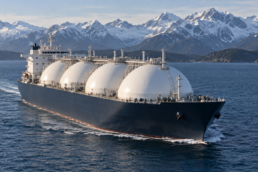
For Korea, winning this contract would be transformational. Hanwha Aerospace’s order backlog already sits near 28 trillion won. Moreover, South Korea has emerged as the world’s second-largest arms supplier to NATO members in Europe. A successful Canadian submarine deal would mark Korea’s first major North American defense win. This milestone is documented in Seoulz’s coverage of the Korea Defense Industry 2026.
The first new submarine is expected in the water by 2032. A decision between Hanwha and TKMS is expected later in 2026.
[image-3: Hanwha KSS-III submarine off BC coast]
The Korea-Canada Defence Partnership: First in the Indo-Pacific
The submarine deal would not exist in its current form without the diplomatic scaffolding built around it.
That scaffolding has a name: the Canada–Republic of Korea Security and Defence Cooperation Partnership (SDCP). Carney and Lee announced it at the APEC summit in Gyeongju on October 30, 2025. It is the first such partnership Canada has signed with any Indo-Pacific country.
In addition, it builds on the inaugural Foreign and Defence (2+2) Ministerial Meeting held in November 2024. That was the first time defence and foreign ministers from both countries met in that joint format.
The SDCP covers five concrete domains:
- Joint exercises and interoperability — including expanded participation in maritime security and peacekeeping operations.
- Defence industrial cooperation — covering procurement, supply chain integration, and joint R&D.
- Emerging technologies — with explicit mention of cyber, space, AI, and hybrid threats.
- Trilateral cooperation — coordination with other like-minded partners, particularly Japan, Australia, and the U.S.
- Classified information sharing — through a pending agreement expected to enter into force in 2026.
For South Korea, the SDCP fits perfectly into Lee Jae Myung’s diplomatic playbook. Specifically, it reflects a more pragmatic Indo-Pacific posture. The goal is to diversify security partners beyond the U.S. and Japan. For Canada, the agreement fulfills the most concrete commitment in its 2022 Indo-Pacific Strategy. Above all, it builds a credible non-American security partner in Northeast Asia.
Notably, Canada has maintained a continuous presence in the United Nations Command in Korea since the Korean War. Today, Canadian officers hold the Deputy Commander role in the UNC. They also contribute personnel to armistice supervision and ceasefire investigations. The new SDCP formalizes seven decades of informal cooperation. As a result, future arms sales, joint patrols, and intelligence sharing all gain a legal foundation.
For broader context on Korea’s global arms push, see Seoulz’s reporting on why 30 NATO ambassadors visited Seoul earlier this year.
[image-4: SDCP signing or 2+2 Ministerial]
Korea-Canada Trade: Critical Minerals, LNG, and the New Supply Chain
Defence is the headline story, but the trade story is bigger.
Since the CKFTA took effect in 2015, bilateral merchandise trade has roughly doubled. Specifically, the relationship grew from about C$12 billion to C$24.5 billion in 2024, according to Global Affairs Canada. By the first half of 2025, Canadian exports to Korea had already exceeded C$8 billion. The trajectory is on track to set a new record.
South Korea is now Canada’s eighth-largest trading partner. Furthermore, it is the sixth-largest merchandise export market and seventh-largest agri-food market. Canada exports more to South Korea than to France and Italy combined.
The composition of that trade tells the strategic story. Canadian exports to Korea are dominated by:
- Mineral fuels and oils ($1.96 billion in 2024) — primarily crude oil. All three of Korea’s major refineries now process Canadian grades.
- Ores, slag, and ash ($1.26 billion) — including critical minerals like copper, nickel, and lithium concentrate.
- Meat and edible offal ($386 million) — mainly pork and beef.
- Pulp and wood products (over $300 million combined) — feeding Korea’s industrial paper and chemical sectors.
- Aerospace components ($90 million) — small in volume, high in strategic value.
In the other direction, Korean exports to Canada are heavily concentrated in finished manufactured goods. The top categories are vehicles ($5.52 billion), electronics ($1.22 billion), and machinery ($1.13 billion). Meanwhile, South Korean direct investment in Canada now totals around $12 billion. It concentrates in finance, energy, mining, and manufacturing.
The most interesting growth area for the next decade is critical minerals. Korea’s battery and semiconductor industries depend entirely on imported minerals. Canada has them. As a result, in January 2026, Industry Minister Mélanie Joly and her Korean counterpart signed a new MOU. The deal covers critical minerals, battery supply chains, and clean energy technologies.
For investors tracking the broader pattern, Korea is also diversifying away from over-reliance on China. The country’s $13.6 billion food export boom is one slice of that shift. Seoulz analyzes the food-export side in detail in its K-Food Exports 2026 coverage.
LNG is another frontier. New West Coast LNG terminals now ship to the Indo-Pacific. Canada has positioned itself as a partner in helping Korea diversify away from Russian and Middle Eastern gas. Furthermore, the upcoming Team Canada Trade Mission to Korea in 2026 will focus heavily on these sectors.
[image-5: Critical minerals supply chain or LNG terminal]
People Power: 218,000 Koreans in Canada, 26,000 Canadians in Korea
A trade relationship of this size cannot survive on tariffs alone. It needs people moving in both directions. On this front, Korea Canada relations 2026 look remarkably healthy.
The Korean diaspora in Canada concentrates in two metropolitan areas. Roughly 40 percent live in the Greater Toronto Area. Another 31 percent live in Greater Vancouver. Toronto’s Koreatown along Bloor Street and Vancouver’s Lougheed Town Centre node are well-established cultural hubs. According to South Korea’s Ministry of Foreign Affairs, the actual figure for ethnic Koreans in Canada is closer to 247,000 once non-citizen residents are included.
In addition, the youth flow has accelerated dramatically since January 2024. That was when both countries launched the Korea–Canada Youth Mobility Program. The program expanded the original Working Holiday scheme in three important ways:
- Eligible age raised from 18–30 to 18–35.
- Two new categories added: Young Professionals and International Co-op.
- Maximum stay extended from 12 months to 24 months. Participants may now enter the program twice in their lifetime.
For Canadians, the annual quota for South Korea sits at around 4,000 spots. Most Canadian participants work in English education, hospitality, or tech startups in Seoul. By contrast, many Korean participants head to Toronto, Vancouver, and Montreal for hospitality, retail, and graduate study.
Educationally, South Korea is now Canada’s seventh-largest source of international students. Thousands of Koreans enroll at Canadian universities every year. In the other direction, hundreds of young Canadians teach English in Korea annually. They do so under the EPIK and TaLK programs.
The result is a generation that moves between Seoul and Toronto without thinking of it as exotic. That generation now produces founders, filmmakers, and investors who shape both economies.
[image-6: Toronto Koreatown or Seoul foreign community]
Maggie Kang and the Cultural Diplomacy Nobody Saw Coming
The cultural breakthrough of Korea Canada relations 2026 did not come from a government. It came from an animator in Toronto.
Maggie Kang was born in Seoul in the early 1980s. She moved to Toronto with her family at age five. Later she studied animation at Sheridan College. She then worked as a storyboard artist for two decades on films like Rise of the Guardians and Puss in Boots. In 2018, she pitched five words to a producer friend: K-pop idols who are demon hunters.
The result, seven years later, was KPop Demon Hunters. It was a Netflix animated musical co-directed with Chris Appelhans, released in June 2025. The film surpassed 540 million views on Netflix to become the platform’s most-watched original ever. Eight of its songs charted simultaneously on the Billboard Hot 100. Moreover, it won the Academy Award and the Golden Globe for Best Animated Feature. Kang received the Okgwan Order of Cultural Merit from the South Korean government.
At the Gyeongju summit, President Lee personally singled out Kang during his remarks. “Many people think the film was made in Korea,” he said. “But in fact, it was directed by a Canadian.” For her part, Kang describes herself as both. Specifically, she is a gyopo — the Korean term for ethnic Koreans abroad. She introduces herself first as Korean but credits her Canadian upbringing for shaping her storytelling instincts.
In April 2026, Kang signed with Seoul-based talent agency The Present Co. for her Korean projects. Meanwhile, UTA continues to represent her internationally. In May, Toronto presented her with the key to the city. Her next project remains under wraps. However, industry watchers expect another Korea-Canada hybrid.
Above all, Kang’s success illustrates something the trade statistics miss. The cultural traffic between the two countries is dense and growing. It runs from K-pop fan communities in Vancouver to Canadian animators in Sony Pictures’ Korean-language pipeline. As a result, a creative network has emerged that policy could never have engineered. For deeper context on how K-content drives this kind of soft power, see Seoulz’s coverage of the Korea Webtoon Industry 2026.
[image-7: Maggie Kang or KPop Demon Hunters]
What Canadian Brands Are Doing in Korea (And Vice Versa)
The flow of brands lags slightly behind the flow of people. However, it is moving.
Tim Hortons, Canada’s most recognizable consumer brand, opened its first Korean store in Sinnonhyeon, Gangnam, in 2023. The launch operated under master franchise BKR Co. Ltd. By early 2026, the chain ran 24 stores. Furthermore, it announced plans to add 26 more during 2026 alone. The target is 160 stores by 2028.
Interestingly, Tim Hortons has positioned itself as a premium brand in Korea. This stands in sharp contrast to its mass-market identity in Canada. A “Montréal Coffee” limited edition and Canadian-themed branding aim to capitalize on Korean curiosity about a country many Koreans have visited or studied in.
Lululemon, the Vancouver-headquartered athleisure giant, has expanded its Korean retail footprint since 2021. It now operates multiple flagship stores in Seoul. Canada Goose, the luxury parka brand, has built a substantial Korean customer base partly through K-drama placement. Moreover, Canadian pension and investment funds have allocated billions to Korea. CPPIB, OMERS, and others have deployed capital across Korean real estate, infrastructure, and private equity.
In the other direction, Korean firms have made some of Canada’s largest foreign investments. LG, Samsung, and Hyundai operate manufacturing and R&D in Ontario and Quebec. SK Innovation announced major battery facilities in 2024. In addition, Hanwha’s expanding North American defense presence treats Canada as a strategic extension of its U.S. market. Seoulz tracks the broader trend through its coverage of LIG Defense U.S. expansion strategy.
[image-8: Tim Hortons Seoul or Canada Goose Korea]
What’s Next for Korea Canada Relations: Team Canada Mission 2026
The most concrete near-term milestone is the Team Canada Trade Mission to Korea in 2026. Carney announced it at the Gyeongju summit. It will focus on five sectors: energy and critical minerals, agri-food, advanced manufacturing, clean technology, and defense. Industry Minister Mélanie Joly and Trade Minister Maninder Sidhu are expected to lead the delegation.
Beyond 2026, three structural drivers will shape Korea Canada relations 2026 and beyond:
First, the resolution of the submarine procurement. A Hanwha win would lock Canada and Korea into a 30-plus-year industrial relationship. By contrast, a TKMS win would mean Korea-Canada defense cooperation continues, but at smaller scale.
Second, U.S. policy under shifting administrations. Both Carney and Lee have publicly committed to diversifying away from heavy U.S. dependence. The submarine deal itself was framed in some Canadian media as a bid for defense independence from Washington. Whether the U.S. tolerates or pushes back against this rebalancing will shape every other file.
Third, the China question. Both Canada and South Korea have complicated trade relationships with Beijing. They are economically dependent but strategically wary. As a result, their bilateral cooperation on supply chains, critical minerals, and AI will be defined by how they reduce risk to Chinese leverage.
In particular, Canada’s Asia Pacific Foundation has noted a clear trajectory. The next decade of the CKFTA will be defined less by tariff elimination. Tariff cuts are already 99 percent complete for Canadian exports. Instead, the agreement will serve as a platform for upgrading strategic cooperation in critical minerals, digital trade, and energy transition.
[image-9: Carney–Lee summit or Team Canada delegation]
The Bottom Line on the New Seoul-Ottawa Ties
For most of the past sixty years, the Canada–South Korea relationship was described, accurately, as “friendly neglect.” Both countries had the U.S. at the center of their strategic thinking. Both had bigger trading partners. Both treated the other as pleasant but secondary.
That description no longer fits.
In 2026, Canada and South Korea are building a new kind of middle-power partnership. The list is now concrete. A potential $60 billion submarine deal sits at the centre. Above it, a first-in-Indo-Pacific security agreement provides the diplomatic frame. Beneath it, a doubled trade relationship is anchored in critical minerals and LNG. Meanwhile, a cultural alliance has emerged, powered by the most-watched movie in Netflix history. Finally, a youth-mobility program lets a 35-year-old Canadian work in Seoul for two years without a job offer.
Korea Canada relations 2026 mark the moment when “friendly neglect” turned into something more useful. Specifically, it became a real partnership both sides can build on for the next sixty years. The Gyeongju handshake didn’t make front pages around the world. However, in the corridors of trade ministries, defence procurement offices, and Sony Pictures Animation studios, the people building the next decade already know what it meant.