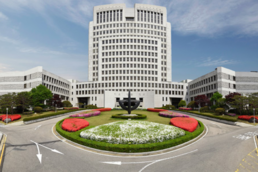


On October 6, 2026, Korea’s finance minister said something that landlords had waited years to hear. Speaking at a National Assembly audit, Deputy Prime Minister Lee Hyoung-il argued that rent regulations on long-term private rentals “should be eased as much as possible.” Without that, he added, operators cannot earn a return while they hold a building. As a result, they recover it by selling the units instead.
That single remark explains the whole Korea build-to-rent story. Over the past two years, some of the largest property investors on earth have arrived in Seoul. KKR, Morgan Stanley, CPP Investments and Tishman Speyer are all here. They are buying tired hotels and small studio blocks, then turning them into managed rental homes. However, they are doing so in a country that has never really had professional landlords. Moreover, the rules that govern them are still being written.
So this is a story with two halves. First, there is the money, which is real and growing. Second, there is the policy, which keeps changing direction. For foreign investors, the gap between the two is the entire risk. For foreign residents, meanwhile, it will shape what kind of home you can rent in Seoul, and at what price.
Why Korea Build-to-Rent Did Not Exist Until Now

In most rich countries, pension funds own apartment buildings. In Korea, they almost never did. The reason is jeonse.
Under jeonse, a tenant pays no monthly rent. Instead, the tenant hands over a huge lump-sum deposit and gets it back two years later. For an individual owner, that deposit works like an interest-free loan. For an institution, however, it is useless. A pension fund needs steady cash flow every month, and jeonse produces none. Consequently, Korean rental housing stayed in the hands of individuals: a retired couple with a spare apartment, or a dentist with three studios.
That structure is now breaking down. According to JLL research reported in June, jeonse made up 71.9% of leases in the Seoul metropolitan area in 2012. By 2025, the share had fallen to 38%. In other words, monthly rent became the norm in barely a decade. We traced that reversal in detail in our piece on how Seoul monthly rent overtook jeonse.
For a landlord with a spreadsheet, the change is profound. Monthly rent can be forecast, financed and sold on to other investors. Therefore, Korean housing can finally be valued the way housing in New York or Berlin is valued. JLL Korea chief executive Lee Tae-ho describes the market as “experiencing rapid structural realignment.” That is a polite way of saying a new asset class has just appeared.
Demographics push in the same direction. Single-person households now make up about 41% of all households in Seoul. In addition, Korea counted more than 300,000 international students this year. Both groups rent small, furnished rooms, and both struggle with the old system of large deposits.
The Buyers: Who Is Behind the Korean Rental Housing Rush

The first foreign name arrived quietly. In 2018, Singapore’s GIC backed Episode, the rental brand of developer SK D&D. For several years, almost nobody followed. Then, in 2023, the British firm ICG formed a fund of roughly 300 billion won ($225 million) with the local operator Homes Company. After that, the pace changed.
According to a May 2026 briefing from JLL, activity accelerated through 2024 and 2025. KKR, Morgan Stanley and CPP Investments expanded through partnerships and portfolio purchases. Hines, Invesco and M&G Real Estate bought private rental assets as well. More recently, TPG Angelo Gordon acquired buildings operated by MGRV, the startup behind the Mangrove brand. In total, JLL counts at least 17 significant transactions since 2024.
The deals themselves are surprisingly small and local. For example, the Seoul Economic Daily reports that Morgan Stanley bought studio blocks in Doksan-dong, Gil-dong and Anam-dong. None of those is a prestige address. Similarly, KKR picked up a residence building in Yangpyeong-dong and a studio block in Hwigyeong-dong. These are ordinary neighborhoods near subway lines and universities. That is precisely the point.
The 2026 Wave Looks Different
This year, the money flowing into Korea build-to-rent has become larger and more patient. Three announcements stand out.
- Tishman Speyer. In June, the New York firm closed $300 million for its Korea Living Venture. The capital came from two Dutch pension investors, APG and Bouwinvest. The fund targets $400 million in equity and, with debt, more than $800 million in buying power.
- IGIS and HOMA. In May, a unit of Korea’s largest property manager teamed up with HOMA, a rental platform that built its business in Thailand. Together they are targeting a $300 million fund. The first building could open as early as the fourth quarter of 2026.
- CPP Investments and MGRV. The Canadian pension fund and the Mangrove operator formed a joint venture last year. According to the Kyunghyang Shinmun, the pair are deploying 500 billion won, or about $375 million.
Notably, the investor base has shifted. Early entrants were private equity firms looking for a quick repositioning trade. By contrast, Dutch and Canadian pension funds hold assets for decades. Their arrival suggests that Seoul build-to-rent is being treated as a permanent allocation.
Regional surveys support that reading. In Cushman & Wakefield’s 2026 survey of Asia-Pacific residential investors, Korea ranked fourth among preferred markets. Only Australia and New Zealand, Japan and Singapore placed higher. Furthermore, 85% of respondents said they plan to raise their residential allocation within five years.
Inside the Product: What Seoul Build-to-Rent Actually Looks Like

Forget the suburban apartment complexes of Texas or the tower blocks of London. In Seoul, the institutional rental product is small, central and usually second-hand.
Most projects are conversions. According to JLL, the bulk of recent deals involved old hotels and officetels, which are compact studio buildings that mix homes and offices. Investors buy them, strip them back and reopen them under a brand. Indeed, 73% of investors in the Cushman & Wakefield survey said they are actively considering conversion strategies. Building from scratch is rarer, because land in central Seoul is scarce and expensive.
The format is usually co-living. Residents get a small furnished room and share kitchens, lounges, gyms and study rooms. We covered the tenant experience in our report on the Korea goshiwon and the co-living boom. Here, the business model matters more.
Consider Mangrove Sinchon, a 16-story building with 165 rooms near Yonsei University. The Kyunghyang Shinmun reports that single rooms start at 1 million won a month, with a fixed deposit of 5 million won. Annual occupancy runs above 95%. Meanwhile, the share of foreign residents climbed from about 25% in 2024 to 37% last year.
Three features make that model attractive to a Korea build-to-rent investor.
First, the rent premium is large. JLL puts the median rent for a Seoul co-living unit under 40 square meters at 1.13 million won, or roughly $850. A conventional officetel of similar size rents for about 790,000 won. Therefore, the managed product earns around 43% more for the same floor area.
Second, the deposit is tiny. A typical Seoul landlord asks for 10 million won or more up front. Mangrove asks for half that. As a result, operators reach tenants whom ordinary landlords turn away, including newcomers with no Korean credit history. That is the same gap we described in our guide to jeonse for foreigners.
Third, leases are short. Six-month contracts let operators reset prices far more often than a two-year lease allows. In a rising market, that flexibility is valuable.
The Operators Are Scaling Fast

Local platforms are growing alongside their backers. MGRV runs six Mangrove locations and has eleven more projects underway. SK D&D operates eight Episode sites in Seoul and absorbed a rival, Local Stitch, last year. In particular, its target is striking: from about 7,000 rental homes today to 50,000 by 2029.
Still, keep the scale in perspective. As of November 2025, Seoul had 47 co-living properties with 8,491 units, according to the Korea Times. The city has roughly 1.66 million single-person households. In other words, the branded sector houses about half a percent of its natural customers. That gap is what the funds are really buying.
The next frontier is age. Last year, SK D&D agreed with Warburg Pincus to create a senior housing fund of up to 1 trillion won, about $750 million. Its first project is planned for Bangbae-dong in southern Seoul. Given that Korea is aging faster than almost any other country, senior rental may eventually dwarf the student market.
The Catch: Seoul Wants Corporate Landlords and Fears Them Too
Here the story turns. Korea’s government is pulling the sector in two directions at once.
On one side, Seoul is courting professional owners. A new framework for long-term private rental lets corporations that secure 100 or more units lease them for at least 20 years in exchange for tax benefits. In August, the land ministry went further. It raised the public fund’s equity ceiling from 11% to 14% of project cost. It also cut the loan rate to between 2.0% and 2.8%. In addition, initial rents may be set at 95% of market value and reset to that level when a tenant leaves.
On the other side, the same government is squeezing anyone who buys existing homes to rent. Two packages in late 2025, known by their dates as the September 7 and October 15 measures, designated most of Seoul and much of Gyeonggi Province as regulated zones. Inside those zones, JLL notes, rental operators can now borrow nothing against a housing purchase. Specifically, the loan-to-value limit was set at 0%. Exemptions from the comprehensive real estate tax were narrowed too.
Then, on September 29, the finance ministry announced another cut. Tax breaks for registered rental apartments in speculation-control zones will end on December 31, 2027. That includes a corporate tax exemption on purchased rental apartments. Our explainer on Korea’s 2026 property tax rewrite covers the wider package.
Consequently, the message to Korea build-to-rent investors is mixed. Build new rental homes and the state will help you. Buy old ones and it will not. Unfortunately, almost every deal so far has been a purchase and conversion. JLL says the tightening has produced a “wait-and-see” mood among foreign buyers.
The 5% Problem
Beneath the tax debate sits a simpler issue. Under the existing ten-year model, registered rental operators may raise rent by no more than 5%. For a 20-year hold, that ceiling matters enormously.
Costs, however, are not capped. Operators told the Kyunghyang Shinmun in July that borrowing costs had climbed from around 2.5% to between 5% and 7%. Meanwhile, the Bank of Korea has raised its base rate twice in a row this year. If income is fixed and financing is not, the only exit is to sell the units.
That is exactly what the finance minister conceded on October 6. “If rent regulations are in place, operators ultimately cannot make returns during the rental period,” Lee said. Therefore, he argued, they convert to for-sale housing. The government is now weighing legal revisions to make the 20-year model more predictable.
The Critics: Does Korea Build-to-Rent Raise Rents?
Not everyone welcomes the newcomers. In fact, the sharpest objection comes from tenant advocates.
Their argument runs as follows. Institutional investors need high yields. High yields require high rents. So a policy that invites corporate landlords is, in effect, a policy that tolerates expensive housing. Cho Jeong-heun of the Citizens’ Coalition for Economic Justice put it bluntly in an interview this month. Soaring monthly rents, he said, have “laid the groundwork for corporate landlords pursuing high returns to operate profitably.”
The data gives that concern some weight. Between January and August, 12.5% of leases on Seoul studios of 30 square meters or less carried rents of at least 1 million won. Five years earlier, the figure was 2.1%. Near Ewha Womans University, a 17-square-meter room was let in August for 1.2 million won a month. In short, the ordinary market is already charging co-living prices without the gym or the lounge.
Operators answer that they are a symptom, not a cause. They did not shrink the supply of new apartments, and they did not break jeonse. Moreover, they offer things a private landlord rarely does: a small deposit, a contract in English, and an owner who will not disappear with your money. Jie So-rim of Cushman & Wakefield Korea told the Korea Times that young renters now “want security, reliable management and built-in community.”
Both sides have a point. Professional landlords do improve quality and transparency. However, at half a percent of the market, they are far too small to lower rents. For now, they serve tenants who can afford a premium. Whether the model ever reaches ordinary households depends on the same question as everything else: what the state allows operators to charge.
There is also an awkward precedent abroad. In the United States, large investors who bought up homes have become a political target. Korean critics follow that debate closely. Accordingly, any easing of rent caps here will be fought line by line.
What Investors Should Watch in Korean Rental Housing
For readers weighing exposure to Korea build-to-rent, five signals matter more than any single deal.
- The rent-cap revision. This is the central variable. If the 20-year model allows market-linked resets, development becomes viable. If the 5% ceiling survives in practice, expect more conversions to sale.
- Financing terms. A 0% loan-to-value limit in regulated zones forces buyers to use equity alone. Watch for any carve-out for corporate operators with 100 or more units.
- Interest rates. Two consecutive hikes have already narrowed spreads. Further tightening would hit leveraged conversion plays first.
- Operator consolidation. SK D&D’s merger with Local Stitch will not be the last. Scale lowers management costs, and smaller brands may struggle to compete.
- The senior pivot. Student and young-professional housing is crowded. By contrast, senior rental is nearly empty and backed by demographics.
Foreign buyers face one further layer. Korea tightened its rules on overseas purchasers last year, and the permit regime now covers all of Seoul. Our overview of Korea’s foreign property rules explains what applies to whom.
What It Means If You Rent in Seoul
For residents, the rise of corporate landlords in Korea is mostly good news, with one caveat.
The good news is choice. A decade ago, a newcomer had two options: a large deposit or a tiny goshiwon room. Today there is a middle path. You can sign online before you land, pay a deposit of a few million won, and leave after six months. Additionally, a corporate owner is easier to hold to account than an individual who lives overseas.
The caveat is price. In the Korea build-to-rent sector, managed rooms cost roughly 43% more than a comparable studio. Furthermore, short leases cut both ways. They let you leave quickly, but they also let the operator reprice quickly. Before you sign, compare the total monthly cost, including management fees and utilities.
Finally, do not assume the model will stay the same. The rules on rent increases, lease length and tax treatment are all under review this autumn. What you are offered in 2027 may differ from what is on the table today.
A Market Waiting for Its Rulebook
Korea build-to-rent is a rare thing in global real estate: a large, wealthy market where the institutional sector barely exists. The demand is plain. Jeonse is fading, households are shrinking, and foreign residents keep arriving. The capital is plain as well, with pension funds from three continents now committed.
What remains unsettled is the bargain between those funds and the state. Seoul wants private money to build the rental homes it cannot afford to build itself. Yet it also wants rents to stay low and speculation to stay out. So far, it has not found a rule that delivers both.
The finance minister’s comment on October 6 suggests which way the wind is blowing. Even so, a remark at an audit is not a law. Until the revision is written, every fund in Seoul is making the same bet. They are wagering that Korea needs landlords more than it distrusts them.