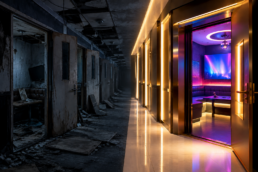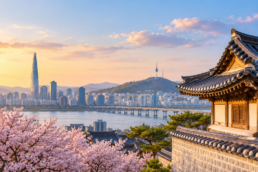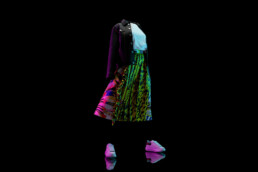


On a slow Tuesday afternoon in Itaewon, a Nigerian-Korean stylist tries on a deadstock military parka. The shopkeeper, who has run the same room since the 1990s, hunts for a matching pair of vintage Levi’s — in a size that no Korean department store would ever stock. Meanwhile, three subway stops east in Seongsu-dong, a queue of 200 people waits ninety minutes to photograph a brand pop-up they will never actually buy from. These two scenes sit fifteen minutes apart. However, they represent two completely opposite theories of what a fashion neighborhood is for. That contrast is the key to understanding the Itaewon fashion scene in 2026.
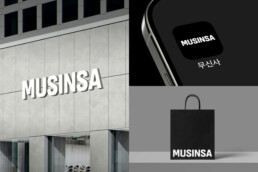
For most foreign readers, Itaewon is a name attached to two things: a Netflix drama and a tragedy. As a result, the neighborhood’s quiet reinvention as a fashion district has gone almost entirely unnoticed abroad. Yet while international attention drifted elsewhere, Itaewon was busy becoming the one thing Seongsu can never be — Seoul’s anti-Seongsu. In particular, it is the place where the city’s fashion identity gets weirder, more global, and more useful to the people actually wearing the clothes. It is a counterpoint to the platform-driven, export-focused story of the Musinsa K-fashion empire that dominates headlines abroad.
The Neighborhood Everyone Wrote Off
To understand why the Itaewon fashion district matters now, you have to understand how far it fell. The story starts with a US Army garrison. For decades, Itaewon existed mainly to serve American soldiers stationed at the adjacent Yongsan base. Consequently, the area developed a retail ecosystem unlike anywhere else in Korea. Think tailors who could cut a jacket for a 6’4″ frame, shops stocked with Western shoe sizes, and a tolerance for outsiders that the rest of Seoul did not share. In other words, Itaewon learned to dress foreigners long before “K-fashion” was a marketing term.
Then came a brutal decade. First, a 2020 COVID-19 cluster was traced to Itaewon’s clubs, and the neighborhood was effectively branded a contamination zone. Crowds vanished, and small retailers shuttered in waves. Next, on October 29, 2022, a crowd crush during Halloween celebrations killed 159 people. The tragedy left a deep wound, and for a time it seemed the neighborhood might never recover its energy. For many Koreans, Itaewon became a place you simply did not go.
However, the obituaries were premature. According to the Yongsan District Office, domestic visitors to Itaewon climbed from 1.25 million to 1.3 million over the course of 2025, while foreign arrivals rose past 250,000. The district had launched a publicly funded revitalization program in 2023. It came with a new identity called “Welcome All Itaewon.” In addition, merchants, residents, and artists formed a nonprofit body to steer the recovery. The numbers are modest, but the direction is unmistakable. Itaewon is filling back up — and this time, fashion is leading the way.
Why Foreigners Care About Itaewon Style More Than Locals Do
Here is the part that rarely gets explained to international readers. The Itaewon fashion scene is structurally built for people the rest of Korean retail tends to ignore. For instance, consider sizing. Korean fast fashion and even most Korean designer labels cut for a narrow range of body types. Therefore, a tall Western shopper, a curvier body, or anyone needing a US size 11 shoe often finds Seoul shopping frustrating. Itaewon is the historical exception. Its shops grew up serving American soldiers and a permanent foreign community, so broader sizing is baked into the inventory.
Tailoring is the clearest example of this legacy. Walk out of Itaewon Station exit 4, and within a few hundred meters you pass a cluster of bespoke shops that have operated for decades. Dynasty Tailor, open since 1989, keeps customer patterns on file so returning clients can reorder a perfectly fitted suit from abroad. Likewise, long-running shops such as Hamilton and Washington Shirt built reputations copying a customer’s favorite Hugo Boss shirt stitch for stitch. Prices typically run from 500,000 to 700,000 won for a suit, with one or two fittings over two to three weeks. For a foreigner who has given up on off-the-rack fit, that proposition is genuinely rare in Asia.
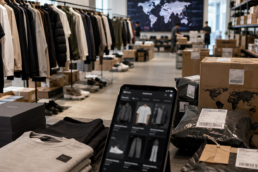
Vintage and military surplus form the second pillar. Because Itaewon sat beside a military base, it became a natural channel for American workwear, field jackets, and deadstock denim. The selection here leans global and broader in sizing than the Y2K-obsessed racks of Hongdae. As a result, Itaewon attracts a specific kind of shopper. This is the person hunting an authentic M-65 parka or a 1990s heritage piece rather than a trend.
The Hannam-to-Itaewon Gradient
Geography explains a lot about how Itaewon style works. The neighborhood does not exist in isolation. Rather, it sits on a slope that runs from the polished boutiques of Hannam down into Itaewon’s denser, messier streets. According to the Michelin Guide’s survey of Seoul fashion districts, Hannam’s pristine flagships gradually “bleed into” Itaewon as you walk downhill toward Namsan.
At the top of the hill, Hannam hosts the flagships of elevated Korean labels. For example, Amomento works in minimalist architectural tailoring, Jiyongkim draws collectors with sun-bleached one-off pieces, and the genderless label Nohant sells elevated everyday staples. International houses like Comme des Garçons keep a presence here too. In short, Hannam is the refined, gallery-adjacent layer.
Then the slope tips downward, and the texture changes. Itaewon proper is louder, cheaper, and more eclectic. Long known for everything from leather jackets to oversized clothing to tailored eveningwear, the lower streets retain what the Michelin editors called an “anything-goes spirit.” This gradient matters for shoppers and investors alike. Specifically, it lets a visitor experience the full price spectrum of Korean fashion — from a 1.5 million won designer coat to a 5,000 won vintage tee — in a single afternoon’s walk.
The Genderless Underground That Could Only Happen Here
If Seongsu is where brands perform for the camera, Itaewon is where subcultures actually live. The neighborhood has long been Seoul’s most diverse pocket — home to the city’s central mosque, its main LGBTQ+ nightlife strip, and decades of foreign residents. Even as the neighborhood’s late-night drinking culture cools, its creative daytime identity is sharpening. Consequently, it became fertile ground for fashion that the Korean mainstream still treats cautiously.
Labeless is the clearest example. Founded by three friends who came up together in Itaewon, the brand makes genderless clothing and frames itself as “a philosophy of freedom” rather than a product line. Notably, its campaigns feature same-sex couples and older models in dignified portraits — a deliberate statement in a market where fashion advertising is often rigidly conventional. The founders chose to keep their store directly below their office so they could, in their words, feel the people who wear their clothes. Moreover, they are explicit about not chasing hype, which is itself a kind of anti-Seongsu manifesto.
This is the deeper point about the Itaewon fashion scene. The neighborhood’s value does not come from manufactured scarcity or viral installations. Instead, it comes from a genuine tolerance for difference that no amount of marketing budget can replicate. For instance, brands built on inclusivity read as authentic in Itaewon precisely because the neighborhood has lived that identity for fifty years.
Seongsu vs. Itaewon: Two Theories of Retail
It helps to put the two districts side by side, because they are pursuing opposite strategies. Seongsu has become, by most measures, the densest experiential-retail market on earth. Over 3,000 pop-up stores opened across Seoul’s major districts in 2025, a 79% jump from the year before, and Seongsu sits at the center of that boom. Foreign card spending in the district surged 226% year-on-year in the first half of 2025, with more than 95% of it going to fashion and beauty. In effect, Seongsu monetizes attention. A brand rents a space, builds a photogenic set, and converts foot traffic into global social-media reach.
Itaewon plays a different game entirely. Its model is rooted in permanence rather than rotation: long-tenured tailors, standing vintage dealers, and resident-owned indie labels. Whereas a Seongsu pop-up might vanish in seventeen days, an Itaewon tailor has kept your measurements on file since 2015. As a result, the two neighborhoods are not really competitors. Rather, they are complementary halves of Seoul’s fashion economy — one optimized for spectacle, the other for substance.
For foreign investors and brand strategists, the distinction is sharper than it looks. The Seongsu model carries real risk. Specifically, rents there now run at multiples of standard retail. On top of that, several Western entrants have quietly exited Seoul after discovering that Korean consumers cross-shopped them for novelty but defaulted to local brands for loyalty. Itaewon, by contrast, offers lower entry costs, a built-in international audience, and a district government actively subsidizing its revival. Consequently, the smart money may be looking at the anti-Seongsu rather than chasing the next viral pop-up.
What This Means for 2026 and Beyond
Several forces are converging on Itaewon at once. First, Seoul welcomed roughly 18.5 million foreign tourists in 2025, with a government target of 30 million by 2030. A larger international audience naturally favors the one neighborhood purpose-built for foreigners. Second, the global pivot toward sustainable and secondhand fashion plays directly to Itaewon’s vintage strength. Third, Yongsan District’s revitalization money is still flowing. At the same time, the relocation of the nearby US base is freeing up vast tracts of land for future development.
There are risks, of course. Rents could rise as the recovery accelerates. The same gentrification that hollowed out other creative districts could eventually price out the indie designers who give Itaewon its character. Furthermore, the neighborhood still carries the emotional weight of 2022, and its recovery depends on careful, respectful stewardship rather than aggressive commercialization.
Still, the trajectory is clear. While the world watches Seongsu perform, Itaewon is quietly rebuilding itself around the things that made it special in the first place — global sizing, real craftsmanship, and room for people who do not fit the mold. For foreign readers trying to understand where Seoul’s fashion identity actually lives, the answer is shifting. It is found less in the queue for a pop-up, and more in the tailor’s shop that has kept your measurements on file for a decade. That, ultimately, is the quiet promise of the Itaewon fashion scene.