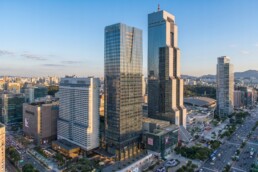


The bus from Seoul pulls into Dongdaegu Station a little after two in the afternoon. You step out expecting the usual big-city shove. The wall of tour groups. The selfie sticks. Then the queue for the “must-see” photo. Instead, you get quiet. A grandmother wheels a cart of green onions past the taxi rank. A group of students argues about lunch. Nobody is filming anything. Welcome to the city most foreign visitors never bother to see. And that gap is exactly why this Daegu travel guide 2026 exists in the first place.
Korea’s tourism story right now revolves around three places. In the third quarter of 2025, roughly 77 percent of foreign visitors stopped in Seoul. About 16 percent made it to Busan. Meanwhile, Jeju Island climbed past 10 percent on the back of a hit Netflix drama. Daegu, however, did not even crack the list. And yet this is Korea’s fourth-largest city. Indeed, it is a metropolis of 2.4 million people. Moreover, it holds a food culture found nowhere else, a walkable historic core, and a train line to an ancient royal capital. In other words, the numbers are not a warning. Instead, they are an invitation.

Why Daegu Belongs on Your Korea Itinerary
Let me be blunt about the pitch. Daegu is not trying to sell itself to you. And that is exactly the appeal. For context, Busan has the beaches. Similarly, Seoul has the palaces. Daegu, meanwhile, has something harder to package onto a poster. Namely, it is a genuinely ordinary Korean city. Here, daily life has not been repackaged for foreign consumption. For instance, walk through Seomun Market on a weekday morning. You may be the only non-Korean face in a hall the size of several football fields.
The practical case is just as strong. For one thing, Daegu sits squarely on the KTX high-speed corridor between Seoul and Busan. As a result, adding it to an existing trip costs almost nothing in extra travel time. In addition, it is cheap. In fact, it runs noticeably cheaper than Seoul for food, transport, and hotels. A full day of market eating, capped by grilled makchang for dinner, can cost around 30,000 won. Furthermore, the city is compact and easy to navigate even if you speak zero Korean. It has three metro lines and bilingual signage throughout.
Additionally, there is a cultural hook, and it is a big one. Daegu is the hometown of BTS member V, also known as Kim Taehyung. Admittedly, there is no official V museum. Even so, fans regularly make the trip to walk the neighborhoods where he grew up. For everyone else, meanwhile, the draw is simpler. Daegu is where you go to see a Korean city just being itself.
 Getting There: The KTX Makes It Almost Effortless
Half the reason to visit Daegu is how absurdly easy it is to reach. The city is a core stop on Korea’s main north-south rail spine. As a result, high-speed trains connect it to both major gateways with minimal fuss.
For example, from Seoul Station, the KTX reaches Dongdaegu Station in roughly one hour and forty minutes. From Busan, meanwhile, it takes under an hour. Perhaps most importantly, Gyeongju sits just 45 minutes away by train. That city is Korea’s open-air museum of the ancient Silla kingdom. Because of this, the smartest way to use Daegu is not as a standalone destination. Instead, treat it as an anchor. You can slot it into a Seoul-to-Busan run. In turn, you pick up two cities most tourists never see. All of it costs about two extra hours of total travel.
Once you arrive, skip the rental car. The metro handles the main corridors. In addition, buses fill in the gaps. Taxis, too, are cheap. Grab a T-money transit card at any convenience store. Then download Naver Map before you go, since Google Maps is famously unreliable for directions in Korea. For most visitors, staying near Dongdaegu Station or the central Jung-gu district puts everything within reach.
[IMAGE SLOT 3: KTX train at Dongdaegu Station platform]
 Daegu Things to Do: Walking the Modern Alleys
Start with the walk that ties the whole city together. In truth, Daegu played a larger role in modern Korean history than most visitors realize. The “Modern Alleys” (근대골목) trace that story through the central district. During the colonial period, for example, the city was a regional hub of foreign missionaries and early modern institutions. Later, during the Korean War, it was one of the few major cities never captured. The Nakdong River defensive line held just to the south.
The city has marked out five official routes. However, the one to walk is Route 2, the Modern Culture Alley. It runs about 1.6 kilometers through the winding lanes of Jung-gu. The full loop takes two to three hours at a comfortable pace. Along the way, you pass Gyesan Cathedral. Built in 1902 in Romanesque style, it is one of Korea’s earliest Catholic churches. You also pass preserved missionary houses and a poignant “March 1st Movement” staircase. Pockets of colonial-era architecture line the route, easy to miss if you rush.
What makes this Daegu itinerary highlight work is simple. It is not a manicured tourist attraction. Instead, it threads through a living neighborhood. A coffee shop here. A fabric wholesaler there. Nearby, a school lets out. In short, history and everyday life share the same sidewalk.
Seomun Market and the Best Night Market in Korea
If you do one thing when visiting Daegu Korea, make it Seomun Market. By day, it is a sprawling traditional market. Specifically, textiles, dried goods, and food alleys stretch across a complex so large it is genuinely disorienting. Above all, this is the birthplace of napjak mandu. That flat, pan-fried dumpling is a Daegu institution. Notably, the stalls still make them the old way, on massive griddles.
By night, the market transforms entirely. The Seomun Night Market sets up in the outdoor plaza every evening. It runs from around 6:30 to 11:30 p.m. It closes only on the first and third Sundays of the month. More than 80 stalls sell street food. A small stage hosts indie musicians. As a result, the vibe leans closer to a local festival than a tourist trap. For my money, it is the single best night market experience in mainland Korea. That is precisely because it was not built for tourists.
Come hungry and graze. A plate of napjak mandu runs 4,000 to 5,000 won. Hand-torn sujebi soup, Korean blood sausage, skewers, and pancakes are all a few thousand won each. Bring cash, since not every stall takes cards.
What to Eat in Daegu: A Food Culture of Its Own
Here is the part locals will not stop talking about. Daegu food is not Seoul food with a regional accent. Instead, it is its own tradition. It was forged in a mountain basin so hot in summer that the city earned the nickname “the cauldron.” That isolation and heat produced a distinct cuisine. In particular, it is built around bold, fiery, unapologetic flavors. Several dishes were invented here. Moreover, they are genuinely hard to find done right anywhere else.
Makchang gui — grilled beef or pork intestines — is the city’s signature. In particular, the best of it lives in Anjirang Gopchang Alley. This whole street is dedicated to the dish. A 300-gram order runs around 18,000 won. Notably, the alley comes alive after 7 p.m., so plan for a late dinner. Then there is Dongin-dong jjimgalbi. These spicy braised short ribs cook in battered aluminum pots with red pepper and a punch of garlic. They are served along a dedicated restaurant street. For the adventurous, mungtigi is Daegu-style raw beef. It is cut into thumb-sized pieces and dressed with sesame oil, garlic, and chili. Naturally, it is a soju companion if there ever was one.
Round it out with ttaro gukbap, a spicy beef soup served with the rice “on the side.” And of course, do not skip those crispy napjak mandu. Want a guided version? Food tours around Seomun Market and the jjimgalbi alleys walk you through the essentials. Just pace yourself, because Daegu rewards the hungry.
Beyond the Center: Parks, Views, and a Cable Car
Of course, Daegu is more than markets and alleys. A half-day of breathing room does the city good. For example, Apsan Park sits on the southern edge of town. From there, a cable car lifts you above the basin. The panorama makes you wonder why the place is not on every Korea itinerary. Meanwhile, Duryu Park and the adjacent E-World amusement park offer an easy afternoon. E-World even has its own observation tower. Together, they suit families and casual wanderers alike.
For a slower pace, head to Suseongmot Lake. It draws locals in the evening. The waterfront cafés fill up. The whole area softens into something genuinely pleasant. And if you happen to visit in early July, catch the Daegu Chimac Festival. It pairs fried chicken with beer across a citywide celebration. Honestly, it is exactly as fun as it sounds. In short, there is real range here once you look past the obvious stops.
The Gyeongju Side Trip: Two Cities, One Base
This is the move that turns a good trip into a great one. Gyeongju is the thousand-year capital of the Silla kingdom. It sits just 45 minutes from Daegu by train. Pairing the two is one of the best side trips in the country. Daegu gives you living, modern Korea. Gyeongju, by contrast, hands you the ancient version. Think grassy royal burial mounds. Picture the UNESCO-listed Bulguksa Temple. Then add the serene Seokguram Grotto.
The logistics are clean. First, base yourself in Daegu for two or three nights. Then spend one full day in Gyeongju. Meanwhile, let Daegu’s food and alleys fill the rest. Are you traveling the Seoul-to-Busan route? Then you can chain all of it together. Go Seoul, then Daegu, then Gyeongju, then onward to Busan and the KTX home. Three nights split across Daegu and Gyeongju hits the sweet spot for most travelers. It is efficient. It is cheap. And it delivers two destinations most visitors to Korea will never experience.
When to Go and What It Costs
A few things are worth knowing before you go. First, timing. Daegu summers are brutal. In fact, this is one of the hottest cities in Korea. In July and August, temperatures regularly push past 35°C with heavy humidity. Spring and autumn, by contrast, are far kinder. The weather turns mild and dry, ideal for the alley walks. Autumn in particular is a good bet. The maples turn, the heat breaks, and the markets feel alive rather than sweltering.
On costs, the math stays gentle throughout. For instance, budget hotels and guesthouses near Dongdaegu Station run roughly 35,000 to 60,000 won a night. Mid-range business hotels and boutique stays, meanwhile, land in the 70,000 to 120,000 won range. Meals are cheap too. Most sit-down dishes cost 7,000 to 12,000 won. Coffee, similarly, runs 3,000 to 6,000 won. Carry your passport if you plan to shop. After all, foreign visitors can claim tax refunds on eligible purchases. Finally, keep some cash on hand for markets and street stalls. The city is largely card-friendly, but the smallest vendors are not.
Practical Tips for Visiting Daegu Korea
Now for the mindset note, because it matters here. Frankly, Daegu will not hold your hand the way Seoul does. English is less common. Similarly, the tourist infrastructure is thinner. Occasionally, you will have to point and smile your way through an order. That friction, however, is the whole point. If you want a polished, frictionless Korea, stay in Myeongdong. If you want to see how the country actually lives, come here instead.
A couple of logistics smooth the trip. Download a translation app, since menus are not always in English. Also, note that many restaurants use QR-code ordering. Lunch specials are common and offer strong value. For a similar off-the-beaten-path angle elsewhere in Korea, see our Gangwon Korea travel guide. And for the bigger picture on where foreign visitors are heading next, read our breakdown of Korea’s inbound tourism boom. Both frame why regional cities like this one are having a moment.
The Bottom Line on This Daegu Travel Guide 2026
Daegu is the rarest thing in modern Korean tourism. It is a major city that has not been discovered yet. The food is singular. Its history runs deep. Meanwhile, the prices stay gentle. And the crowds simply are not there. Foreign visitors keep spreading beyond Seoul, a trend Korea’s tourism boards are actively pushing. As a result, cities like this one are where the next wave of travelers will find what the big three can no longer offer.
So build it in. First, take the KTX. Then walk the alleys. Eat the intestines. Afterward, catch the train to Gyeongju. Above all, see the version of Korea that does not perform for anyone. That is the case at the heart of this Daegu travel guide 2026. And honestly, the window to go before everyone else catches on is open right now.