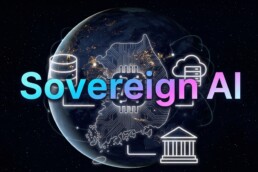


Korea once measured national ambition in semiconductor yields and broadband speeds. Now it measures it in GPU counts and model parameters. However, beneath the headline race to build bigger AI, a quieter and more consequential debate is unfolding — one that will determine not just who builds Korea’s AI future, but who controls it. Sovereign AI Korea has moved from think-tank jargon to government mandate, and the implications stretch far beyond Seoul’s tech corridors.
The forum hosted by the Korea Cyber Security Association (한국정보보호학회 — a government-affiliated body that sets the professional agenda for the nation’s cybersecurity community) made one thing clear. The central anxiety is no longer about algorithmic performance. It is about who holds the keys to the infrastructure that AI runs on. For investors and multinational corporations eyeing the Korean market, that distinction matters enormously.
Defining the Rules of Engagement for Korean AI Security
The call for a uniquely Korean set of security standards is growing louder. “To achieve Sovereign AI, Korea must be ready to create its own security requirements,” stated Son Ki-wook, president of the Korea Cyber Security Association. He pointed to the United States Department of Defense (DoD) as a model. The DoD does not build its own cloud. Instead, it dictates stringent security standards that commercial giants like Google, Microsoft, and Amazon must meet to win its business. This approach ensures security without stifling innovation.
In addition, the analogy carries a pointed message for Seoul. Korea’s government is signaling a similar posture — one where global cloud providers are welcome, but only on Korea’s terms. Therefore, the era of simply “plugging in” to global infrastructure without deep customization is ending. Companies that can adapt to and meet a rigorous Korean security framework will hold a distinct advantage. Control over security standards is non-negotiable.
Furthermore, the 2026 enforcement of Korea’s AI Basic Act (AI 기본법 — the country’s first comprehensive AI governance law, covering high-risk AI systems in finance, healthcare, and public administration) is accelerating this shift. The market is moving from a model-development competition to actual infrastructure deployment in high-trust industries. That transition opens a new category of procurement — and a new category of risk for those unprepared.
Code, Not Geography: A New Paradigm for National AI Strategy
Traditionally, data sovereignty debates fixated on the physical location of servers. However, experts are now arguing that this framing is dangerously outdated. The real question is not where data sits, but who can read it, modify it, and cut off access to it.
Korea’s approach reflects this evolution. Rather than mandating data localization alone, the national AI strategy is pushing toward cryptographic sovereignty — controlling the encryption keys and access protocols that govern AI systems, regardless of where the underlying hardware lives. In particular, the Bank of Korea (Korea’s central bank, equivalent to the U.S. Federal Reserve) and Naver jointly built ‘BOKI’, a sovereign AI system operating within an internal network and cloud infrastructure. It is the first such system deployed by any central bank in the world, and it now serves as a global benchmark for public-sector AI governance.
When a central bank builds its own sovereign AI, the signal to the market is unmistakable. The public sector will not outsource its cognitive infrastructure to entities it cannot fully audit. As a result, private-sector vendors — domestic and foreign alike — must now meet a standard that the government itself has defined by example.
The Sovereign Cloud Playbook: Joint Ventures as Survival Strategy
For global tech firms, the most practical consequence of Korea’s national AI strategy is the growing necessity of the “Sovereign Cloud” model. Microsoft and KT (Korea Telecom — one of Korea’s three major telcos, with deep government and enterprise relationships) have already demonstrated the template. Under their arrangement, Microsoft’s cloud infrastructure is operated within a Korean legal and security envelope, managed in partnership with a domestic entity.
By contrast, companies that attempt to enter Korea’s regulated sectors — government, defense, finance — with purely offshore cloud architectures will find doors closing. BCG has assessed the situation directly: full AI self-sufficiency across every layer of the value chain is prohibitively expensive and, therefore, unrealistic for most nations. However, the “AI Resilience” model — maintaining strategic control at critical chokepoints while leveraging global technology — is both practical and, in Korea’s case, already working.
Korea’s AI voucher program (a government subsidy that helps small and mid-sized enterprises adopt AI tools from certified domestic providers) is a concrete example of this resilience strategy in action. It channels AI adoption through a domestically governed pipeline, building ecosystem depth without requiring every company to build from scratch.
The joint venture is not a compromise. It is the market entry ticket. For any global cloud or AI firm with serious ambitions in Korea’s public and regulated sectors, a credible domestic partnership is now a prerequisite, not an option.
The Infrastructure Numbers Behind the Vision
Korea’s sovereign AI ambitions are backed by capital at a scale that commands attention. The government, in partnership with the private sector, is pursuing a ₩1,000 trillion-equivalent investment plan targeting 500,000 GPUs and 50 new data centers by 2030. The goal: membership in the AI G3 — a self-declared club of the world’s top three AI powers.
Meanwhile, the investment community has already responded. Between 2024 and 2025, Korea attracted $25.5 billion in AI-related foreign direct investment — ranking third globally, behind only the United States and China, and ahead of the EU and India. Furthermore, the government has committed ₩1.4 trillion (approximately $1.25 billion) to AI talent development, covering the pipeline from elementary school students to senior researchers.
Korea’s cloud market is projected to reach $12.46 billion by 2026, driven largely by enterprise AI adoption. Nevertheless, the more telling figure is qualitative: Korea is one of only a handful of non-English-speaking countries with a homegrown big-tech ecosystem capable of building foundation models that deeply understand its own language and culture. Naver’s HyperCLOVA X, SK Telecom’s A.X K1, and LG’s EXAONE are not just products. They are strategic assets in a sovereignty argument.
Korea as a Global Blueprint
Naver CEO Choi Soo-yeon has framed the stakes clearly. “The core of sovereign AI is no longer about who builds it,” she said, “but how it is actually used in services and industries.” In other words, the competitive advantage will accrue to those who embed AI into real workflows — not those who simply hold the model weights.
In addition, Korea’s role in shaping global AI governance is expanding beyond its own borders. Korea is actively leading the development of international standards at the ISO (International Organization for Standardization) covering AI system architecture and operations within cloud environments. For a mid-sized nation with outsized technological capacity, standard-setting is a form of soft power — and Korea is deploying it deliberately.
As a result, the Korean model is emerging as a potential blueprint for non-English-speaking nations seeking to build AI ecosystems centered on their own languages, legal systems, and security requirements. Countries across Southeast Asia, the Middle East, and Central Europe are watching closely. The country that writes the rules for sovereign AI at home may well write them for others abroad.
What Investors and Businesses Should Watch
For foreign investors, the key inflection point is the full enforcement of the AI Basic Act in 2026. However, the market is already repricing. Compliance infrastructure, domestic AI security vendors, and sovereign cloud architecture specialists are all seeing increased interest. Furthermore, companies positioned at the intersection of global cloud capability and Korean regulatory fluency — the Microsoft-KT model — represent the most defensible market position.
For multinationals already operating in Korea, the message is direct: audit your AI supply chain now. Identify where your models, data, and cloud dependencies sit relative to what Korean regulators will require. In particular, sectors such as finance, healthcare, and defense procurement are tightening their standards ahead of the legal deadline.
Korea’s national AI strategy is, at its core, an infrastructure story — one measured in encryption standards, data center locations, partnership agreements, and legislative timelines. Nevertheless, the strategic logic is simple. A nation that cannot secure its own AI cannot secure its own future. Korea has decided it will not take that risk. The only remaining question is which companies will be inside the fortress when the gates close.