Week in review: US pressure on OPCON, drone programs, and space milestones reshape Korean defense
Washington's reported demands for stronger counter-fire and reconnaissance assets, new domestic drone procurements, and rapid satellite imaging highlight a week of shifting requirements and industrial momentum.
This week's developments in Korean defense and aerospace clustered around three threads: reported U.S. pressure for stronger counter-fire and reconnaissance capabilities in wartime operational control (OPCON) transfer talks, new domestic drone procurement programs, and space milestones that underscore South Korea's growing satellite-operations maturity.
OPCON conditions and U.S. capability demands
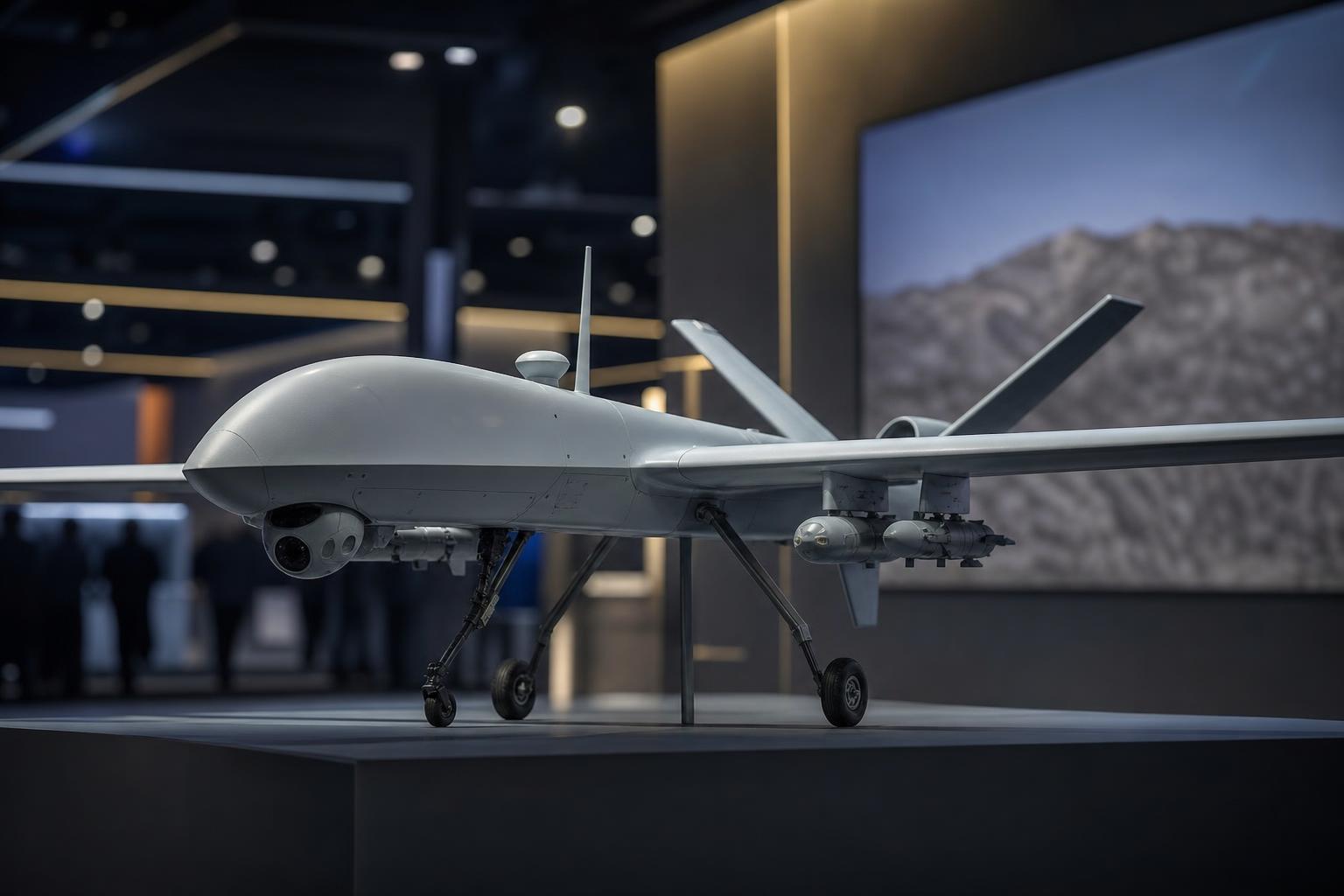
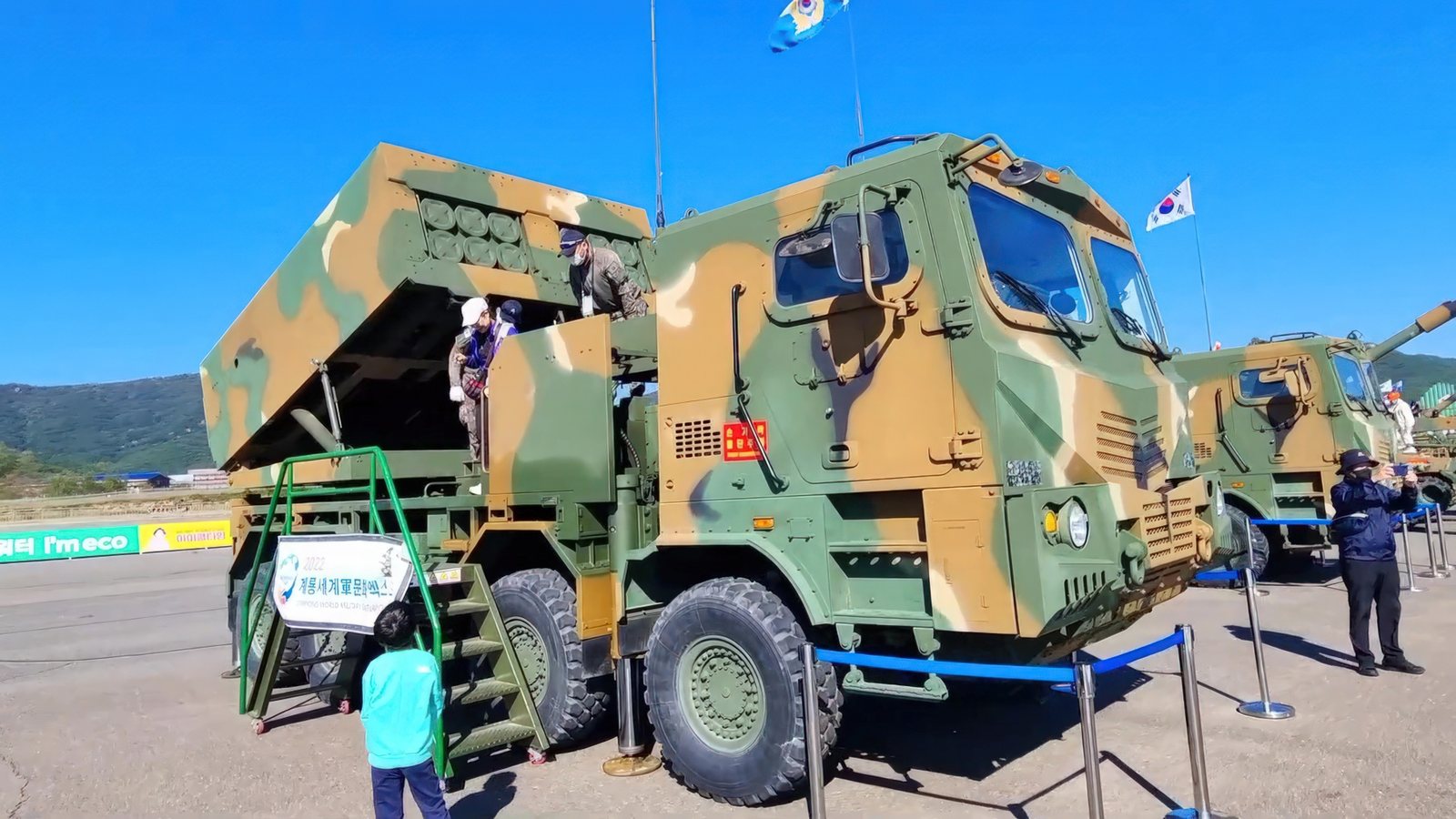
The most strategically significant report came from Kyunghyang Shinmun, which said Washington added demands for stronger counter-fire capabilities such as the Chunmoo multiple rocket launcher and expanded operation of surveillance and reconnaissance assets in this year's OPCON consultations. According to the report, the U.S. side additionally demanded expanded operation of assets including the medium-altitude reconnaissance unmanned aerial vehicle (MUAV) in South Korean service.
The MUAV's first unit entered mass production in April 2026, Kyunghyang Shinmun said. The report described the MUAV as capable of acquiring and transmitting high-resolution imagery from long range, with an operational radius of 500 km and the ability to be armed with missiles. Gen. Xavier Brunson, Commander of U.S. Forces Korea, said at an Oct. 14 seminar in Washington that the conditions for OPCON transfer had clearly changed and that there were new standards to meet, according to Kyunghyang Shinmun. Ministry of National Defense spokesperson Jeong Bit-na said at a regular briefing, as a personal opinion, that if the goalposts keep being moved, OPCON transfer can never be carried out, the report said.
The reported U.S. demands connect directly to South Korea's industrial base. Hanwha Systems said on Oct. 15 that it completed a drone-interception demonstration on Oct. 14 during the Army TIGER+ Future Warfare Integrated Combat Execution Training, using the Laser Anti-Aircraft Weapon Block-I Cheongwang and a combat vehicle-mounted high-energy laser gun. Cheongwang and the 30 kW-class vehicle-mounted laser gun hit all three drones used in the demonstration, according to Hanwha Systems. The company said Cheongwang costs about 2,000 won per shot and can operate continuously for 24 hours with power supply and without separate ammunition resupply.
Drone procurement and counter-drone industry moves
DAPA opened an industry briefing path for two tactical drone strike procurements, according to a notice posted on Oct. 15, 2026. The notice covered the "Small Attack Drone" and "Squad-level Small Anti-personnel Self-destructing Drone" projects. The small attack drone project is described as a domestic purchase program to acquire small attack drones for precision strikes on fixed and moving targets. The squad-level small anti-personnel self-destructing drone project is described as a domestic purchase program to acquire squad-level small anti-personnel self-destructing drones to strike personnel targets.
The briefing, organized by DAPA's Advanced Technology Program Group, Attack Drone Project Team, will cover project status, implementation plans, mandatory localization parts, TTA certification and a question-and-answer session, according to Vster, which posted the DAPA notice. These programs signal a push to field domestically produced loitering munitions and attack drones, aligning with the counter-drone and reconnaissance themes raised in the OPCON reporting.
Industry activity around unmanned systems also advanced. Motrex Group made a strategic investment in Daon INC, an artificial intelligence and swarm-drone specialist, NewsPim reported on Oct. 14. The two companies plan to combine Daon INC's drone and AI-based autonomous unmanned technologies with Motrex Group's manufacturing, electronics and infrastructure capabilities, according to NewsPim. Hanwha Defense USA and Magnet Defense showcased the M38 Medium Unmanned Surface Vessel and containerized weapon systems at AUSA 2026, The Defense News reported. The M38 has a modular payload deck that accommodates standard shipping containers, including a 20-foot Chunmoo MLRS container and a 40-foot K-VLS II container designed for larger cruise and ballistic missiles, including the L-SAM.
Space milestones and industrial momentum
South Korea's microsatellite constellation satellites 2 through 6, launched aboard the Nuri rocket on Oct. 7, captured their first ground observation images and transmitted them to a ground station about 14 hours and 29 minutes after liftoff, the Korea AeroSpace Administration (KASA) and KAIST announced on Oct. 15. KASA said the early image acquisition indicates that the satellite buses and optical payloads are functioning normally after launch. All five first-batch production satellites are communicating smoothly with ground stations, and systems including power generation and attitude control remain in normal condition.
KASA attributed the rapid imaging to operational know-how gained from previously launched prototype and verification satellites, as well as automation concepts specialized for constellation operations. The agency said it minimized trial and error by using orbital history and operational data from earlier satellites, and automated initial checks and stabilization immediately after separation from the launch vehicle to maximize multi-satellite operation efficiency.
The space sector also saw commercial and industrial developments. Space Lintec launched its AI-based next-generation space-medicine experiment module BEE-PC2 to the International Space Station aboard a SpaceX Falcon 9 rocket on Oct. 13, Newsis reported. Innospace announced on Oct. 14 that it signed a memorandum of understanding with Incera Solution to cooperate on low-Earth-orbit satellite optical-communications demonstrations, with Incera Solution planning from 2027 to apply its Laser Communication Terminal to Innospace's InnoSat satellite for phased demonstrations in the space environment.
Taken together, the week's developments show a defense and aerospace sector responding to external pressure for more capable counter-fire and reconnaissance assets, while simultaneously building domestic drone and counter-drone industrial capacity and demonstrating rapid satellite-operations maturity. The reported U.S. demands in OPCON talks, if confirmed, would reinforce procurement priorities already visible in DAPA's drone programs and Hanwha Systems' laser demonstrations.
This week on Seoulz
- U.S. reportedly seeks stronger Chunmoo, UAV capabilities in OPCON talks
- DAPA to brief industry on small attack drone and squad anti-personnel loitering munition programs
- DAPA teams up with YouTube channel '180 Seconds' to promote K-Defense Youth New Deal
- Remains of Korean War soldier identified 76 years after death, returned to family
- South Korea tracked North Korean submarine-launched strategic cruise missiles
- KASA, Defense Guarantee Cooperative expand insurance access for space firms
- DAPA Holds Public Hearing on Proposal Evaluation Reform
- HJ Shipbuilding completes first U.S. Navy MRO project as USNS Amelia Earhart departs Busan
- LIG D&A, Firehawk sign teaming agreement for Bigung propulsion system
- U.K. trade envoy visits HD Hyundai Heavy Industries to discuss shipbuilding and defense cooperation