LIG D&A, Firehawk sign teaming agreement for Bigung propulsion system
The deal aims to localize the 2.75-inch guided rocket for the U.S. market, with joint marketing and possible follow-on production.
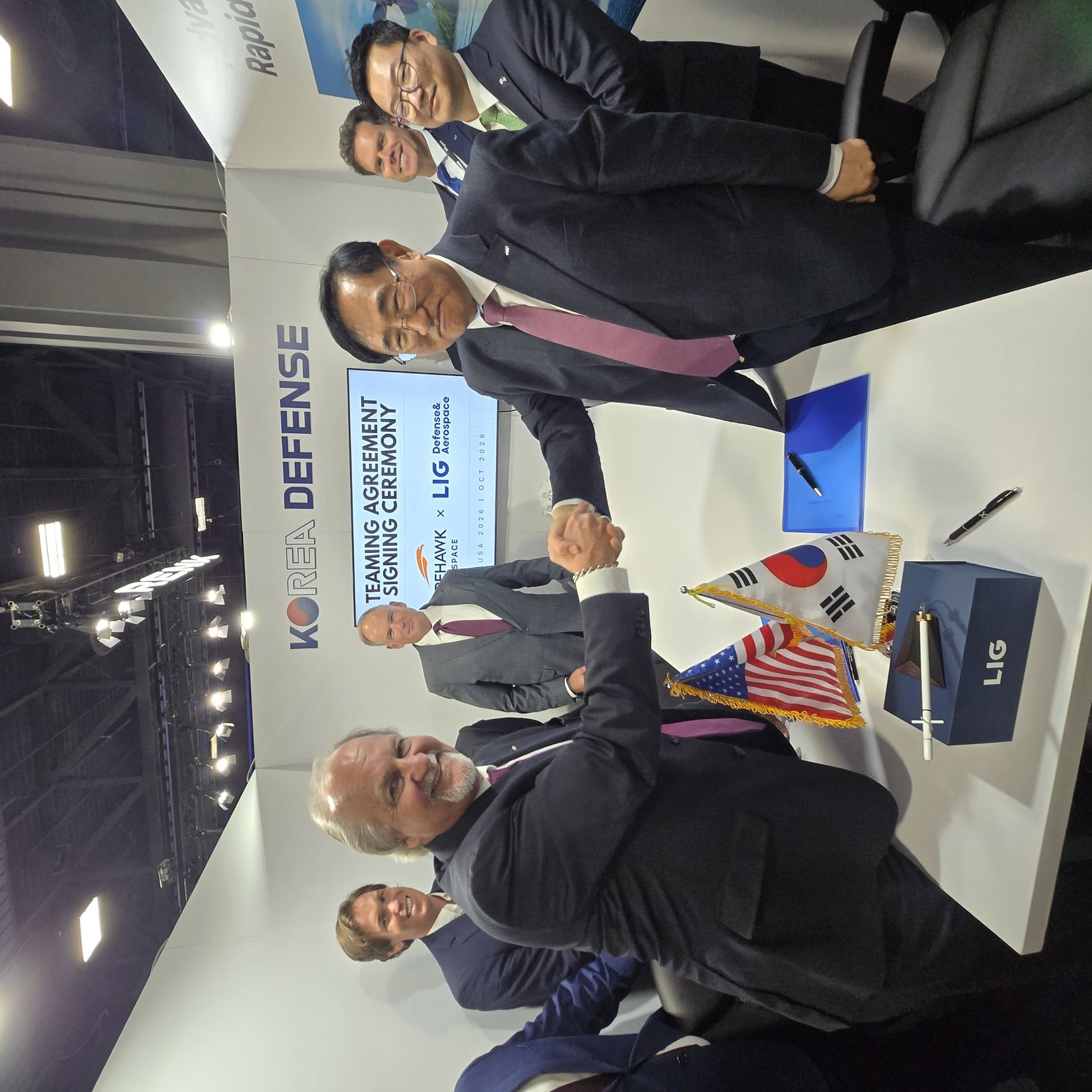
LIG Defense & Aerospace (LIG D&A, formerly LIG Nex1) and U.S. defense startup Firehawk signed a teaming agreement on Oct. 13 to cooperate on developing the propulsion system for the 2.75-inch guided rocket Bigung, the Korean company announced.
The agreement was signed at the Association of the United States Army (AUSA) exhibition in Washington, D.C. Once propulsion system development is complete, the two companies plan to pursue follow-on mass production and explore additional cooperation, according to LIG D&A.
They will also conduct joint marketing in the United States and promotions targeting the U.S. government.
Firehawk is a fast-growing U.S. defense startup founded with the goal of innovating rocket propulsion through advanced 3D printing technology.
Bigung already passed a Foreign Comparative Test (FCT) during the world's largest naval exercise, RIMPAC, in 2024, demonstrating its excellence, LIG D&A said. The company expects the new agreement to add momentum to its U.S. market entry efforts.
"It is very meaningful that Bigung, which was developed through the combined efforts of South Korea and the United States in the past, will now be developed again with an American company," said Baek Hyung-sik, head of LIG D&A's overseas business division.
"Based on the accumulated experience and know-how of LIG D&A, which marks 50 years since its founding under the banner of self-reliant defense, we will ensure that cooperation between the two companies produces good results," Baek added.
Will Edwards, co-founder and CEO of Firehawk, said the partnership connects Firehawk's two core tasks: expanding munitions production capacity and advancing solid rocket motor production.
"Through this, we will be able to provide the United States and its allies with more economical options in the field of air and missile defense," Edwards said.
"It is our duty to prepare weapon systems to meet mission requirements," he added. "We will do our best to advance these capabilities and deliver them to the military."