South Korea Reviews Defense AI Progress, Plans Sovereign AI Expansion
The Ministry of National Defense assessed achievements in defense AI and discussed future directions for the 'Defense AI Transformation' at a meeting on Oct. 22.
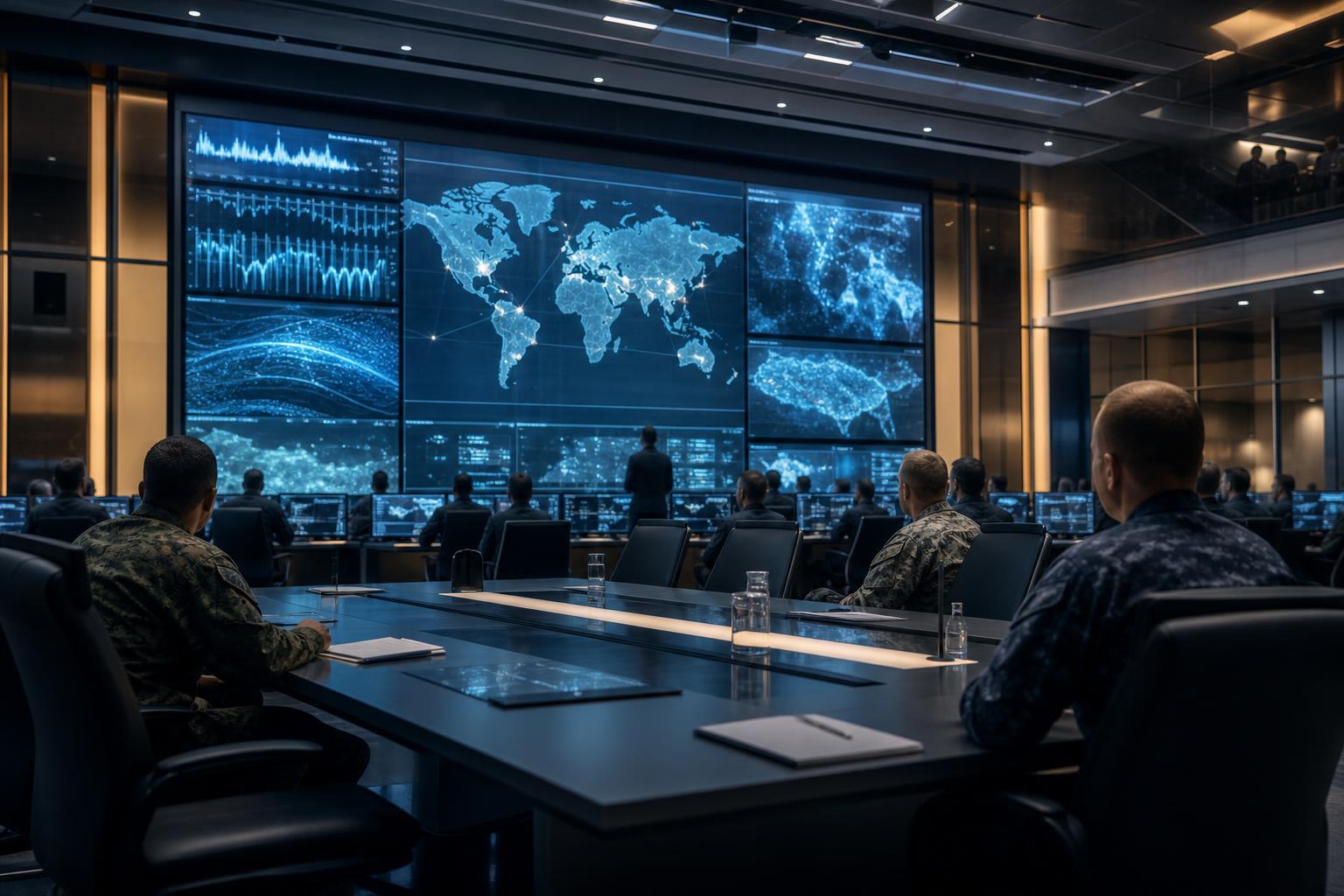
The Ministry of National Defense held the 2026 Defense Artificial Intelligence Progress Evaluation Meeting on Oct. 22 at 14:00 in the ministry's conference room, presided over by Vice Minister Lee Doo-hee. The meeting brought together about 30 officials from the Joint Chiefs of Staff, each military branch, the Marine Corps, the National AI Strategy Committee, the Defense Acquisition Program Administration, and defense AI research institutions.
Under the vision of 'building a self-reliant advanced strong military based on Sovereign AI,' the meeting reviewed achievements and discussed future tasks centered on three key directions: establishing the foundation for Defense AI Transformation, strengthening civil-military cooperation, and maximizing combat power through AI application.
The ministry confirmed that a 'defense-specialized AI model,' the core of Sovereign AI, is being developed through organic collaboration among civilian, government, and military sectors, along with continuous acquisition of GPU resources. It also reviewed the operation and preparation status of five 'Defense AX bases'—Yongsan for command and control AI (opened Oct. 13), Pangyo for physical AI (Oct. 12), Daejeon for agentic AI (Nov. 3), Busan for maritime AX (Nov. 6), and Yangjae for aerospace AX (Oct. 28).
The meeting also discussed improvements to security regulations to prevent constraints in AI development, and reviewed the status of a platform construction project that processes and refines data on the defense network for AI model development. Additionally, it examined the D.AX project, which introduces civilian physical AI technologies in transportation, guard and security, and hazardous material handling, as well as preparations for the defense AI common operating system project.
The Joint Chiefs of Staff presented the development direction of the AI-based command and control system (KCCS) centered on the JCS base and a plan for building battlefield data. Each institution shared best practices in AI utilization, including AI-based perimeter security systems and AI services in administration, intelligence, and operations, and discussed phased demonstration environments for physical AI.
Vice Minister Lee Doo-hee said, "AI is a core technology that changes the future of warfare and a driving force for innovating our military's combat power and overall defense operations," adding that the meeting "served as an opportunity to review defense AI achievements and add execution power and speed to the Defense AI Transformation." He emphasized the importance of developing autonomous capabilities to utilize and advance AI technology in response to the reduction in military service resources and rapidly changing future battlefield environments.