KIST develops flexible BNNT fiber that blocks 99% of thermal neutrons
The boron nitride nanotube-based textile could support future Korean space-suit and spacecraft shielding after space-environment validation.
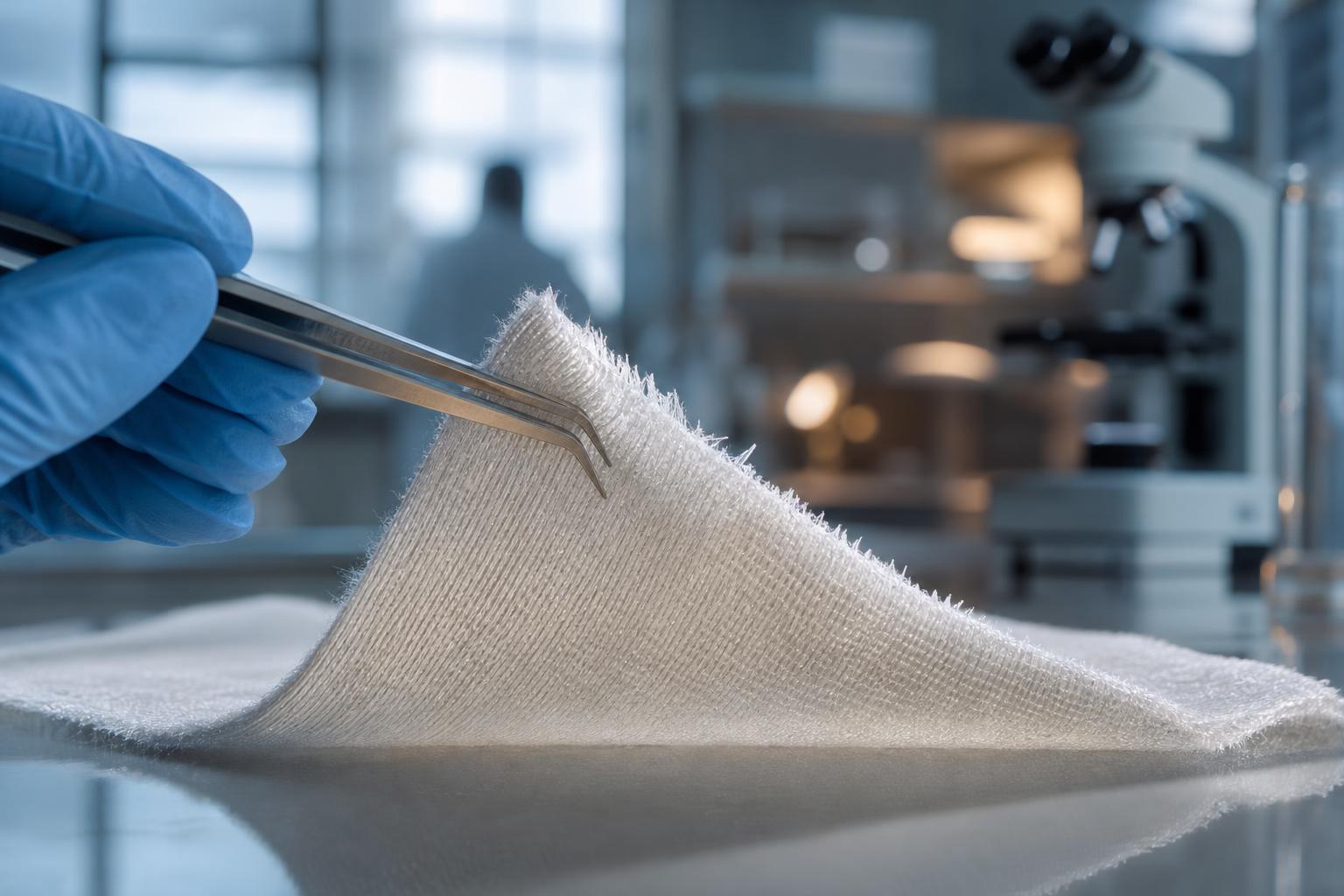
A Korea Institute of Science and Technology (KIST) team led by principal researcher Kim Dae-yoon has developed a boron nitride nanotube (BNNT)-based neutron-shielding fiber with strength and flexibility, ChosunBiz reported.
KIST described the material as a heat-resistant and flexible BNNT-based fiber that shields neutrons, a form of space radiation, according to Dong-A Science.
The research was published online in Nature Communications in September, ChosunBiz reported. The paper, titled “Boron nitride nanotube fibers with over 1 GPa strength and 1000 °C stability for exceptional neutron shielding textiles,” appeared on Sept. 1 with DOI 10.1038/s41467-026-77427-x, according to PubMed.
The fiber contains about 80% BNNT and has tensile strength above 1 GPa, ChosunBiz reported. The material maintained stability from minus 196 degrees Celsius to 1200 degrees Celsius and is flexible enough to tie in a knot.
A 1.62 mm-thick textile made from the fiber blocked 99% of thermal neutrons in the experiment, according to ChosunBiz. The team continuously produced more than 3.5 km of the fiber and processed it into textile form using existing industrial equipment.
ChosunBiz noted that the 99% shielding result was for low-energy thermal neutrons, and that shielding performance and durability against the diverse high-energy radiation found in space need further validation.
Kim Dae-yoon said the team would accelerate Korean space-suit development after verification in an actual space environment, ChosunBiz reported.