KASA confirms all five mass-produced microsatellites make initial contact after Nuri launch
The satellites reached their target orbit and established two-way communication with ground stations in Daejeon, Antarctica and the Arctic, marking South Korea's first simultaneous launch of five operational satellites.
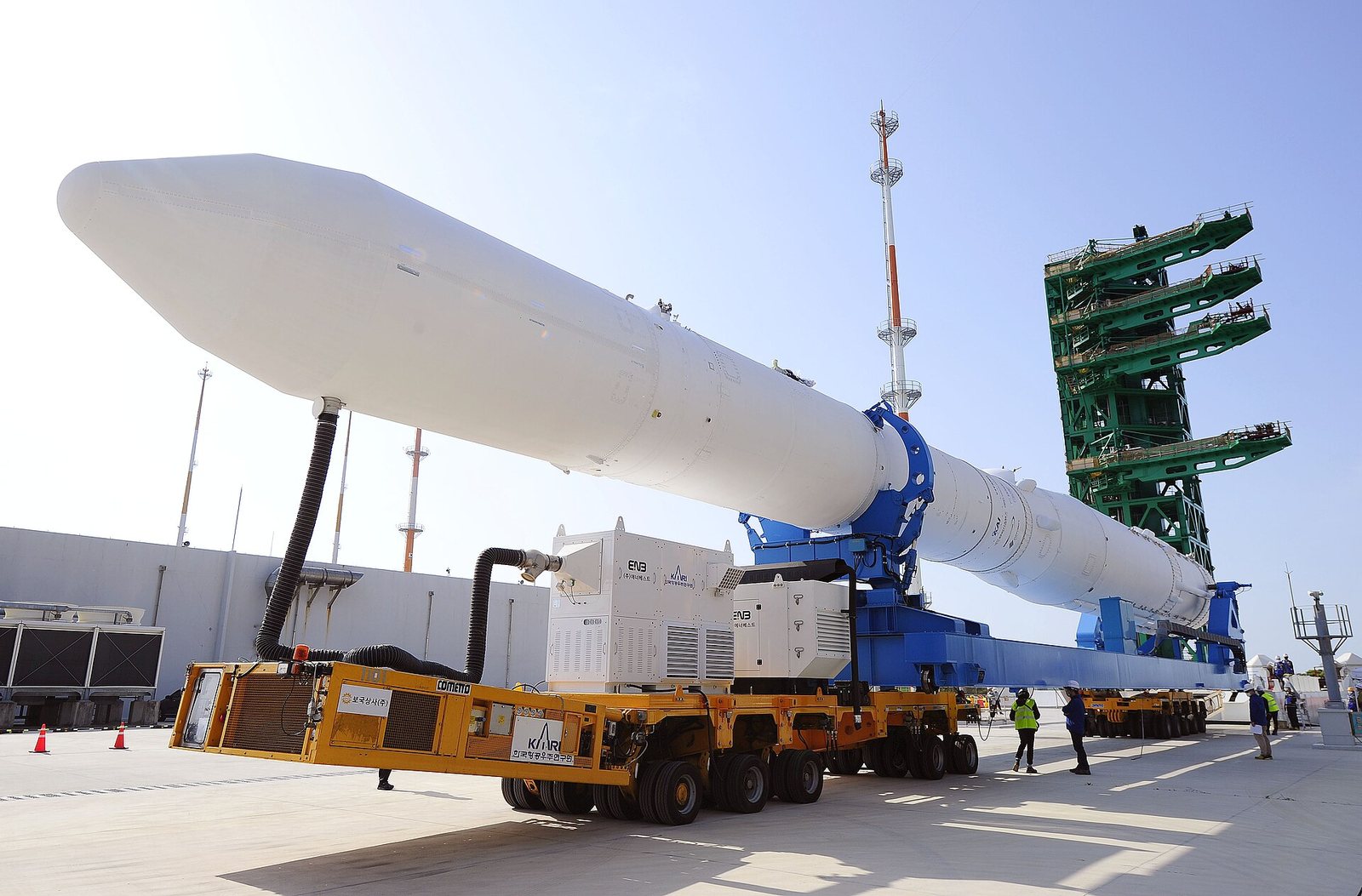
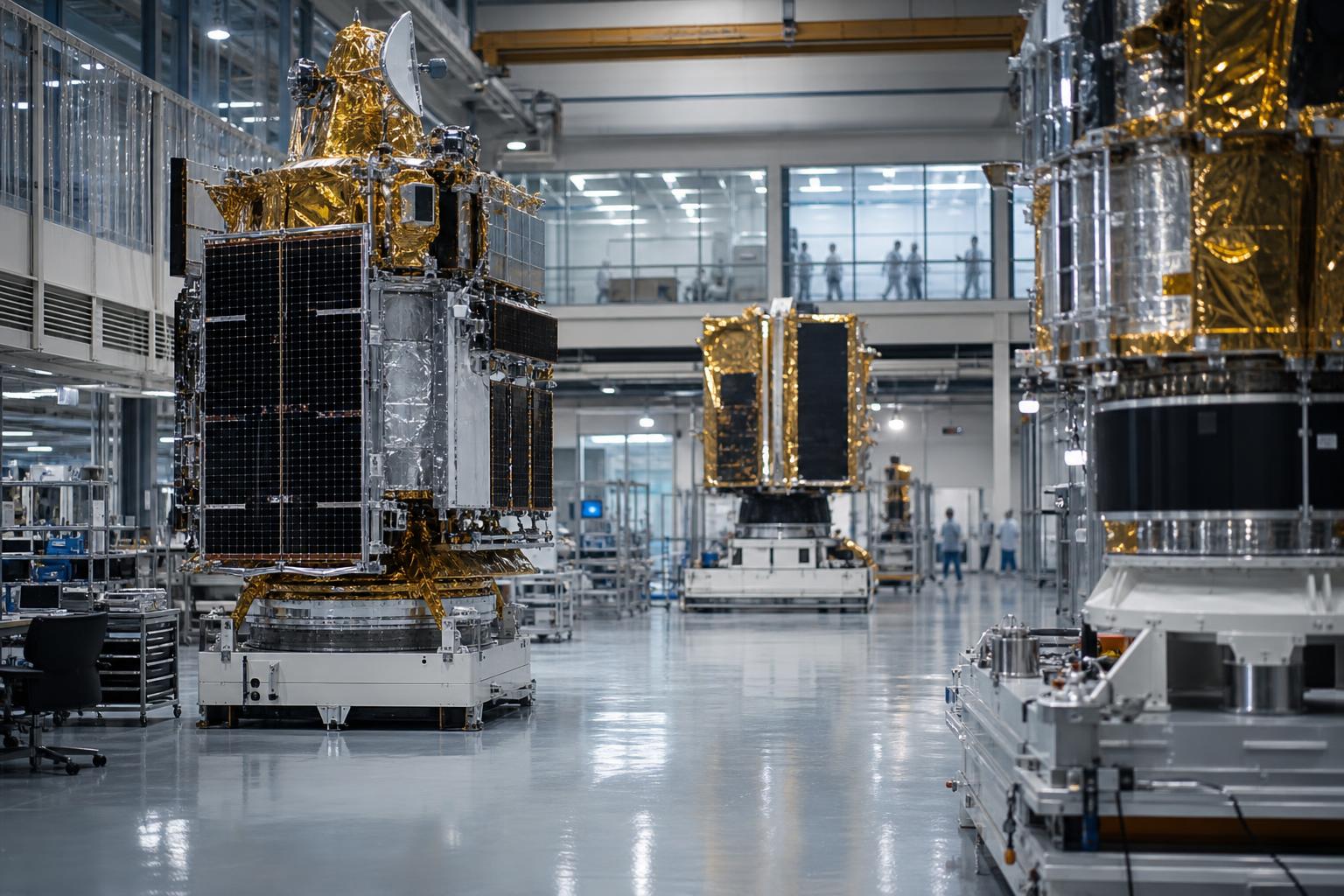
All five mass-produced microsatellites launched aboard South Korea's Nuri rocket on Oct. 7 have successfully reached their target orbit and established two-way communication with ground stations, the Korea AeroSpace Administration (KASA) said.
The satellites, designated Nos. 2 through 6, completed initial contact with ground stations in Daejeon, at the Sejong Station in Antarctica and at the Svalbard station in the Arctic by 6 p.m. local time, KASA said in a statement.
Satellite No. 6 was the first to make contact, linking with the Sejong Station ground station at around 1:08 p.m. No. 4 followed at 2:42 p.m. with Sejong Station, No. 3 at 3:27 p.m. with Svalbard, No. 2 at 4:18 p.m. with Sejong Station, and No. 5 at 5:52 p.m. with Sejong Station.
During the initial contacts, all five satellites transmitted unique identification information and telemetry data and responded normally to ground commands, KASA said. The checks confirmed that solar panel deployment, power generation, temperature and attitude were generally in good condition.
KASA and the Korea Advanced Institute of Science and Technology (KAIST) have determined that the launch was successfully completed and have begun initial operations. The satellites will now undergo checks of their satellite buses, optical payloads, communication systems and attitude control systems, followed by test image capture and reception.
After in-orbit testing and image quality verification, the satellites will be integrated into a constellation Earth observation mission with existing satellites.
The launch marked the first time South Korea has simultaneously launched five mass-produced satellites performing the same mission and successfully established contact with all of them, according to KASA. The agency said the operation demonstrated constellation satellite operation capabilities by identifying multiple satellite orbits and completing communications and status checks within limited ground station contact windows.
The microsatellite development program is led by KAIST's Satellite Research Institute under KASA support, with participation from the Korea Aerospace Research Institute and Satrec Initiative, among other domestic industry and academic partners. The program also includes development of ground systems for control and reception of multiple satellites, as well as image calibration and utilization systems.
Of the nine secondary payload satellites launched alongside the microsatellites, eight have completed communication with ground stations, while one is still attempting contact, KASA said. The agency plans to provide a comprehensive update on the secondary payloads on Oct. 13.
KASA Administrator Oh Tae-seok said the successful simultaneous launch and initial contact of five national satellites confirmed South Korea's satellite mass production and constellation operation capabilities. "We will carry out follow-up initial operations and performance verification without disruption and put them to practical use for national security and disaster response," Oh said.