KARI selects seven university CubeSat teams for KASA-backed satellites
The selected teams will receive technical support, funding and launch opportunities on domestic launch vehicles, with missions ranging from space-environment observation to laser optical communications.
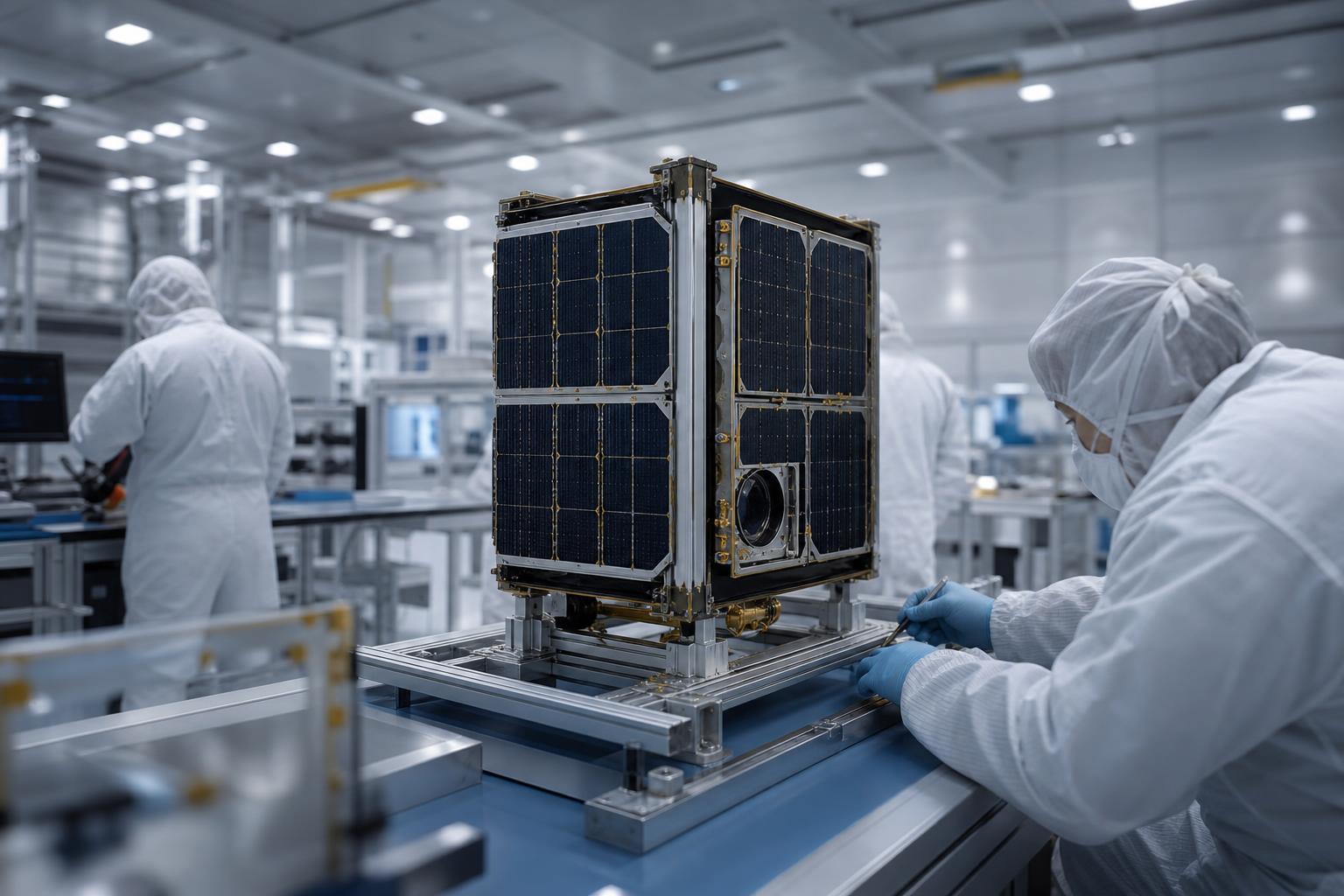
The Korea Aerospace Research Institute (KARI) selected seven university teams in the 7th micro/cube satellite contest, the institute announced on Oct. 23. Five teams were chosen in the beginner category and two in the advanced category.
The beginner-category teams are Pusan National University’s “Plato Sat,” Kyung Hee University’s “PADO-SAT,” Jeju National University’s “Blue Orbit,” Gyeongsang National University’s “OFDIR,” and Korea Aerospace University’s “KAUSAIL.” The advanced-category teams are Yonsei University’s “CubeSat Yonsei” and Chosun University’s “OLIVESat.”
According to KARI, the proposed missions span space-environment observation, disaster monitoring, laser optical communications, fine-dust observation, anomaly detection and data compression, with artificial intelligence used in several mission-efficiency concepts.
The selected teams will proceed through phased design reviews, satellite fabrication, space-environment testing and final pre-launch review to complete flight models capable of actual launch, KARI said.
The Korea AeroSpace Administration (KASA) and KARI plan to provide the selected teams with satellite-development technology support, development funding and launch opportunities on domestic launch vehicles.
KARI noted that all six CubeSats developed by teams selected in the previous, 6th contest were launched on the Nuri rocket: four on Nuri’s fourth flight in November last year and two on Nuri’s fifth flight in October this year.
Pusan National University said its PNU AEROSPACE team will develop the “PlatoSat” CubeSat with a space electric thruster by the second half of 2028 and pursue low-Earth-orbit launch.
NewsJeju reported that Jeju National University’s “Blue Orbit” team aims to observe Sargassum horneri in real time and was one of five beginner-satellite teams selected from 23 nationwide teams.