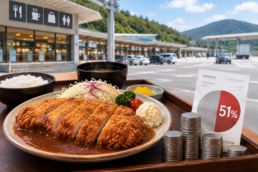


It is 8:30 on a Wednesday evening in Mapo, and the Korea honjok lifestyle 2026 is hiding in plain sight. Inside a narrow grilled-meat shop on a side street, a woman in her early thirties slides onto a single-seat counter. She unpacks a tablet, taps her order, and slips on a pair of headphones. Within minutes, a portable gas burner clicks to life in front of her. Then a small plate of pork belly arrives. Meanwhile, beside her, a man around the same age does the same thing. Neither looks up.
Ten years ago, this scene would have been almost unthinkable. For instance, eating alone — especially Korean barbecue, the country’s most stubbornly communal meal — used to signal social failure. However, today’s Korean single living script has flipped that expectation entirely. Now, this scene is so ordinary that nobody notices it. In fact, the entire restaurant was designed around it.
This is a small window into one of the quietest revolutions in modern Korean society. As of late 2024, more than 8 million Korean households consist of a single person. In other words, that equals 36.1 percent of all households nationwide. As a result, the country has built an entire commercial and cultural infrastructure around being alone. Honbap culture has gone mainstream. Single-seat barbecue chains, one-person karaoke booths, and solo wedding photo studios now dot every Seoul neighborhood. Furthermore, apps even let you “share” a meal with a YouTuber. In short, Korea has effectively turned solitude into a service category.
For visitors and curious outsiders, understanding the Korea honjok lifestyle 2026 is essential. It explains why convenience stores feel like restaurants. It explains why apartments are getting smaller. Furthermore, it explains why an entire generation is rewriting what a “normal” life is supposed to look like.
From Stigma to Status: A Brief History of Honjok
The word honjok (혼족) is a portmanteau. Specifically, it combines honja — meaning “alone” — with jok, meaning “tribe.” In other words, Koreans who do things alone have become a tribe of their own. From this single root, an entire vocabulary has bloomed. For example, honbap means eating alone. Likewise, honsul means drinking alone. Similarly, honyeong means going to a movie alone. Finally, honnol covers solo leisure in general.
Crucially, none of this language existed in the public conversation a decade ago. As recently as the early 2010s, dining alone in a Korean restaurant carried a faintly pitiful charge. Specifically, group meals were the social default. Furthermore, choosing to eat by yourself signaled either workaholism or social failure. By contrast, the cultural script today is almost the opposite. In particular, solo dining is now framed as self-care, intentionality, even a small luxury.
Several forces drove this shift. First, the cost of marriage and housing in Seoul climbed beyond what most young Koreans could justify. Second, women began rejecting the rigid expectations of traditional Korean family life. Our coverage of the Korea gender conflict and 4B movement explores that movement at length. Third, the COVID-19 pandemic normalized eating, working, and entertaining alone. As a result, what once felt embarrassing started to feel modern.
Min Kyeong-seok, a 37-year-old blogger, runs an account about solo travel and dining. He told The Guardian that he refuses to feel bad about eating dinner alone at a luxury hotel. In particular, he argues that the service is often better. That sentiment, almost unspeakable in 2010, is now a perfectly normal Instagram caption in Seoul.
The Numbers Behind the Honbap Mood
Vibes alone do not build industries. Numbers do.
In 2024, single-person households became the single largest household category in Korea. They are now bigger than two-person households, three-person households, or families of four or more. The proportion has climbed steadily from 27.2 percent in 2015 to 31.7 percent in 2020. Now it sits at 36.1 percent. Furthermore, government projections suggest the figure will reach 8.55 million by 2027 and approach 10 million by 2042.
A few additional data points sharpen the picture:
- Notably, the average annual income of a Korean solo dweller is roughly 34.2 million won, or about $23,000. By comparison, total-household average income is more than twice that.
- Nearly 20 percent of solo dwellers are aged 70 or older. Meanwhile, almost 18 percent are 29 or younger. In other words, this is a tribe stretched across two very different generations.
- Notably, Gyeonggi Province now hosts the most one-person households (22.1 percent), followed by Seoul (20.6 percent) and Busan (6.8 percent).
Importantly, this is not just a young-person phenomenon. Korean grandmothers in their seventies are statistically as honjok as a 26-year-old graphic designer in Seongsu. Many of them live alone in apartments their children left long ago. As a result, the market for solo-friendly products spans an unusually wide age range. This structural detail is something many foreign investors miss.
Where Solo Becomes a Business Model
Once you start noticing how the Korea solo lifestyle has redesigned the country for one, you cannot stop noticing.
Walk into a chain restaurant in central Seoul, and you will frequently find a row of single-seat counters facing the kitchen. Indeed, many barbecue places — once the strictest enforcers of the “two-person minimum” rule — now offer individual grills, butane burners, and personal screens. According to a Time magazine analysis, about 10 percent of Korea’s 170,000 restaurants now actively cater to solo diners. By Korean food-industry standards, that share is enormous.
The infrastructure goes far beyond food. Coin karaoke booths, called coin-noraebang, are designed for one or two people. Furthermore, they have spread across every major university district. Single-screen movie theaters offer recliner seats and curated solo schedules. Photo studios in Hongdae and Seongsu now sell a service called “solo wedding photoshoots.” Customers rent a wedding dress and pose alone for portraits. As a result, marriage is being quietly reframed as a personal milestone rather than a relational one.
Convenience stores deserve their own paragraph. GS25, CU, and Emart24 have collectively built more than 55,000 outlets nationwide. Moreover, these are not the bare-bones 7-Elevens that foreigners might recognize. Korean convenience stores carry hot ramyeon stations, fresh kimbap, single-portion side dishes, and ready-to-heat soups. They even stock discount wine selections curated for one. Many readers may already know how convenience stores have evolved into lifestyle platforms in Korea. Honjok demand directly accelerated that transformation.
Why Honjok Differs from American “Single Life”
Western readers sometimes assume honjok is just the Korean translation of “being single.” That assumption misses something important.
In American or European discourse, “single” usually describes a romantic status. A single person is unmarried, unpartnered, and often imagined as in transition before coupling up. By contrast, honjok in Korea describes a behavioral identity, not a romantic one. A married person can absolutely be a honjok-style consumer. They might enjoy eating alone, traveling solo, or spending an afternoon at a café. In short, honjok is about preferring your own company, regardless of relationship status.
Furthermore, honjok carries a layer of intentional self-protection that Western single-life narratives often lack. Korean honjok-identifying young adults explicitly cite Korea’s hypercompetitive work culture. They also point to exhausting social hierarchies and intense family obligations. For these reasons, choosing to be alone is partly an active retreat from social pressure. By comparison, the Western “treat yourself” version of solo dining is more about leisure than resistance.
This distinction matters for any foreign brand thinking about entering Korea. Specifically, marketing solo products as “for the empowered single” misreads the audience. Korean honjok consumers are not waiting to be coupled. As a result, they are not buying a temporary lifestyle — they are buying tools for a permanent one.
The Honjok Index: A Day in the Life
To understand how thoroughly honjok has restructured Korean daily life, consider a typical Tuesday for a 28-year-old office worker named Ji-eun. She lives alone in a 23-square-meter studio in Mapo.
7:00 AM — She wakes, makes coffee with a single-serving capsule machine, and eats a small yogurt cup. Notably, both products are sized for one person.
8:30 AM — On her commute, she stops at a GS25. She picks up a triangular samgak gimbap, a hot Americano, and a 200-milliliter bottle of orange juice. The receipt totals 4,800 won. Importantly, none of these items would have existed in this form fifteen years ago.
12:30 PM — Lunch is at a kimbap cheonguk — a casual Korean diner. There, she takes a counter seat and reads on her phone. A staff member places her bibimbap in front of her without comment. In fact, solo dining here is so routine that the staff barely register it.
7:00 PM — After work she walks alone through her neighborhood. Subsequently, she stops at a coin-noraebang. She pays 5,000 won for thirty minutes and sings four songs. Nobody else is there. Indeed, she likes it that way.
9:30 PM — Back home, she opens a delivery app. The Korean food delivery industry has aggressively built single-portion menus to capture exactly this moment. Our coverage of Korean startups and digital platforms examined this trend in depth. She orders a small bowl of jjajangmyeon. The minimum order is 8,000 won. There is no minimum-people requirement.
11:00 PM — She watches a YouTube mukbang — a video of someone else eating — while sipping a single can of beer. Mukbang itself is, in many ways, a cultural answer to honsul. It lets viewers feel social presence at a meal without actually having one.
This single fictional day touches at least seven distinct industries. Each has rewired its products for solo consumption. Multiply it by 8 million households, and the market becomes self-evident.
What Honjok Means for K-Culture and Beyond
Honjok has also become a recurring theme in Korean popular culture, which has helped export it globally.
K-dramas like My Liberation Notes, Because This Is My First Life, and Welcome to Samdal-ri feature solo-dwelling protagonists. Their alone-time is portrayed as restorative rather than sad. K-pop lyrics, too, increasingly name-check solo evenings, alone routines, and the simple comfort of one’s own apartment. As K-content travels, so do these images. Furthermore, foreign viewers are absorbing not only Korean fashion and food but also Korean ways of being alone.
The connection to commerce is direct. International coverage by outlets such as CNN has profiled honjok as a global lifestyle export, not just a Korean curiosity. Honjok has, in effect, become a soft-power product on par with K-beauty or K-pop.
This export function also benefits Korea’s brands. For instance, single-portion premium foods, solo travel packages, compact home appliances, and one-person furniture lines now have a global story attached to them. Our coverage of Korean lifestyle platform Ohouse noted that single-person households are explicitly named as a core growth driver. The same is true across the broader Korean startup ecosystem. There, honjok consumer behavior shapes everything from financial apps to dating-adjacent platforms.
The Quiet Side of Living Alone
It would be incomplete to write about the Korea honjok lifestyle 2026 without acknowledging its harder edges.
Roughly 49 percent of Korean solo dwellers report that they often or sometimes feel lonely. Furthermore, the rate of godoksa has been climbing — those are deaths in isolation that go undiscovered for days or weeks. The trend is especially visible among older single-person households. The same demographic shift that built the solo economy also built a quieter loneliness epidemic underneath it. As a result, Korean policymakers are now treating loneliness as a public-health issue, not just a lifestyle one.
In practice, this dual reality is part of what makes honjok culturally complex. Specifically, the same person who proudly orders single-serving wine at GS25 on Friday night may also worry about how to age alone. Korean honjok culture is not a frictionless utopia of self-actualized solitude. Instead, it is a structural adaptation to demographic, economic, and cultural pressures. As a result, this adaptation has been astonishingly successful at the consumer level — yet noticeably uneven at the human level.
For curious foreign readers, sitting with both halves of that picture is the most accurate way to understand it.
A Quiet Honjok Revolution Continues
If current trends hold, by 2030 roughly half of all Korean households will consist of a single person. In other words, “alone” will no longer be a deviation from the Korean default. Instead, it will be the Korean default. As a result, honbap culture will move from a notable trend to simply the way most Koreans eat.
That outcome reframes a lot of conversations. Furthermore, it means single-portion grocery aisles will keep expanding. Likewise, micro-apartments will become the dominant new build. This trend is already visible in Seoul real estate data showing that small units are leading citywide price growth. Solo-friendly entertainment will keep going global. Marriage, where it happens at all, will be increasingly opt-in rather than expected.
For visitors, the practical takeaway is straightforward. The next time you walk into a counter-seat ramyeon shop in Seoul and worry about looking awkward, remember the math. Roughly four out of every ten people around you live this way every day. As a result, you are not the exception. You are the audience the city was built for.
That, more than any single statistic, is the Korea honjok lifestyle 2026 in a sentence.