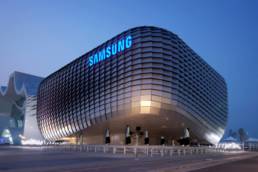


On a humid Thursday in late April 2026, something strange happened outside Samsung Electronics’ Pyeongtaek semiconductor campus. A crowd of 47,000 employees raised flags reading “Change it to be transparent!” Their demand was simple. They wanted a bigger share of the AI boom enriching their employer. Three weeks later, a very different crowd showed up at the same factory gate. This time, small business owners begged the union to cancel the strike. That collision — one group demanding more, the other terrified of losing what little remained — captures the Korea AI wealth gap better than any government report.
Then, on May 12th, a senior policymaker named Kim Yong-beom posted a 1,200-word essay on Facebook. By morning, the KOSPI had dropped 5.1 percent. By afternoon, every major newsroom in Asia was debating whether Korea was about to invent a new social contract for the AI era. This is the story of how a memory chip boom split a country in two — and what Seoul is now trying to do about it.
April 2026: 47,000 Samsung Workers Marched. Then a Facebook Post Lit the AI Wealth Gap Debate.
The Pyeongtaek demonstration was the largest organized labor action in Samsung Electronics’ history. Founded in 2019, the National Samsung Electronics Union now represents nearly a quarter of the company’s domestic workforce. Their demand sounded technical. They wanted 15 percent of operating profit routed into a transparent performance-bonus pool, with the existing cap removed. However, the underlying argument was political. Samsung’s semiconductor division had just posted ₩53.7 trillion ($36 billion) in quarterly operating profit. That was an eightfold increase year-on-year. Meanwhile, management’s counter-offer sat at 10 percent. The gap between those two numbers represented roughly $4 billion a year.
By contrast, the small business owners who showed up on May 19th told a different story. The protest was organized by the Korea Federation of Micro Enterprise. They warned that an 18-day production stoppage would devastate the cafes, restaurants, and supply contractors dependent on Samsung’s lunch crowds. “We are taking out loans to pay employee salaries and rent while facing the risk of bankruptcy,” federation chairman Song Chi-young said at a press conference. “Meanwhile, a powerful union enjoying some of the country’s highest wages and benefits is threatening to strike over bonuses.” The image of struggling shop owners pleading with $400,000-bonus engineers spread fast on Korean social media.
In particular, the tension caught the attention of Kim Yong-beom, President Lee Jae-myung’s chief of staff for policy. His Facebook post on May 12th arrived between the two protests. Kim argued that Korea was no longer functioning as a traditional export economy. Rather, the country was shifting into what he called a “technology monopoly economy.” Two companies could capture nearly all the gains from a global AI infrastructure boom. As a result, he proposed a tentatively named “national dividend” funded by excess tax revenue from semiconductor profits.
Markets reacted immediately. The KOSPI tumbled 5.1 percent before partially recovering. Samsung and SK Hynix led the selloff. Within hours, the presidential Blue House clarified that the post represented Kim’s personal opinion. However, the clarification only deepened the question. If a Korea citizen dividend was already on the policy table, what would it actually look like?
When Two Companies’ Profits Outgrow a Nation’s Tax Base
To understand the Korea AI wealth gap debate, start with a number that sounds impossible. According to KB Securities analyst Lim Jae-kyun, Samsung Electronics is projected to post roughly ₩330 trillion ($220 billion) in operating profit during 2026. SK Hynix is on track for ₩239 trillion. If both companies hit those marks, their combined corporate tax bill alone could exceed ₩100 trillion. That figure surpasses the Korean government’s total projected national corporate tax collection for the entire year.
In other words, two private companies will pay more corporate tax than every other company in Korea combined.
The driver is high-bandwidth memory, or HBM. These specialized chips allow Nvidia GPUs and other AI accelerators to process data at the speeds modern models demand. SK Hynix dominated the category early. The firm captured 57 percent of the global HBM revenue share by late 2025. Samsung followed at 22 percent. Together, the two firms have become the most strategically important memory suppliers on Earth. Furthermore, the supply shortage is structural. SK Group Chairman Chey Tae-won has publicly warned that global wafer capacity will remain at least 20 percent below demand through 2030. As a result, prices keep climbing.
The numbers behind that supercycle are staggering. SK Hynix posted a Q1 2026 operating profit of ₩37.6 trillion. The operating margin hit 72 percent — a level essentially unheard of in capital-intensive manufacturing. Samsung’s semiconductor division, despite trailing in pure HBM share, posted ₩53.7 trillion. That accounted for 94 percent of the company’s total quarterly profit. For instance, DRAM contract prices jumped 90 to 95 percent quarter-on-quarter. NAND flash followed at 55 to 60 percent. Notably, both companies have started rejecting long-term contracts. They can sell every chip they produce at higher spot prices.
This is the structural backdrop to Kim Yong-beom’s argument. When two companies capture this much of a nation’s productive surplus, the gains stop flowing through traditional channels. Shareholders win. Core engineers win. Owners of capital assets in the Seoul metropolitan area win. Meanwhile, much of the middle class experiences only indirect benefits. Specifically, a stronger won, slightly higher fiscal transfers, modest asset appreciation. The rest of the country watches the KOSPI climb on television.
For more on how the broader AI ecosystem is taking shape beyond the chipmakers, see Seoulz’s coverage of Korea’s hidden AI giants. That report profiles the startup layer building applications on top of this infrastructure.
The Other Korea: How 1 Million Closures Define the Korea AI Wealth Gap
Here is the part of the story that doesn’t appear in the semiconductor headlines. In 2024, the number of business shutdowns filed with Korea’s National Tax Service hit 1,008,282 — the first time in recorded history the figure has crossed one million. For instance, half of those closures were attributed to “business downturn,” the largest such share since the 2008 global financial crisis. Retail and food service accounted for 45 percent of the total. Vacancy rates in major commercial districts climbed to between 10 and 20 percent.
The profitability numbers underneath are even worse. According to a Korea Labor Institute report released in April 2026, 47.7 percent of Korean self-employed businesses generated annual operating profit of ₩10 million ($7,200) or less in 2023. That works out to roughly ₩830,000 per month. That figure is less than the legal minimum wage. The share of businesses operating at a loss tripled over a decade. Specifically, it jumped from 1.3 percent in 2007 to 12.8 percent by 2023. Meanwhile, the average operating margin in the sector collapsed from 17.8 percent in 1991 to 1.7 percent in 2023.
In addition, self-employed debt has now passed ₩1,000 trillion. The figure represents both a milestone and a warning. Delinquency rates on sole-proprietor loans have been ticking upward. Financial analysts typically read this as a leading indicator of further closures. Furthermore, the inflow of new entrants has slowed sharply. Statistics Korea reported that the number of self-employed Koreans aged 15 to 29 dropped by 33,000 in a single year. As a result, the system is bleeding both old businesses and new entrepreneurs simultaneously.
The political weight matters because roughly 20 percent of Korea’s workforce is self-employed. That is far above the OECD average of about 14 percent. Many ran restaurants, fried chicken franchises, or convenience stores after early retirement from corporate jobs. For instance, the country’s convenience store empire was built largely on this layer of small operators. Now, however, the math no longer works. Rent stayed flat, labor costs rose, and consumers cut back on discretionary spending as inflation lingered. Meanwhile, two chipmakers an hour south of Seoul were minting record profits. That juxtaposition is the lived reality behind every academic chart about Korea AI inequality.
The Bonus War: Why Engineers Earn $400K While Shop Owners Sell Their Stores
If you want to see the Samsung SK Hynix windfall debate at human scale, the bonus war between Samsung Electronics and its union is where to look. In September 2025, SK Hynix had already settled the precedent. Its labor and management agreed to allocate 10 percent of operating profit to a worker performance bonus pool, with no cap. The result, by April 2026, was a reported average special bonus of approximately $477,000 per employee in the chip division. Furthermore, internal projections suggested the figure could climb past $900,000 by year-end if HBM demand held.
Samsung’s union watched those numbers and pushed for more. The National Samsung Electronics Union demanded 15 percent of operating profit. They also wanted removal of all bonus caps and a formalized payout structure. Management countered with 10 percent. The standoff escalated through three months of mediation. Then it collapsed on May 20th. The Labor Relations Commission’s compromise was accepted by the union but rejected by management. The strike was scheduled for May 21st through June 7th. Analysts estimated the 18-day stoppage could cost between $6.9 billion and $11.7 billion in lost foundry production.
Then, on May 21st, the deal happened. Late-night negotiations led by Labor Minister Kim Young-hoon produced a tentative agreement. According to documents reviewed by Reuters and Korean media, Samsung agreed to fund the bonuses partially through company stock. The payout would extend over at least ten years. It was contingent on the chip division exceeding operating profit targets. Specifically, ₩200 trillion for 2026 to 2028, then ₩100 trillion from 2029 to 2035. As a result, Samsung shares jumped more than 6 percent the next morning. The union suspended the strike.
Here, however, is the catch. Those numbers apply to roughly 89,000 unionized engineers and operators. Meanwhile, the Samsung SK Hynix windfall has not translated to most other Koreans. For example, the average Korean household monthly wage sits at approximately ₩3.2 million ($2,300). The food delivery riders, retail clerks, and contract workers who power the broader economy have seen far smaller gains. In addition, gig economy workers — including the delivery platform riders profiled in our quick commerce analysis — continue to negotiate basic protections rather than profit-share schemes.
The visual of the small business federation begging Samsung engineers not to strike was, in some ways, the perfect snapshot of Korean labor in 2026. On one side of the fence stood workers negotiating shares of a hundred-billion-dollar windfall. On the other side stood the convenience stores and fried chicken franchises trying to keep the lights on.
Kim Yong-beom’s “National Dividend”: Pragmatic Reform or Political Bait?
To understand why Kim Yong-beom’s Facebook post triggered such a violent market reaction, understand who he is. Kim is not a fringe academic. He is chief of staff for policy at the Blue House. That is one of the most powerful economic positions in Korea. Furthermore, he sits at the center of President Lee Jae-myung’s redistribution agenda. His administration has already produced expansionary budgets, cash transfers, and a doubling of AI infrastructure spending. Moreover, the Lee administration is widely seen as having weakened the traditional Ministry of Economy and Finance. Specifically, the goal was to centralize fiscal authority within the presidential office.
In his post, Kim made a careful philosophical argument. The fruits of the AI era, he wrote, “are not solely the result of particular companies.” Instead, they arise “from the industrial base that the entire population has built together over half a century.” Therefore, a portion of those fruits “should be structurally returned to all citizens.” He named this principle the Korea citizen dividend. As examples of how the money could be used, he listed four concrete categories. They include startup capital for young people, basic income for rural and fishing communities, support for artists, and strengthened pensions for the elderly.
In particular, the political ambition of the framing was clear. Kim explicitly compared Korea’s position to Alaska’s Permanent Fund and other windfall redistribution models. “Using a portion of excess profits to ensure social stability,” he wrote, “is not merely redistribution, but also a type of system maintenance cost.” In other words, the Korea citizen dividend was being pitched not as charity but as infrastructure. It would be a payment that kept the social system functioning during a period of structural change.
Markets, however, heard “new tax.” Samsung and SK Hynix shares dropped sharply. KB Securities, Morgan Stanley, and other analysts spent the next 48 hours trying to clarify the proposal. Was Kim suggesting a brand-new windfall levy, or simply talking about how to spend existing tax surpluses? Eventually, Kim issued a follow-up clarification. His intent was to redistribute “excess tax revenue,” not impose a new corporate windfall tax. Markets recovered most of their losses. The Blue House called it a personal opinion.
Nevertheless, the policy genie was out of the bottle. Whether or not a new tax materialized, the question Kim raised was now part of the national conversation. What does Korea owe its citizens when two of its companies become globally dominant chip suppliers? Moreover, the political calendar matters. Korea’s revised 2026 economic outlook is due in the second half of this year. The size of corporate tax revenue projections will determine the 2027 budget. If the semiconductor supercycle holds, Kim has indicated that tax revenue could reach “historic levels.” In that case, a national dividend program would no longer be hypothetical.
A Society at the Inflection Point: Wages vs. Capital in a 0.65 Fertility Country
The Korea AI inequality debate does not exist in isolation. It sits on top of a demographic crisis with no real precedent in modern industrial history. South Korea’s total fertility rate fell to 0.65 in 2023. That is the lowest figure ever recorded by any country in peacetime. Furthermore, the rate has continued to plumb new depths even as the economy industrialized. The Board of Audit and Inspection now predicts that by 2047, all 226 of Korea’s cities and counties will face risk of population extinction.
The drivers of that collapse are tightly linked to the wealth distribution debate. Specifically, young Koreans cite three reasons most often when surveyed about why they delay or forego marriage and children. They include the cost of housing in Seoul, the cost of education, and the perceived impossibility of competing economically without inherited capital. For more on how this plays out at the level of family decision-making, see Seoulz’s coverage of Korea’s birth rate crisis. That piece dives deeper into the cultural and economic feedback loops.
For instance, the average monthly tuition for a Seoul “English kindergarten” now exceeds ₩1.54 million ($1,070). These immersive private preschools have become a status marker in Gangnam and Seocho. That figure is roughly half of the average Korean household’s monthly wages. Meanwhile, top-tier preschools in Seocho-gu charge over ₩3 million a month. That is more than five times the cost of public university tuition. Furthermore, Korea’s hagwon industry absorbs ₩29 trillion in annual household spending. It continues to grow even as the student population shrinks. The math, for most Korean parents, simply does not work.
Capital income, on the other hand, has rewarded those who hold it. KOSPI gains in 2025 and early 2026 were driven almost entirely by semiconductor weighting. As a result, the gap between asset-holding households and wage-earning ones has widened sharply. In addition, Seoul apartment prices moved up again. Fund managers, retirees, and dynastic family offices repositioned around the chip cycle. The asset class is already among the most expensive in the developed world relative to local income.
This is the inequality that Kim Yong-beom’s national dividend is really designed to address. The framing is less about taxing companies. Rather, it is about repairing a social contract that demographic and economic forces have nearly severed. If Koreans cannot afford to start families, the question of who captures the AI windfall stops being abstract.
Could a Korea Citizen Dividend Actually Lift the Demographic Crisis?
Globally, the precedents for what Korea might build are scattered but instructive. The Alaska Permanent Fund, established in 1976, distributes annual dividends from state oil revenue to every resident. Payouts have ranged from $300 to over $2,000 per person. Meanwhile, Norway’s sovereign wealth fund, also built on oil, has grown to roughly $1.7 trillion. It now owns approximately 1.5 percent of every publicly traded company on Earth. In addition, European Union member states imposed temporary solidarity contributions on energy companies in 2022. The levies targeted profits more than 20 percent above the 2018-to-2021 average.
However, none of those precedents map perfectly onto AI. Oil and gas are extractive industries with finite resources and clear public ownership of the underlying assets. By contrast, semiconductor profits arise from intellectual property, capital investment, and human capital. The link to public infrastructure is more diffuse. For instance, Samsung’s HBM advantage rests partly on Korean public R&D, partly on decades of internal investment, and partly on proprietary partnerships with Nvidia. Establishing what portion of the resulting profit constitutes a “social return” is a non-trivial policy problem.
Nevertheless, Korean policymakers are starting to map the terrain. Kim’s four categories read like a blueprint for a broader Korean version of the Alaska model. They include youth entrepreneurship, rural basic income, artist funding, and pension reinforcement. Moreover, the timing matters. Korea is approaching what economists call its demographic point of no return. The country’s working-age population peaked in 2019. As a result, every year of policy delay compounds the demographic gap.
Specifically, one structural advantage Korea has is the concentration of the windfall. Two companies, Samsung and SK Hynix, produce most of the excess corporate tax revenue. Therefore, designing a redistribution mechanism does not require complex industry-wide modeling. The hard part, instead, is the politics. The Samsung union strike, the small-business counter-protest, and the KOSPI’s 5 percent swing on a single Facebook post all underline that fact.
For investors and operators watching Korea, the practical takeaway is that the Korea citizen dividend debate is unlikely to disappear. The next signal will come from the second-half 2026 economic outlook revision. Furthermore, if tax revenue projections climb meaningfully, the policy framework will move from Facebook post to legislative proposal. By 2027 budget season, foreign investors will need to model not just AI demand and HBM pricing. They will also need to factor in the probability of a structural redistribution mechanism eating into the chipmaker tax line.
What Korea Tries Now, Everyone Will Copy by 2030
In April 2026, a New York state lawmaker introduced a similar proposal. The bill would create a citizen dividend funded by taxes on AI-driven excess profits. It is unlikely to pass, but the symbolism matters. As a result, the Korea AI wealth gap debate is starting to surface globally. Seoul is, almost by accident, becoming the first major economy to test a real-world framework. Furthermore, the United Nations Secretary-General and several OECD economists have already called for some form of AI-era redistribution. If Korea moves first, every country hosting AI infrastructure will have a working precedent to study.
That precedent matters because the same dynamics are visible elsewhere. Across the United States, the “Magnificent Seven” tech stocks now account for roughly a third of S&P 500 market capitalization. Over in Taiwan, TSMC’s profit share has become so large that it materially affects the country’s GDP statistics. Within China, the AI infrastructure buildout is being directed largely by state-owned enterprises. The redistribution question there is structurally different but no less acute. Meanwhile, in Europe, the Draghi Report has already flagged AI-era industrial concentration as a policy challenge.
Importantly, what Korea is doing differently is treating the question as a social problem rather than purely a fiscal one. Kim Yong-beom’s framing — that the AI dividend is “system maintenance cost” — implies that capitalism in the AI era requires a new floor of citizen participation in returns. For foreign investors, the framing is initially unsettling. Markets dropped 5 percent the first time they heard it. However, for policymakers, the framing is structurally different from the windfall taxes Europe attempted in 2022. Those were emergency measures. By contrast, the Korean citizen dividend, as Kim describes it, is an attempt to institutionalize a redistribution principle for the long run.
Whether Korea actually pulls it off remains an open question. The political opposition is real. Samsung, SK Hynix, and the broader business federation will resist any framework that resembles a new tax. Meanwhile, the unions will push for direct profit-sharing rather than collective dividends. In addition, the demographic clock is ticking. Korea may have only a few years to translate its semiconductor advantage into a renewed social contract before the population pyramid makes the underlying economics impossible.
The Pyeongtaek factory is the symbol of that race. In April, 47,000 union workers marched there. In May, small business owners pleaded at the same gate. On one side stands the most profitable manufacturing facility in human history. On the other side stand the convenience stores, fried chicken franchises, and PC-bang arcades that define daily Korean life. That service economy has long absorbed the social cost of Korean industrial success without sharing in its upside. The question Kim Yong-beom posed in his Facebook post is whether those two Koreas can be bridged before the demographic math forecloses the option.
By 2030, the answer will matter not just for Seoul but for every country navigating the AI transition. As a result, what looks today like a local Korean political story may, in retrospect, turn out to be the first chapter of a global one. The world’s first AI national dividend experiment is being designed in Seoul. The question now is whether Korea has the political will — and the time — to finish it.