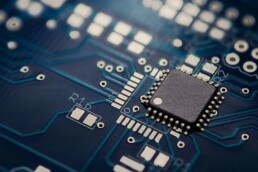


Every year, millions of plastic IC trays — the small, grid-like carriers that cradle semiconductor chips through packaging and testing — get tossed into the waste stream. They are not toxic. They are not worthless. Until now, however, recycling them required each company to run a separate, months-long approval process. That bottleneck is about to end.
From Waste to Resource: What Changed
Korea’s Ministry of Climate, Energy and Environment announced on April 6 that it would formally designate waste IC trays and waste quarry stone as “circular resources” — a legal classification that exempts materials from waste regulations entirely. The ministry opened a 20-day public notice period starting April 7, covering three revised ordinances.
In Korea, a “circular resource” is a material deemed non-hazardous, economically viable, and suitable for paid commercial transactions. Once designated, it no longer requires individual waste-handling permits. The concept is broadly similar to the EU’s “end-of-waste” criteria. In practice, however, Korea’s previous system forced every individual company to seek its own approval — a process that could take up to 60 days and carried an initial validity period of just three years.
The two new additions bring Korea’s total list of designated circular resources to twelve. Previous entries include waste paper, scrap metal, and spent EV batteries.
Why IC Trays Matter to the Semiconductor Circular Economy
IC trays are made from engineering plastics — durable, high-spec, and expensive to produce. After several reuse cycles, trays that fall below quality standards are retired. Shredded and reprocessed, they can directly substitute for virgin plastic in new tray manufacturing. Samsung Electronics‘ Onyang facility already demonstrated this in 2024: by crushing waste IC trays and blending them into feedstock, the plant replaced 12% of raw material inputs and became Korea’s first certified “circular resource product” manufacturer.
That case study matters for investors. It shows the economics work — and at scale, the savings are real.
Under the new rules, IC tray makers can shred and reprocess retired trays without any additional licensing. Furthermore, the ministry is removing waste IC trays from Korea’s restricted import list for “waste synthetic polymer compounds.” As a result, tray manufacturers can now import used IC trays directly from overseas — without holding a separate recycling business license.
This is a supply-chain move as much as an environmental one. Samsung and SK Hynix together consume enormous volumes of IC trays annually. Stabilising feedstock supply through imports reduces dependence on virgin plastic and helps chipmakers hit ESG targets simultaneously.
Quarry Stone: A Quieter Win for Construction
Waste quarry stone — the offcuts and fragments generated when natural rock is processed — shares the same mineral composition as primary aggregate. Nevertheless, it has long been treated as regulated waste, adding disposal costs to quarrying operations. By contrast, under the new designation, quarry stone can flow freely into concrete production and aggregate supply chains.
Korea’s construction sector faces persistent pressure on material costs. In addition, the government’s infrastructure pipeline remains active. Cheap, certified-clean aggregate from quarry waste therefore arrives at a convenient moment for project developers and ready-mix concrete suppliers alike.
Regulatory Friction: The Real Cost That’s Being Cut
Between 2024 and 2025, Korean companies submitted 1,815 individual circular resource recognition applications covering 39 waste categories. Each application required hazardous-substance analysis and on-site inspections. The administrative burden fell disproportionately on smaller firms that lacked dedicated compliance teams.
Blanket designation changes that equation. Companies no longer file; they simply comply with the material standard and proceed. For multinationals operating Korean facilities, this reduces one layer of localised regulatory friction that foreign compliance officers often flag as opaque.
Kim Go-eung, director-general of the Resource Circulation Bureau at the Ministry of Climate, Energy and Environment, stated that the measures would “reduce the burden on the semiconductor industry and further activate the circular use of waste stone,” adding that “field-centred institutional improvements” would continue.
The Bigger Picture for Korea’s Circular Economy
Korea’s semiconductor industry is not just a domestic story. It anchors global chip supply chains — and therefore global electronics manufacturing. Any policy that lowers the cost of responsible waste management at Korean fabs ripples outward to supply-chain partners and investors tracking ESG compliance across the value chain.
Meanwhile, the move signals a broader regulatory direction. With twelve circular resources now on the list, the ministry has a template to expand coverage to other semiconductor process by-products — chemical slurries, packaging films, and specialty plastics among them. The IC tray decision, in other words, is likely a precedent, not an endpoint.
Korea’s semiconductor circular economy is still early-stage. However, the regulatory infrastructure is now catching up to the industrial reality.