Week in review: Hanwha's global push, KAI's teaming milestones and North Korea's AI torpedo claim
From Austal USA talks and a Canadian land-systems venture to FA-50 drone formation flights and a disputed hypersonic test, the week highlighted both industrial ambition and security friction.
This week's developments in Korean defense and aerospace clustered around three threads: Hanwha's aggressive expansion across land, sea and space; Korea Aerospace Industries' progress in manned-unmanned teaming and helicopter exports; and a series of security flashpoints involving North Korean weapons claims and U.S. Forces Korea remarks.
Hanwha's multi-front industrial push
Hanwha Group moved on several fronts simultaneously. Austal Limited said on Oct. 14 that it had extended due diligence for Hanwha Defence USA to turn its indicative offer into a binding one, with commercial negotiations now underway. ThePublic reported that Hanwha had proposed a valuation of $1.05 billion to $1.2 billion for Austal USA in August, while a Wildcat-led consortium later proposed $1.25 billion to $1.35 billion.
In Canada, a venture linked to Hanwha Aerospace is seeking about $1 billion to build land defense systems using the Korean company's technology, according to Be Giant. Project Arrow Defence Industries aims to assemble military vehicles in a new plant using parts from Canadian automotive suppliers. The plan follows an April joint venture between Hanwha and APMA to manufacture K9 Thunder self-propelled howitzers, armored personnel carriers and uncrewed ground vehicles in Canada, contingent on Hanwha winning Canada's submarine contract—which instead went to Germany's Thyssenkrupp Marine Systems.
Hanwha Systems also filed to sell its entire 7.24% stake in Hanwha Ocean for $1.03 billion (1.38 trillion won), with proceeds earmarked for satellites and defense artificial intelligence, according to The Korea Economic Daily. The company separately said terms for a joint venture with UAE EDGE Group on an integrated air-defense network remain unconfirmed, with a redisclosure date of Jan. 15, 2027.
KAI's teaming and helicopter milestones
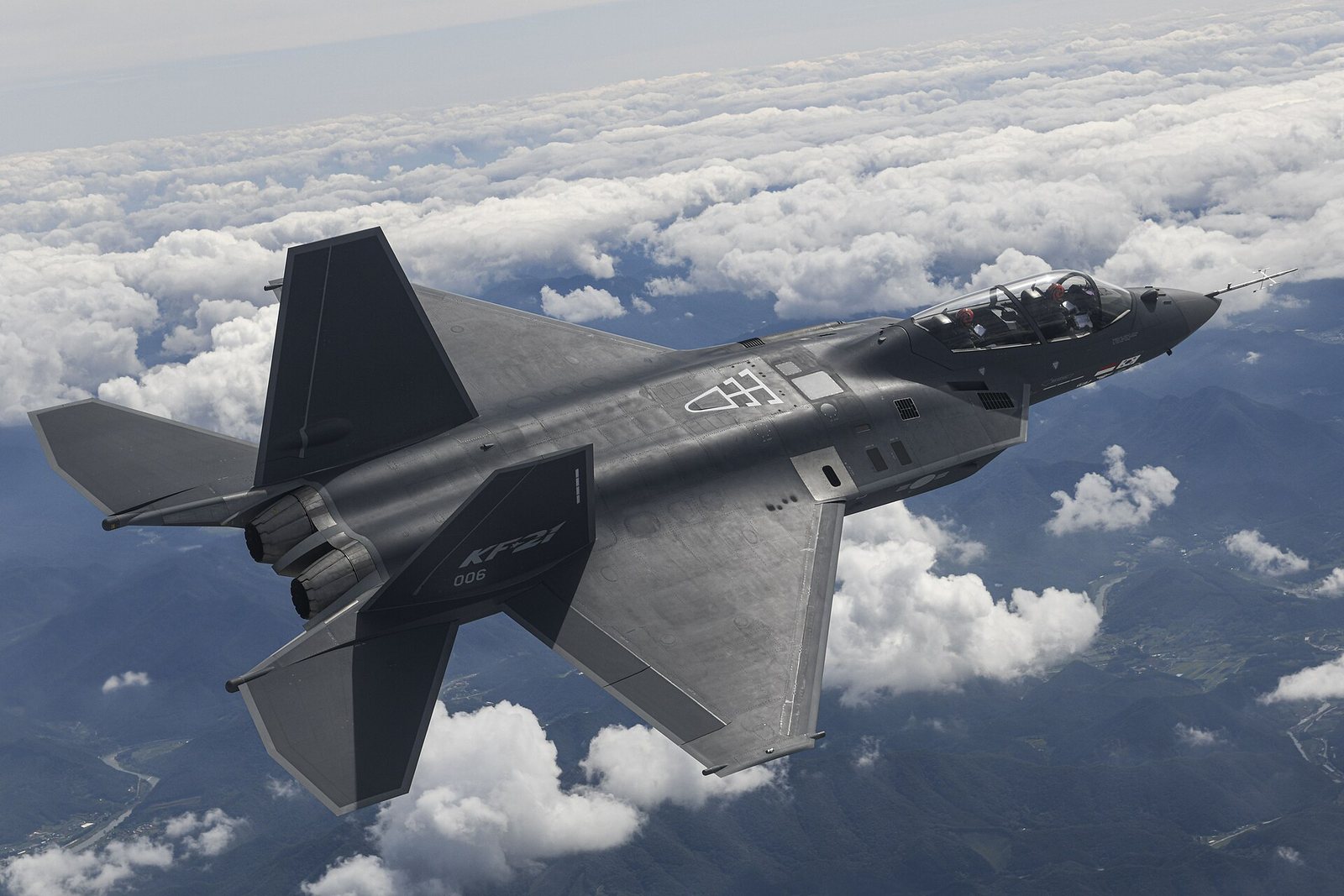
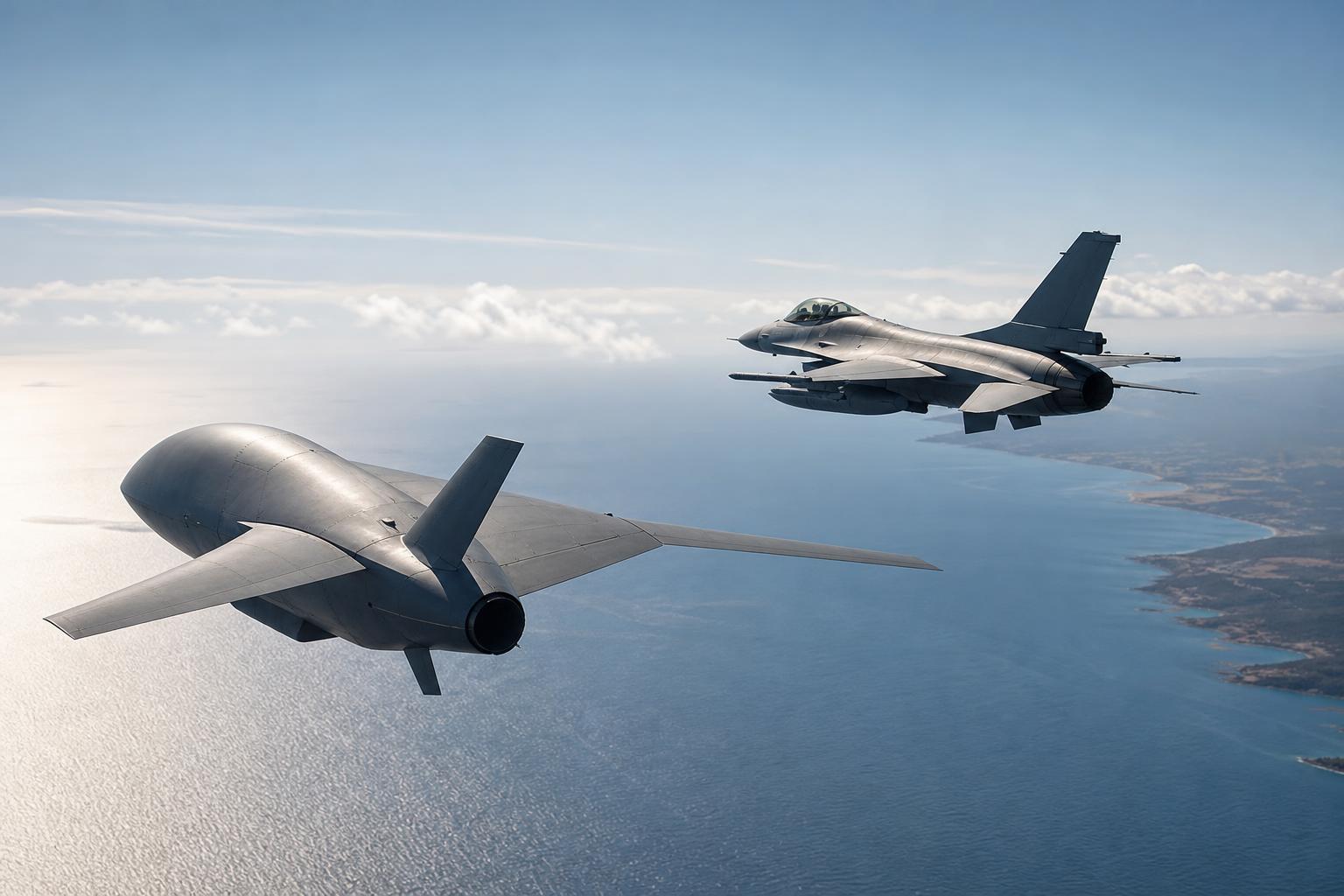
Korea Aerospace Industries reported two notable advances. Its AAP unmanned aircraft flew in formation with an FA-50 light combat aircraft for 20 minutes over waters south of Goheung on Oct. 16, maintaining 9 to 30 meters of separation at about 7,000 feet and 360 km/h. KAI describes the AAP as a 150 kg-class high-speed unmanned aircraft developed through company investment since 2024, intended for reconnaissance, jamming, deception and strike missions alongside manned fighters.
On the helicopter side, KAI said 44 civilian Surion helicopters had been contracted as of Oct. 16, with 30 delivered and 14 under production. The contract breakdown includes 15 for the National Police Agency, 11 for the Korea Coast Guard, 9 for the National Fire Agency, 8 for the Korea Forest Service, and 1 for the Korea National Park Corporation. KAI is also watching whether its two firefighting helicopters delivered to Iraq lead to additional exports.
Security friction: North Korean claims and USFK remarks
North Korea said it tested a new torpedo weapon system named Zam-2.0, with state media claiming artificial intelligence was used for target detection and guidance. KCNA said the test verified propulsion technology developed through more than 180 tests over five years, but did not disclose range, speed, operational capabilities or location. South Korea's military did not immediately comment.
Seoul also pushed back on North Korean doubts over its first hypersonic glide vehicle test. A defense ministry official said the absence of soot on the vehicle surface reflected domestic heat-resistant material technology rather than a failed test. The military conducted the first test launch on Oct. 8 while President Lee Jae-myung observed.
Separately, the defense ministry distanced itself from remarks by USFK Commander Gen. Xavier Brunson that South Korea begins at the southern boundary of the Military Demarcation Line area, calling them his personal views. Lawmakers demanded a retraction and apology, while the ministry and USFK also diverged publicly over wartime OPCON transfer conditions.
This week on Seoulz
- Seoul distances itself from USFK commander's DMZ sovereignty remarks
- South Korea ranks second in reusable launch vehicle patent growth
- Hanwha Defense USA gets more time as Austal USA sale talks move into commercial negotiations
- KAI privatization debate heads to Export-Import Bank audit after Hanwha stake build-up
- North Korea says it tested AI-equipped Zam-2.0 high-speed torpedo system
- Chinese Connected EVs Registered for Access to Key South Korean Military Bases
- KAI and Royal Malaysian Air Force Complete School Improvement Project in Kuantan
- Hana Aerodynamics ramps up Bell 412 fuselage work after long-term supply deal
- KAI reports 44 civilian Surion helicopters contracted, eyes Iraq follow-on exports
- Lawmakers Fault Labor Oversight After Fatal Explosions at Hanwha Aerospace Daejeon Plant