Spacebeam and Chosun University Decode Optical Signal from CPSAT1 Satellite
The Korean startup and university confirmed the satellite's identification string from an LED beacon, a step toward laser communications tests.
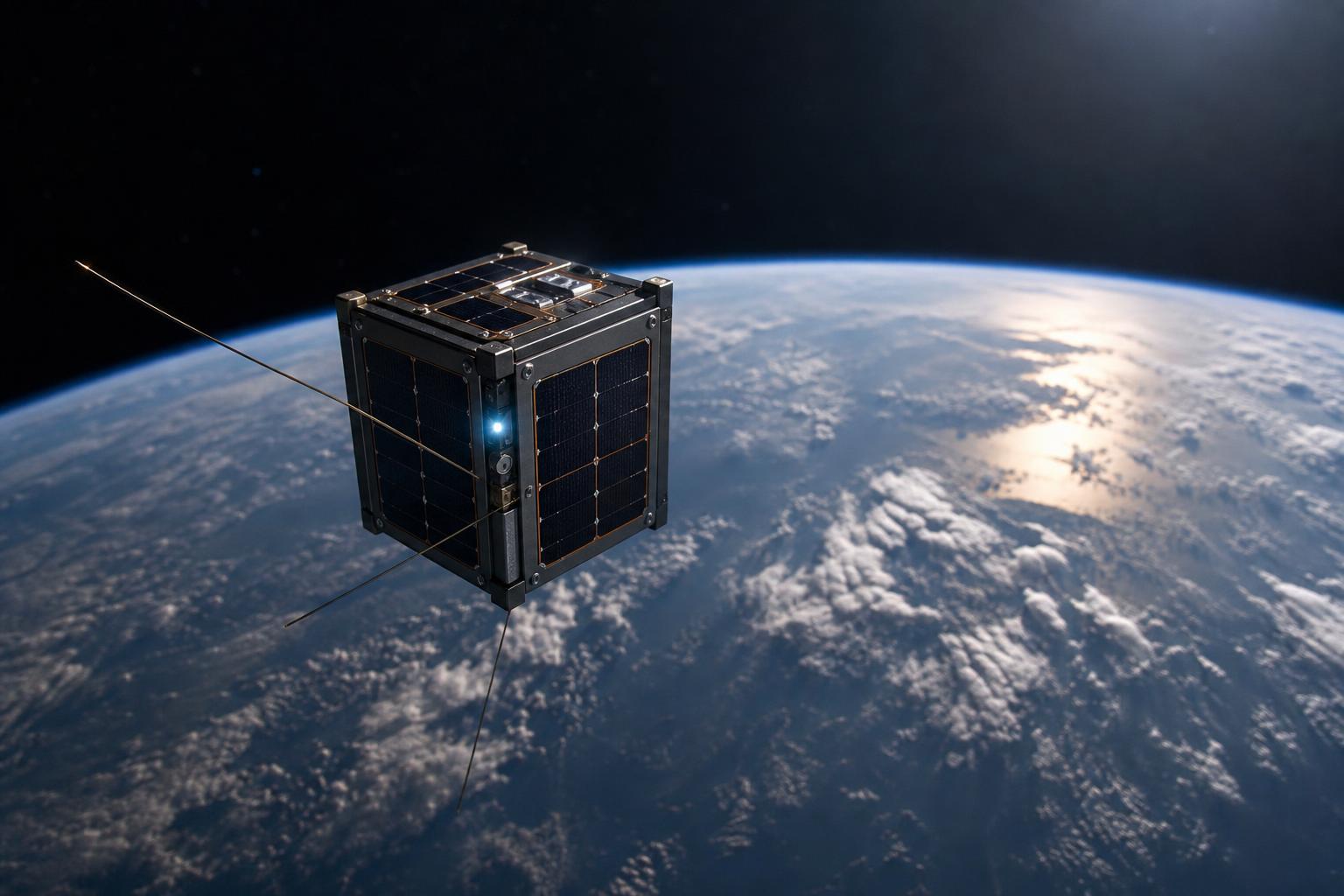
Space optical-communications startup Spacebeam and Chosun University succeeded in decoding a message sent from space by light, MoneyToday reported. The test used the LED beacon signal from the CubeSat CPSAT1, which entered orbit on South Korea's fifth Nuri launch.
Spacebeam received the optical signal at its optical ground station and confirmed the satellite identification string "CPSAT1," according to MoneyToday. The observations were conducted over two days from Oct. 14 to Oct. 15 at Spacebeam's optical ground station in Osong, Chungcheongbuk-do.
CPSAT1 was placed into an orbit of about 575 km on Oct. 7 and carries laser optical-communications and LED payloads to demonstrate satellite-to-ground optical communications, MoneyToday reported.
Chosun University said on Oct. 20 that it had successfully received an optical signal sent from space by CPSat through cooperation with Spacebeam, ETNews reported. The university and Spacebeam received CPSat's LED beacon signal on both Oct. 14 and Oct. 15 and confirmed the information contained in the signal.
Spacebeam plans to refine its tracking and receiving system using the observation data, then proceed to satellite-to-ground laser optical-communications demonstration after CPSAT1's attitude stabilizes and Chosun University completes pointing tests, according to MoneyToday.