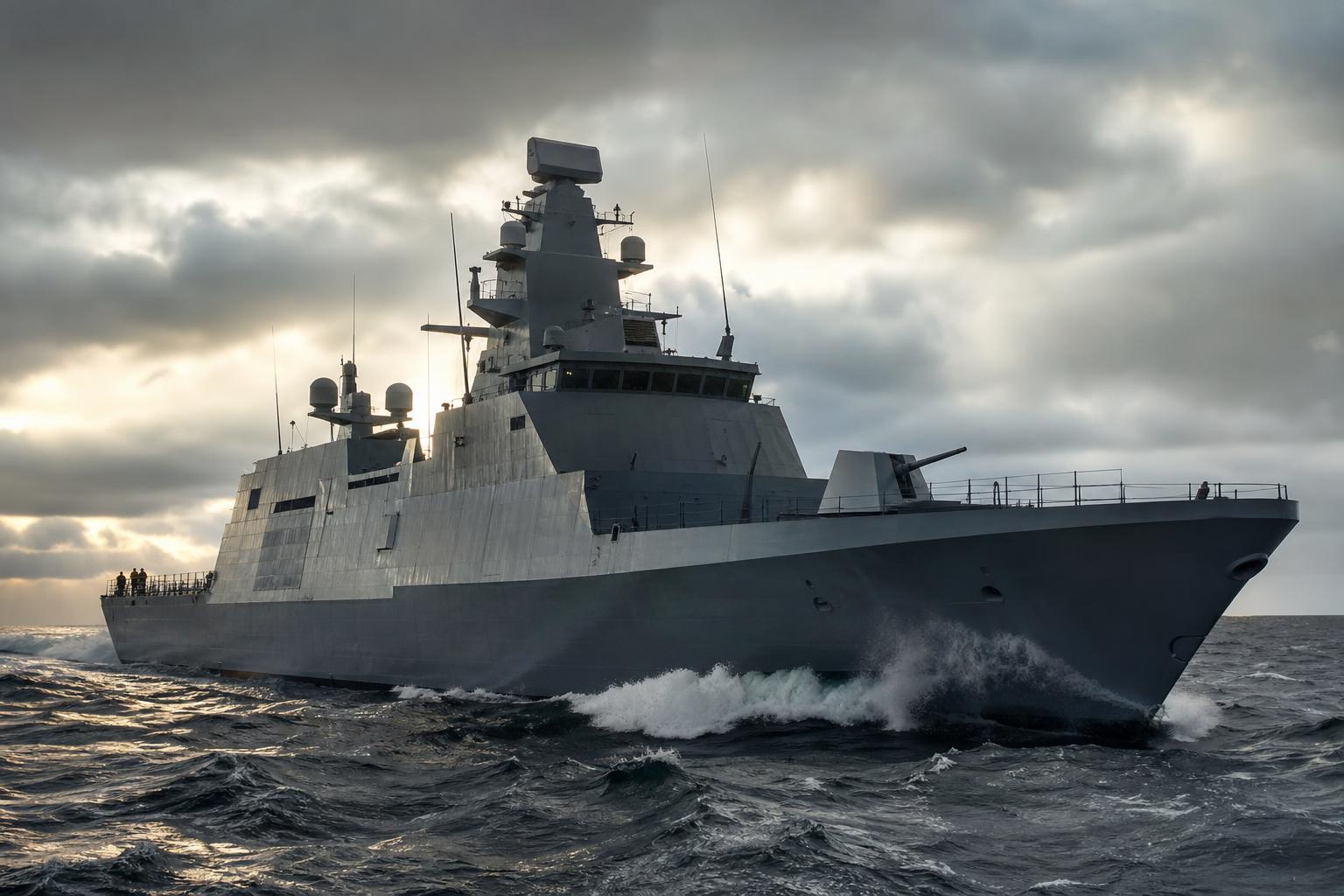
South Korea launches fifth Ulsan-class Batch-III frigate ROKS Pyeongtaek
The 3,600-ton frigate, built by Hanwha Ocean, features an integrated sensor mast with a domestically developed multifunction phased array radar.
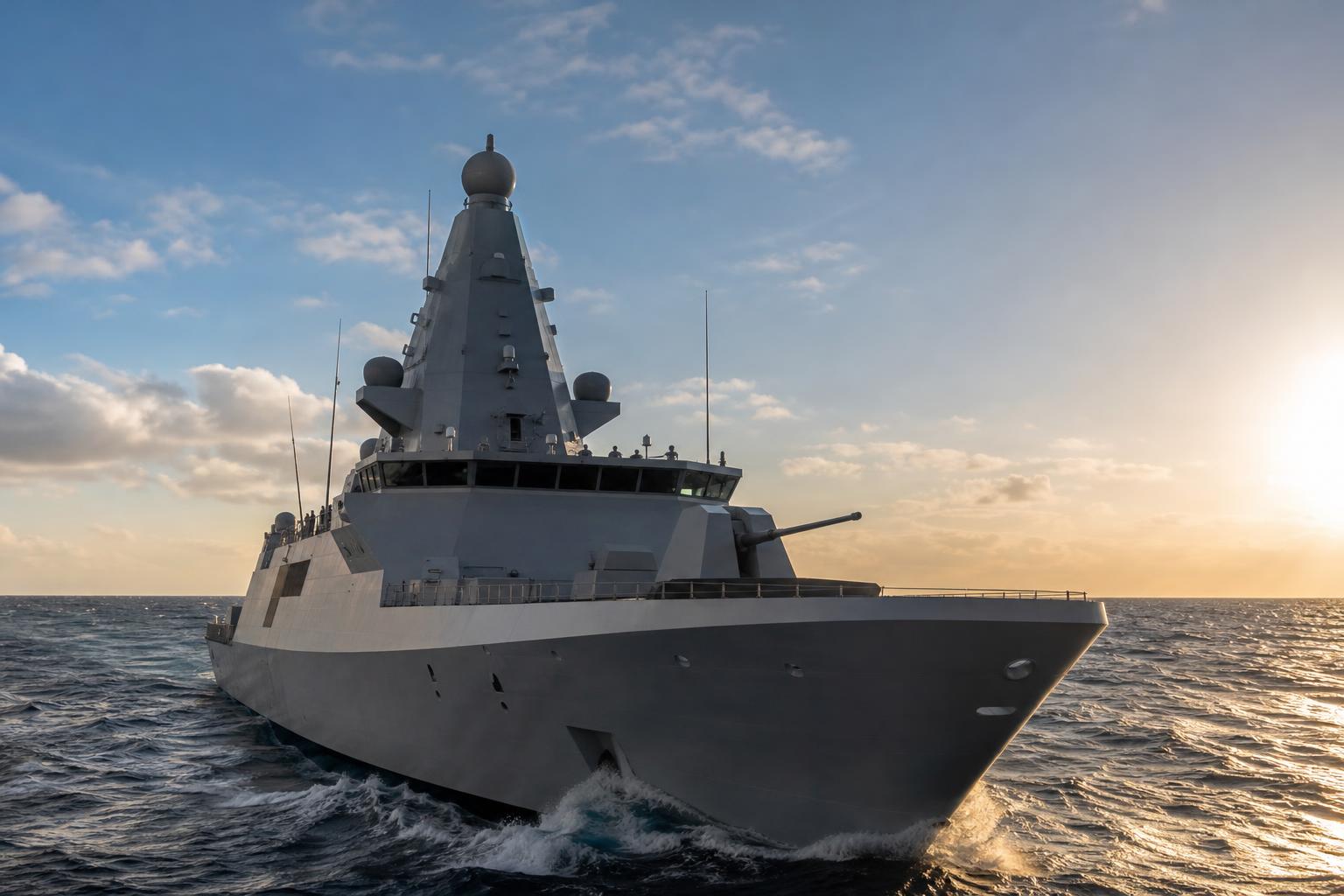
The Republic of Korea Navy and the Defense Acquisition Program Administration (DAPA) held a launching ceremony for the Ulsan-class Batch-III frigate ROKS Pyeongtaek (FFG-833) at Hanwha Ocean's Okpo shipyard in Geoje on Nov. 18.
The Pyeongtaek is the fifth ship of the Ulsan-class Batch-III program, which replaces the Navy's aging frigates (FF) and patrol combat corvettes (PCC). Previous ships include ROKS Chungnam, ROKS Gyeongbuk, ROKS Jeonnam, and ROKS Jeju.
The frigate is named after Pyeongtaek, the city where the Navy's 2nd Fleet Command is located. This is the second ROKS Pyeongtaek; the first (ATS-27) was a former U.S. Navy salvage ship that served for about 20 years before being decommissioned in December 2016.
The ship was built under a contract signed with Hanwha Ocean in November 2023, followed by a steel-cutting ceremony in 2025 and a keel-laying ceremony in 2026.
The ceremony was attended by Defense Minister Kang Shin-chul, Chief of Naval Operations Adm. Kim Gyeong-ryul, DAPA's Director General for Infrastructure Programs Jeong Jae-jun, and Hanwha Ocean CEO Kim Hee-chul, along with about 150 other officials.
The Pyeongtaek is 129 meters long, 14.8 meters wide, and 38.9 meters high. Its main armament includes a 5-inch gun, Korean Vertical Launching System (KVLS), anti-ship missile defense missiles, ship-to-ship missiles, tactical ship-to-land missiles, and long-range anti-submarine torpedoes.
The frigate is equipped with a domestically developed Multifunctional Phased Array Radar (MFR) with four fixed faces, capable of all-round detection and tracking of air and surface targets and simultaneous engagement of multiple air targets, similar to Aegis radar.
The Pyeongtaek also features an Integrated Sensor Mast (ISM) that combines the four-faced MFR and infrared search and track equipment in a stealthy design.
For anti-submarine warfare, the ship uses a hybrid propulsion system to minimize underwater radiated noise, along with a domestically developed hull-mounted sonar (HMS) and towed array sonar system (TASS).
Jeong Jae-jun said the Pyeongtaek demonstrates the excellence of Korea's defense science and shipbuilding capabilities and is expected to contribute significantly to future defense exports.
Rear Adm. Lee Gu-seong, head of the Navy's Planning and Management Staff, said the Pyeongtaek will perfectly carry out its mission as a core force defending the West Sea.
The Pyeongtaek is scheduled to be delivered to the Navy in December 2027 after sea trials, followed by operational deployment.