Seoul and USFK diverge publicly over wartime OPCON transfer conditions
Defense Ministry says joint assessment already conducted for full operational capability verification this year, while USFK commander says conditions have changed.
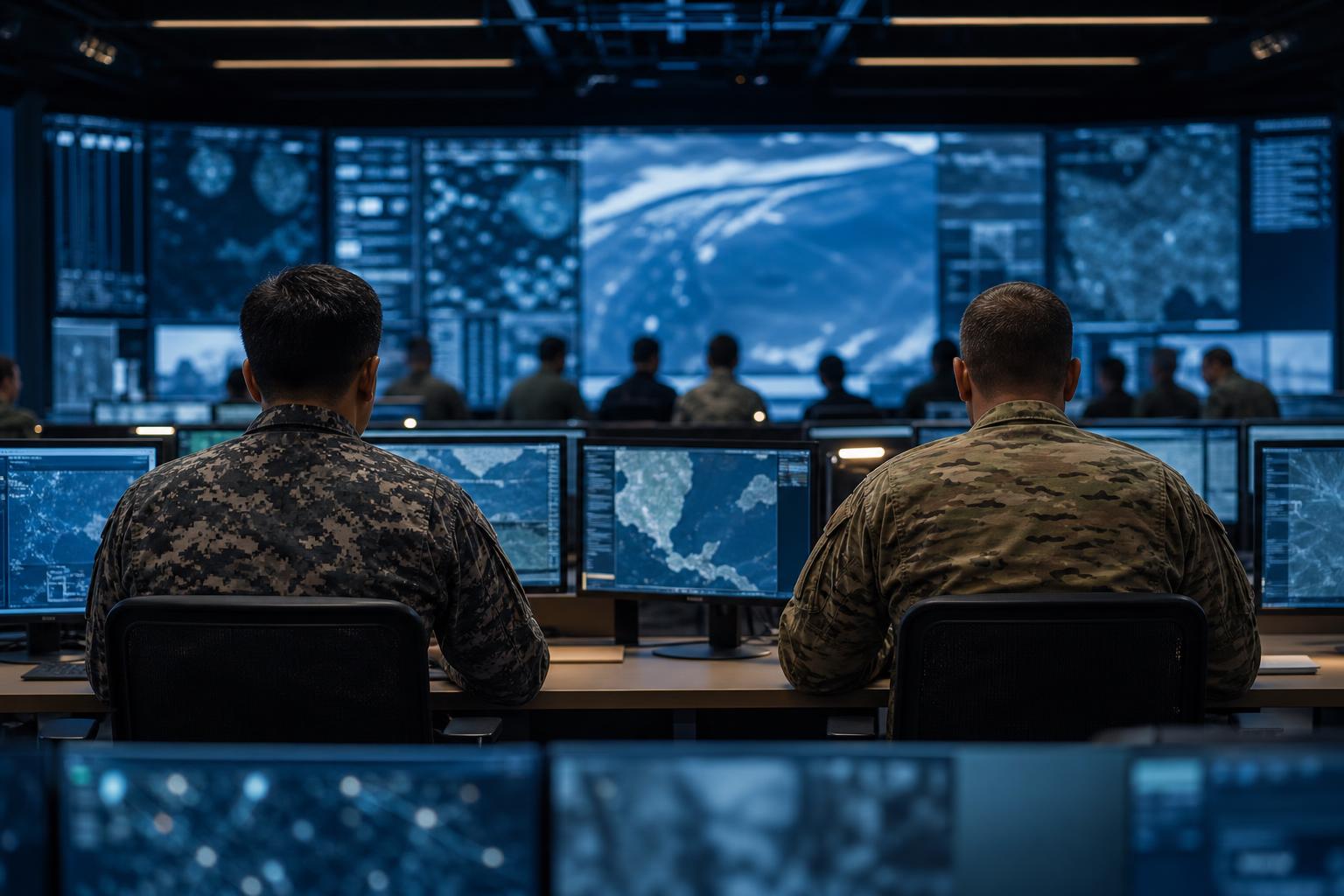
South Korea’s Ministry of National Defense and the commander of United States Forces Korea (USFK) have publicly diverged over the conditions for transferring wartime operational control (OPCON), with Seoul insisting the transition will proceed when mutually agreed conditions are met and the USFK commander saying the conditions have changed.
At an Oct. 15 daily briefing, ministry spokesperson Jeong Bit-na said South Korea and the United States had already conducted a joint assessment under the conditions-based OPCON transition plan to pursue full operational capability verification this year, according to Korea.kr.
Jeong said the ministry’s position is unchanged that wartime OPCON will be transferred when mutually agreed ROK-U.S. conditions are met, and that remaining differences will be resolved by the Security Consultative Meeting under mutually agreed conditions and evaluation criteria.
When asked about USFK Commander Gen. Xavier Brunson’s comments, Jeong said it was not appropriate for the ministry to evaluate remarks made publicly by the USFK commander.
Speaking in a personal capacity during the briefing, Jeong said that if the goalposts keep being moved, wartime OPCON transfer can never be achieved.
MBC reported on Oct. 16 that Brunson said in Washington that the conditions for OPCON transfer had changed and that new standards had emerged because plans had changed.
MBC also reported that Defense Minister Kang Shin-chul had conveyed concern or protest to the U.S. side over Brunson’s OPCON remarks and argued that there would be no problem with transferring OPCON now.
BusinessKorea reported on Oct. 16 that Brunson told a Washington seminar on Oct. 14 local time that he supports OPCON transfer as part of alliance modernization, but that the transition should be based on fulfillment of agreed conditions rather than a political timetable.
BusinessKorea also reported that the three 2015 conditions in the Conditions-based OPCON Transition Plan are South Korea’s military capabilities to lead combined defense operations, the alliance’s ability to counter North Korean nuclear and missile threats, and a security environment conducive to a stable transition.