KASA, KARI review Nuri 5th launch; one cubesat failed to deploy
A review meeting on Nov. 18 found that 9 of 10 cubesats deployed normally, but one, Quaternion P-Sat-2, did not due to a motor not operating.
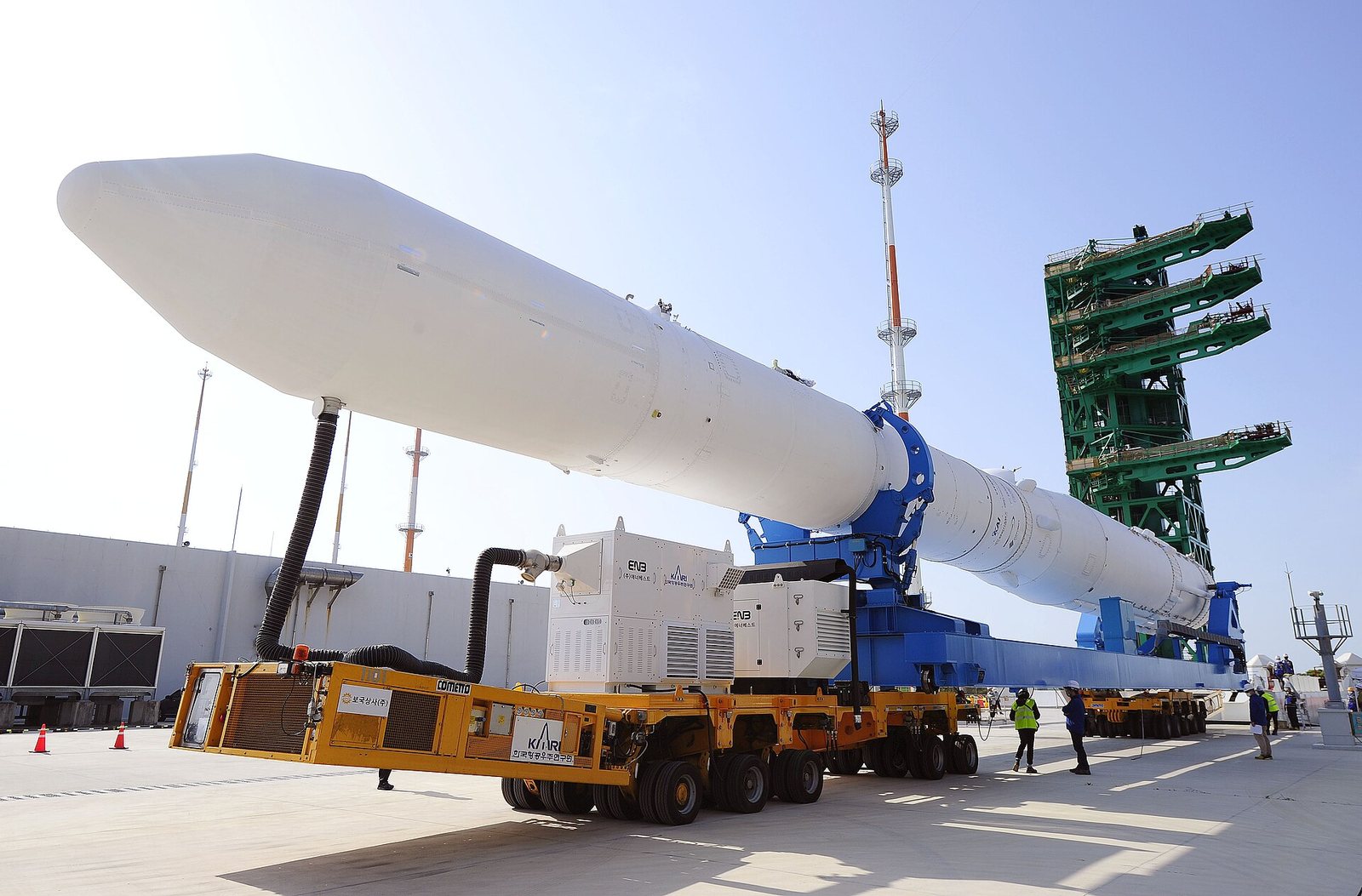
The Korea AeroSpace Administration (KASA) and the Korea Aerospace Research Institute (KARI) held a review meeting on Nov. 18 in Daejeon to examine the results of the fifth launch of the Nuri (KSLV-II) space launch vehicle, including the failure of one cubesat to deploy.
The Nuri rocket lifted off on Oct. 7 carrying 15 satellites: five microsatellites and 10 cubesats. According to KASA, the launch vehicle performed its major flight procedures—first-stage separation, second-stage ignition, fairing separation, second-stage separation, and third-stage ignition—at the preset times, and entered the target orbit, deploying the satellites as planned.
However, only 9 of the 10 cubesats were ejected normally. The cubesat Quaternion P-Sat-2 was not ejected. Analysis showed that the ejection command was normally issued from the upper stage, but the ejection drive current did not flow, so the motor that opens the ejection tube cover did not operate.
KARI could not determine whether the cause was in the signal transmission from the launch vehicle to the ejection tube or a mechanical defect in the ejection tube, due to insufficient measurement signals.
KARI plans to strengthen pre-launch inspections of ejection-related components and their operating conditions, and to improve reliability by implementing redundancy in the electrical signal system for the next launch.
Hanwha Aerospace, the system integrator for Nuri, participated in the review meeting, sharing technology and operational experience accumulated during the launch process. KASA said this helped private companies improve their understanding of overall launch operations.
KASA Administrator Oh Tae-seok said, "In this fifth launch, we achieved the multi-separation of microsatellites and on-time launch, while also identifying areas for improvement regarding the cubesat non-deployment. KASA, KARI, and the system integrator will share launch experience and technology and continuously improve reliability by addressing the identified improvements."