

Korea’s AI Ambitions Go Local, But Will They Last?
From Seoul’s bustling city hall to the industrial ports of Busan, a new race is on. Local governments across South Korea are scrambling to launch their own artificial intelligence committees and policies. Furthermore, this surge in activity reflects a nationwide push to embed AI into every facet of the economy and public life. However, behind the ambitious announcements lies a critical question of sustainability, casting doubt on whether this boom in regional AI policy is built to last.
The AI Gold Rush in Korea’s Cities
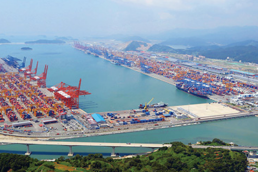
Major metropolitan areas are leading the charge. For instance, the Seoul Metropolitan Government recently launched its AI Committee with the goal of building a “Seoul-type” large language model (LLM) for administrative innovation. Meanwhile, Gyeonggi Province, the populous region surrounding the capital, is focusing on inclusive AI policies to protect vulnerable populations. In addition, industrial hubs are tailoring their strategies to local strengths. Busan, a major port city, has unveiled a 1 trillion KRW (approx. $720 million) project to infuse AI into its maritime, logistics, and defense sectors. Therefore, this wave of municipal AI initiatives is creating region-specific testbeds for new technologies. For investors, this signals a mosaic of public-private partnership opportunities. Every major city in Korea wants its own AI crown.
The Sustainability Question for a Local AI Strategy
The core challenge, however, is money. Most Korean local governments, known as j 자체 (j 자체), have limited authority to raise their own revenue. As a result, they are heavily dependent on funding from the central government in Seoul. This financial structure fosters a culture of chasing short-term grants rather than building long-term capacity. Consequently, many experts worry that these initiatives will be little more than “pretty but useless” projects. The immense cost of computing resources and talent required for genuine AI development is simply beyond the reach of most municipalities. Ambition is clashing with fiscal reality. This dependency means businesses must carefully vet the long-term financial stability of any municipal AI project before committing.
More Than Just a Name Change?
Critics also point out that many of these new plans are merely old “smart city” or “digital transformation” projects rebranded with an AI label. This superficial approach overlooks a fundamental truth about artificial intelligence. By contrast, the real value of AI is unlocked not at the moment of development, but through continuous operation, refinement, and integration into real-world workflows. A focus on one-off, grant-funded projects is unlikely to yield meaningful results. Therefore, stakeholders must look past the buzzwords. They need to scrutinize whether a municipality is investing in the foundational ecosystem of data infrastructure and deployment pipelines. Many initiatives are simply old wine in new AI-branded bottles.
Building a Virtuous Cycle
The path forward requires a fundamental shift in thinking. Instead of isolated projects, Korea needs to foster a sustainable, interconnected AI ecosystem. This demands closer collaboration between the central government and local authorities. For example, the central government could focus on empowering local bodies with the tools and expertise to build their own capabilities, rather than just handing out project-based funds. Furthermore, local governments should concentrate on developing practical, commercially viable AI applications that solve specific regional problems. A successful traffic management AI developed in one city, for instance, could then be scaled and adapted for nationwide use. According to Professor Kim Sook-kyung of KAIST, this requires a longer-term vision, with projects spanning 5-7 years from R&D to commercialization. If Korea gets this right, it can create a powerful cycle where local innovation fuels national strength.