

Somewhere between Seoul’s patent law firms and Busan’s dry docks, a gap has quietly widened for decades. Korea’s Busan IP support infrastructure has long lagged behind the capital — and the numbers are blunt: patent filings from Seoul and Gyeonggi account for roughly 65% of all domestic applications, while Busan and South Gyeongsang combined file barely one-tenth of that. For a city that builds ships the rest of the world depends on, that imbalance is hard to ignore.
A Field Visit With Policy Weight
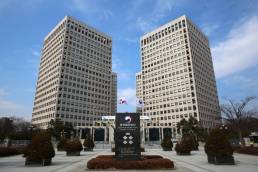
On July 2, Korea’s Intellectual Property Office (KIPO) — known in Korean as 지식재산처, the central government agency overseeing patents, trademarks, and IP data — held back-to-back roundtables in Busan. In the morning, six local companies including E&R Co. and Sambo Industry sat down with KIPO officials. In the afternoon, KIPO met with Busan Metropolitan City government to discuss broader industrial competitiveness.
The sessions focused on three core industries: maritime, shipbuilding, and logistics automation. These are not niche sectors. They form the backbone of Busan’s economy and connect directly to Korea’s export machine. However, firms in these fields have long struggled to translate hands-on engineering know-how into registered intellectual property.
Structural disadvantage is the core complaint. IP lawyers, R&D consultants, and patent analysts cluster in Seoul. As a result, regional firms either pay premium rates to access capital-based expertise or simply skip the process altogether.
What KIPO Is Actually Offering
Two programs drew the most attention at the Busan roundtables. The first is IP-linked R&D strategic support — a service where KIPO analysts help companies align their research pipelines with patentable outputs before a single application is filed. In practice, this means fewer wasted R&D budgets and stronger patent portfolios. For small manufacturers, that is a meaningful shift.
The second is the “IP Data Gift” scheme. KIPO holds approximately 140 million IP records collected from 29 countries. Under this program, regional governments and companies gain structured access to that global database. In other words, a Busan shipyard engineer can now benchmark against Japanese or German patents without flying to Seoul or paying for a private database subscription.
Access to global patent data changes the competitive calculus entirely. For an SME in the logistics automation space trying to enter the European market, knowing what has already been patented in Germany is not optional — it is survival intelligence.
Busan IP Support Inside Korea’s Decentralization Push
This initiative fits into a broader national policy frame. Korea has long grappled with what economists call 수도권 집중 — the concentration of economic activity, talent, and infrastructure in the Seoul Capital Area. Successive governments have attempted to redistribute growth through regional development funds, relocated public agencies, and industrial cluster incentives. Nevertheless, the patent gap has persisted.
Furthermore, Busan’s traditional industries are undergoing a structural transition. Shipbuilding, once a labor-intensive sector, is moving toward smart manufacturing, autonomous vessels, and green propulsion systems. Each of those technology shifts generates patentable innovation. Without local IP infrastructure, however, that innovation risks being captured by larger Seoul-based conglomerates or foreign competitors.
One regional IP expert put it plainly: “Busan is a national-level cluster for maritime, logistics, and shipbuilding. The latent IP potential embedded in its factories is enormous. But without a KIPO regional office here, that potential keeps leaking out.”
The call for a dedicated KIPO Busan branch office is growing louder. Currently, KIPO operates its main facilities out of Daejeon, with limited regional presence. In particular, the absence of on-the-ground patent examiners and counselors in Busan creates friction that no remote program fully eliminates.
The Financial Angle Investors Should Watch
There is also a financing dimension. Busan Bank and other regional lenders have been expanding IP-backed loans — credit facilities secured by patent portfolios rather than physical collateral. As a result, the quality and quantity of registered IP held by Busan firms directly affects their borrowing capacity.
For foreign investors eyeing Korea’s maritime technology or smart logistics sectors, this matters. A Busan SME with a thin patent portfolio is a riskier bet, regardless of its engineering capability. Therefore, KIPO’s push to build local IP density is not just industrial policy — it is, indirectly, credit infrastructure.
Jung Jae-hwan, KIPO’s Director General of IP Information, framed the mission in direct terms: “IP information is a core asset for raising the competitiveness of citizens and businesses. We will continue reflecting the voices of field users in our policies and develop customized services they can actually feel.”
What Comes Next
KIPO has signaled that Busan is a test case, not a one-off. If the IP Data Gift scheme and R&D strategy support gain traction here, similar programs are expected to roll out to other non-capital regions — including Daegu, Gwangju, and the Chungcheong corridor.
Meanwhile, the push for a KIPO Busan branch office is likely to gain political momentum, particularly as Busan positions itself as a candidate city for Expo 2030 follow-on investment and deepwater port expansion. Regional IP infrastructure, in that context, becomes part of the city’s pitch to global industry partners.
The gap between Seoul’s patent ecosystem and Busan’s industrial reality did not form overnight. By the same logic, it will not close with a single roundtable. However, the direction is now clear — and for Busan’s engineers, that may be the most useful signal of all.