KAI wins contract to develop lunar lander main body structure
The deal with KARI, valued at about $11.2 million, runs through December 2030 and covers four structural units.
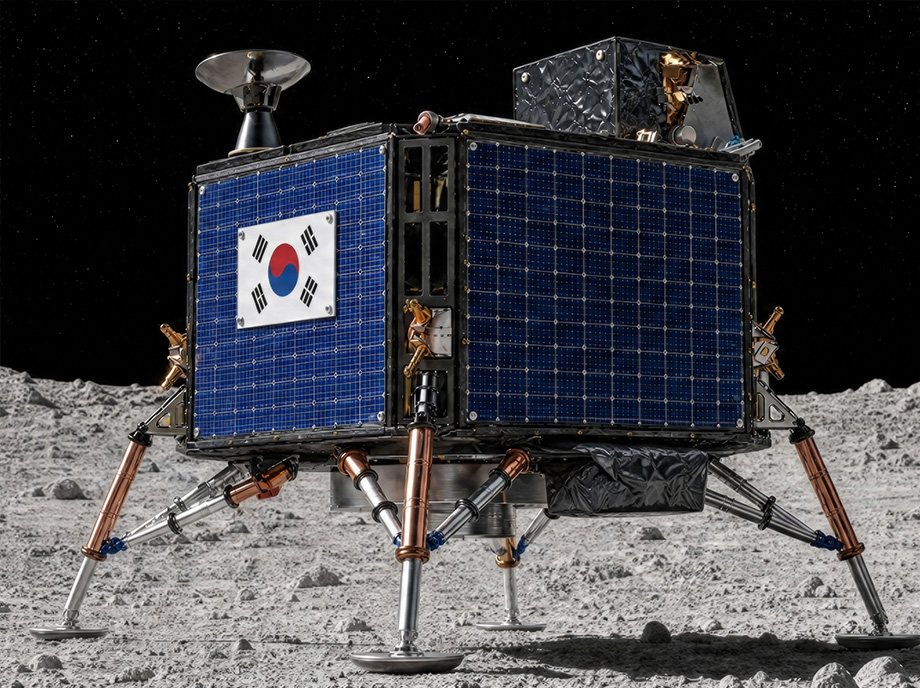
Korea Aerospace Industries (KAI) signed a contract with the Korea Aerospace Research Institute (KARI) on Nov. 23 to develop the main body structure for South Korea's lunar lander, the company announced on Nov. 25.
The contract is valued at approximately $11.2 million (15 billion won). KAI will develop and deliver a total of four main body structures to KARI by December 2030: two for testing and two for flight verification.
The main body structure serves as the skeleton of the lunar lander, withstanding vibration and shock during launch and landing while supporting and protecting payloads and key equipment. KAI said the structure's reliability is critical because the lander must endure loads, vibration, shock, and extreme space environments from launch through lunar orbit insertion, descent, and landing.
The contract is part of the second phase of South Korea's lunar exploration program led by the Korea AeroSpace Administration (KASA). The program aims to independently develop a lunar lander for launch in 2032, demonstrate a soft landing on the lunar surface, and carry out scientific and technological missions.
South Korea completed the first phase of lunar exploration with the 2022 launch and lunar orbit insertion of the Danuri orbiter. KAI participated in Danuri's development, including localization of structures and electronic components, main body and subsystem design, assembly, and testing.
In November 2025, KAI joined the lunar lander landing gear qualification model development project, expanding its role from lunar orbiter to lunar lander development. With the new contract, KAI said it has broadened its participation from landing gear to the main body structure, strengthening its space exploration development capabilities.
A KAI official said, "Following Danuri, it is very meaningful to participate in the lunar lander program. Based on the technology accumulated through satellite and space probe development, we will successfully carry out the project and contribute to securing South Korea's independent lunar exploration capabilities."
KAI has participated in various satellite developments over the past 30 years, including Arirang, Chollian, and the next-generation medium satellite, accumulating know-how from design to manufacturing, assembly, and environmental testing. Since 2018, KAI has led the entire development process as the prime contractor for the next-generation medium satellite. The company also established a space center in 2020 and built a 4-ton thermal vacuum chamber in 2025, securing the largest private-sector development and test infrastructure in South Korea.